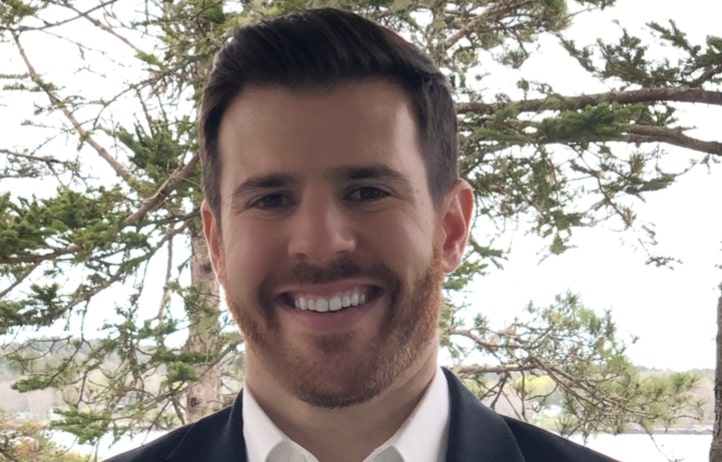
The sales rep who decided the phone was worth saving
Jason Dorfman runs Orum, a live conversation platform that a growing number of outbound sales teams now lean on to spend less time listening to dial tones and more time talking to actual people. The product is built around a parallel dialer paired with speech recognition: it calls several numbers at once, screens out voicemails, busy signals, and dead ends, and drops a rep into the call the instant a human picks up. The pitch is simple, and Dorfman likes it that way - reps get 5 to 10 times more live conversations in a day.
What makes the platform interesting is where it came from. Dorfman did not arrive at cold calling as an outside observer with a spreadsheet. He arrived as the person making the calls. When he was building the inside sales team at Rubrik, his reps were dialing roughly 100 times a day each, and only a handful of prospects would ever pick up. He went looking for a tool to fix the math and found the available options half-baked, slow, and expensive. As he later put it, the tools were "clunky, slow, disconnected, and expensive. They didn't help reps prepare for meaningful conversations."
That gap sat with him. Around the same time he met Karthik Viswanathan, who would become his co-founder. Viswanathan built an early prototype that proved the idea could live in software. It was rough - it performed about half as well as the outsourced dialing services that charged 40 to 60 cents a dial - but it was enough to show the problem was solvable. In 2019 the two of them started Orum.
"There's a period between idea creation and real business where you encounter doubt and dismissiveness. No one gives a sh*t. You have to be a little bit crazy."
The early sales motion was true to form. Dorfman pitched Orum's first product to people in his own network before the company had a website or a SOC 2 certification to point to. The reaction was fast enthusiasm, and some of those early users became early employees. It is the kind of validation loop that only works if the founder already knows exactly whose problem he is solving, and Dorfman did.
From a dentist's house to a hypergrowth sales floor
Dorfman grew up in Los Angeles, the son of a dentist, without much exposure to tech or business. He went to UC Santa Barbara planning to become a lawyer. An elective in the university's Technology Management Program, tucked inside the engineering college, changed the plan. Entrepreneurs came through as guest speakers, and the pull toward startups stuck.
He graduated in 2010 into a soft job market and took a sales development role at RightScale, later acquired by Flexera. He was good at it, moved up to account executive, and watched the company grow. A stint in Silicon Valley followed, including a first startup of his own that ended in a small buyout. He is candid that the failure stung and that it taught him more than any win would have. He was rejected by Y Combinator, then went to a YC party anyway - a small anecdote he tells as part of the nudge that kept him in the startup world.
The Rubrik chapter is the one that shaped him most. He joined when the company had about a dozen people and stayed roughly five and a half years, through more than 1,700 employees. In that window Rubrik went from zero revenue to a billion-dollar valuation in three years and a multi-billion-dollar company in five. Being the first sales hire in that kind of run is a rare front-row seat, and it gave him both the playbook and the pattern recognition he would carry into Orum. One line he repeats from the experience: "People limit themselves with their own beliefs."
He carries that sales-first instinct into unusual places, including the boardroom. His advice on fundraising is to treat it exactly like a sales process - cluster 50 to 60 or more meetings into short two-to-three-week sprints, expect 70 to 80 percent of them to be a no even when the idea is good, tune the message as you go, and ignore the noise. It is the same high-volume, thick-skinned discipline he asks of the reps his own product serves.
In his own words
Dorfman on hiring the right early team at Orum.
A dialer that becomes a coach
Dorfman frames Orum's future in two acts. Act one is the part people already know - getting reps into live conversations faster. Act two is quieter and more ambitious: Orum sits on a dataset of more than a billion calls, and the plan is to turn that into real-time coaching that improves the quality of the conversations, not just the quantity. The $22 million Series B in November 2022, led by Tribe Capital with Craft Ventures and Unusual Ventures, was raised in part to push in that direction.
The through line is consistent. Plenty of people declared cold calling dead. Dorfman never bought it. He argued the channel still worked and the tooling around it was the thing that was broken - and he has spent years and more than $50 million betting he is right.