He reasons his way to the conclusions other commentators won't reach, and writes them with the patience of someone who has already heard your objection.
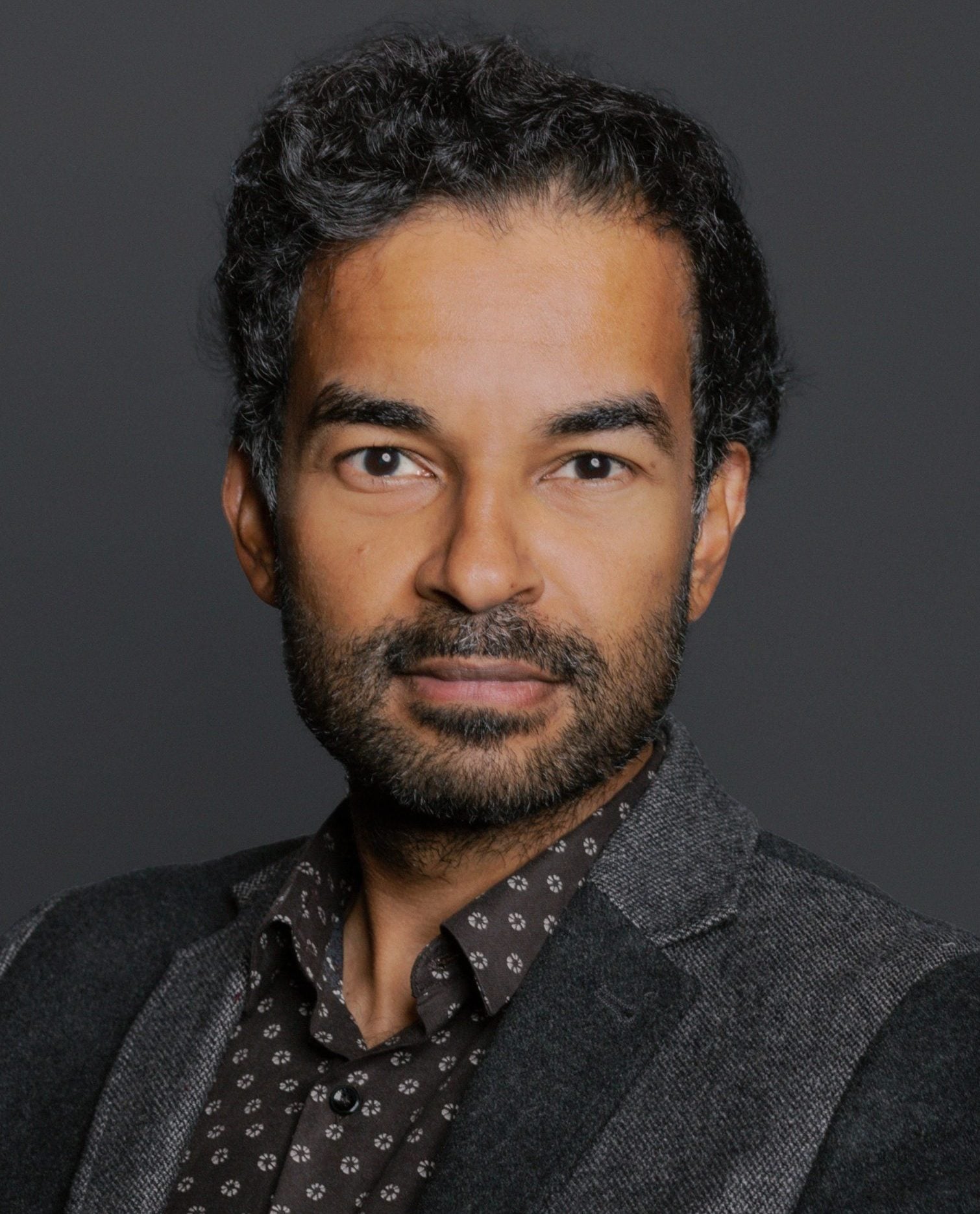
// The face of a man who has already considered your rebuttal and moved on.
Most Saturdays, somewhere in the world, a reader opens the Financial Times and finds Janan Ganesh dismantling a thing they were sure of an hour ago.
He writes a biweekly column for the FT and carries the title of associate editor, which is the paper's way of saying his opinion sits near the centre of its identity. The columns range across the things that decide the century: the rivalry between the United States and China, the slow unwinding of the free-trade consensus, the West's habit of misreading its own decline. Then, on the weekend, he turns the same instrument on cities, football, restaurants and the question of how a person should actually spend a life.
The trick is that he refuses the comfortable version. When the consensus rushed to mourn or celebrate Keir Starmer, Ganesh argued for the historical necessity of Starmer failing. When commentators treated Donald Trump and the MAGA movement as one organism, he separated them: Trump and MAGA, he wrote, are no longer the same thing. He does not hand the reader a conclusion so much as walk them to the edge of an assumption and ask why they ever trusted it.
What makes this readable rather than merely clever is the restraint. There is no shouting, no flag-planting. He assumes you are intelligent and skips the explanation, which means catching up to a Ganesh column is a bit like joining a conversation already in motion. You lean in rather than nod along.
Liberal on social affairs, centre-right on economics.
He was born in Nigeria in February 1982 and grew up in South London, where he went to Stanley Technical School for Boys. It is not the standard launch pad for a national newspaper columnist, and that matters: the polish in the prose is earned, not inherited.
At Warwick he read politics and ran the Politics Society. At University College London he studied public policy. At seventeen, a Tony Blair conference speech pulled him into Labour Students; somewhere along the way the gravity shifted and he settled into the centre-right liberalism he still describes today, once calling himself, with a wink at a generation of Westminster insiders, "essentially a Portillista."
His first job was research, not reporting. Between 2005 and 2007 he worked at Policy Exchange, the Westminster think tank, learning the machinery of policy from the inside before he ever wrote about it from the outside. In 2006 he co-authored "Compassionate Conservatism" with Jesse Norman and won the T. E. Utley Memorial Prize for young political journalists - a prize, in effect, for promise about to be kept.
In 2007 The Economist hired him as a political correspondent. For five years he covered the events that set the terms of modern Britain: the 2008 crash and its long hangover, the 2010 election, the leadership churn that followed. The Economist's unsigned house style taught him economy; he kept the economy and later added a name.
YEARS IN EACH CHAPTER
Bars scaled to span of years, not exact duration.
In 2018 he moved to DC as the FT's US political columnist. For three years he covered an American politics that kept refusing to behave - the worsening of US–China relations, the 2020 election, a pandemic.
Then a year in LA, watching the same country from its other coast. The transatlantic vantage point became a permanent feature of his writing: he reads America the way a foreigner reads a familiar novel, noticing what natives skim.
He covered the January 6 siege as it happened. The columnist who can write a witty paragraph about restaurants also filed on a day the United States held its breath - and treated both with the same steady attention.
The books unread, the restaurants untried, the continental trips not taken on a Friday-night whim.
In September 2012, aged 30, Ganesh decided he was done attending weddings. Not out of grumpiness - out of arithmetic. Each Saturday surrendered to someone else's celebration was a Saturday taken from the books, the restaurants, the spur-of-the-moment continental trip. He counted the cost and declined to keep paying it.
It is a small, slightly outrageous fact, and it tells you more than a paragraph of analysis would. Here is someone who treats his own time as a scarce resource to be allocated with intent, and who is willing to say so out loud. The same instinct runs through the work: a refusal to spend attention on things he has decided are not worth it.
From 2013 to 2017 he was a regular panelist on the BBC's Sunday Politics, a fixture of the British weekend ritual before he left for America. He published a biography of George Osborne in 2012 - while Osborne was still Chancellor, still very much writing his own ending. Most biographies wait for the story to finish. Ganesh started before the verdict was in.
"Trump and the return of Great Man theory" - on the lure of explaining an era through a single figure.
The historical case that Keir Starmer may need to fail - a column that refused the obvious sympathy.
"Trump and Maga are no longer the same thing" - prising apart a movement and the man who named it.