ATARAXIS AI raises $20.4M Series A led by AIX VenturesFIRST AI-native breast cancer test goes clinicalKESTREL foundation model reads digital pathology at scaleGOAL impact 50% of new cancer cases by 2030ADVISOR Turing Award winner Yann LeCun joins Ataraxis
Profile / Precision Medicine
Jan Witowski
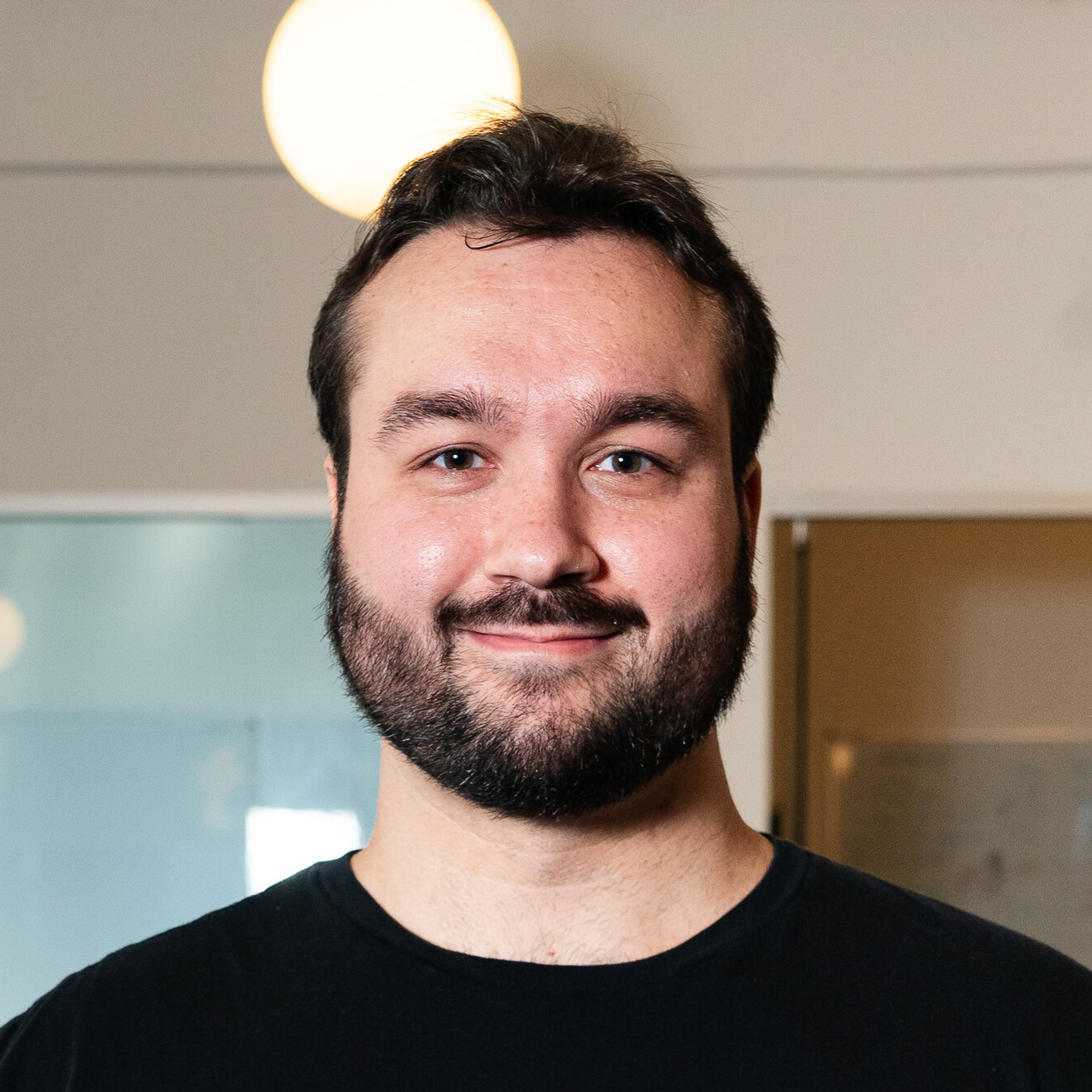
The physician-scientist teaching AI to read cancer tissue - and to say which patients actually need treatment. He is the co-founder and CEO of Ataraxis AI in New York.
A doctor who decided the tests weren't good enough
Jan Witowski spends his days on a problem most people never see: the gap between knowing what a tumor is and knowing what it will do. His company, Ataraxis AI, is trying to close it with artificial intelligence that reads cancer tissue the way a pathologist reads a slide - only faster, and, he argues, more accurately.
Ataraxis is a New York precision-medicine company that Witowski co-founded in 2022 and spun out of New York University the following year. The pitch is direct. Today, when a patient is diagnosed with breast cancer, doctors often order molecular assays to estimate how aggressive the disease is and whether chemotherapy will help. Those tests are useful but expensive, slow, and limited in scope. Witowski's bet is that AI trained on tissue images and clinical outcomes can do the same job - and eventually a broader one - by learning the underlying biology of a tumor rather than measuring a handful of genes.
The company's first product, Ataraxis Breast, launched publicly in late 2024 and is described as the first AI-native prognostic and predictive test for breast cancer. Underneath it sits a foundation model called Kestrel, built to interpret digital pathology at scale. The name Ataraxis comes from the Greek word for a calm, untroubled mind - the state a patient might hope for once the uncertainty of a diagnosis is resolved.
"I think at Ataraxis we are trying to build what is essentially an AI frontier lab, but for healthcare applications."
Jan Witowski, to TechCrunch
The Path
From a medical-textbook household to a Madison Avenue lab
Witowski grew up in Poland, the son of a father who wrote medical textbooks. He started building websites as a kid, an early sign of the technical instincts that would later shape his career. But rather than follow the code, he chose medicine. He earned both an MD and a PhD, then moved into research - first as a fellow at Harvard Medical School and Massachusetts General Hospital, later as a postdoc at NYU Langone Health, where he led projects at the intersection of AI and medical imaging.
That decade of work gave him a specific frustration. He had seen the promise of precision medicine up close, and he had watched much of it go unrealized. The diagnostics available to oncologists had not kept pace with what modern machine learning could, in principle, do. So he teamed up with Krzysztof Geras, an NYU AI researcher who became the company's chief scientific officer, and set out to build the tools himself.
Before raising serious outside money, the founders did something unusually rigorous for an early-stage startup: they ran an 8,000-patient retrospective clinical study. The data suggested that AI-based tests could match or beat molecular diagnostics on accuracy, scope, and clinical utility. That evidence became the backbone of the fundraising pitch.
"As a medical doctor, I was initially excited about the potential of precision medicine, having seen firsthand the urgent need for solutions."
Jan Witowski, on why he founded Ataraxis
The Bet
Replacing molecular diagnostics, not just adding to them
Witowski does not frame Ataraxis as a nicer version of existing tests. He frames it as a category shift. His stated aim is to "phase out molecular diagnostics" and move the industry toward AI precision medicine - a claim that is deliberately provocative in a field where genomic assays have been the standard for years. He credits the intellectual foundation to Yann LeCun, the Turing Award winner and Meta chief AI scientist who serves as a special advisor to the company, and whose work on self-supervised learning and joint-embedding architectures underpins the approach.
The clinical logic is easy to state and hard to execute: not every cancer patient needs chemotherapy, and the treatments carry real costs. A test that can reliably tell which patients will benefit - and which will not - saves both money and suffering. Ataraxis says its breast product shows meaningfully greater accuracy than the current standard of care. Whether that holds up across large, independent, real-world cohorts is the question the company will spend the next several years answering.
Watch / Ataraxis founder Jan Witowski on AI diagnostics
The Money
A Series A with a Silicon Valley cast
In March 2025, Ataraxis announced a $20.4 million Series A led by AIX Ventures, bringing its total disclosed funding to roughly $24.4 million. The round drew a notable roster: Floating Point, Thiel Bio, Founders Fund, Bertelsmann Investments, and existing backers Giant Ventures and Obvious Ventures. Angel and strategic investors included Oscar Health co-founder Mario Schlosser, Tempus COO Ryan Fukushima, and researchers from OpenAI and DeepMind.
The capital is aimed at commercial launch in the United States and at extending the technology beyond breast cancer. Witowski has attached a large number to the ambition. He wants Ataraxis to "impact at least 50 percent of new cancer cases by 2030" - a goal that is either the kind of target a mission needs or an overreach, depending on how quickly regulators and oncologists adopt AI-driven tests.
"With this capital, we are on track to change how cancer is treated and ultimately impact at least 50 percent of new cancer cases by 2030."
Jan Witowski, on the Series A
In His Words
How Witowski describes the work
Building on our advisor Yann LeCun's pioneering work in modern AI, we are establishing a completely new category of tests.
So many of those problems require a very novel technology. That is why we are building a frontier AI lab for healthcare.
This investment is a testament to the groundbreaking work our team is accomplishing and the immense potential of AI in precision medicine.
Over the past decade, the promise of precision medicine has largely gone unfulfilled. We are trying to finally deliver on it.
FAQ
Questions people ask
Who is Jan Witowski?
A physician-scientist with an MD and PhD, and the co-founder and CEO of Ataraxis AI, a New York precision-medicine company applying AI to cancer diagnostics.
What is Ataraxis AI?
A precision-medicine company building AI models that read cancer tissue to predict outcomes and guide treatment. Its first product, Ataraxis Breast, is billed as the first AI-native breast cancer test, powered by a pathology foundation model called Kestrel.
What did he do before founding Ataraxis?
He spent over a decade in medical imaging research at Harvard Medical School, Massachusetts General Hospital, and NYU Langone Health before spinning Ataraxis out of NYU.
How much has the company raised?
A $20.4 million Series A in 2025 led by AIX Ventures, bringing total disclosed funding to roughly $24.4 million.
Who co-founded Ataraxis with him?
Krzysztof Geras, an NYU AI researcher who serves as chief scientific officer. Yann LeCun, the Turing Award winner and Meta chief AI scientist, is a special advisor.