The Profile / Founder, Operator
James Reinhart
He runs the warehouses where your old clothes get a second life - and a second owner.
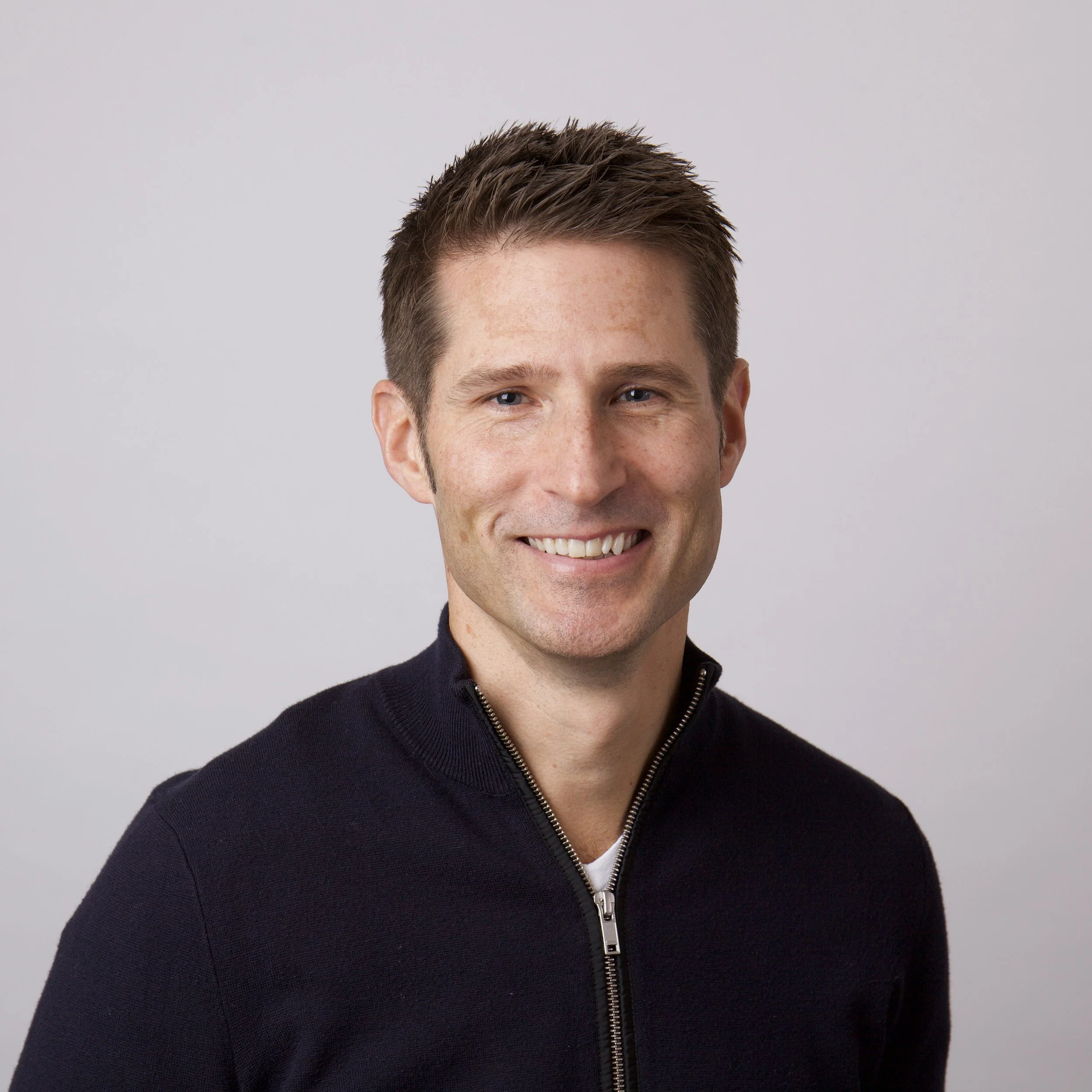
James Reinhart, photographed for the ThredUp press kit. The closet behind him is metaphorical.
He runs the warehouses where your old clothes get a second life - and a second owner.
The closet was the problem. Reinhart, then an MBA student at Harvard Business School, had moved into a Cambridge apartment that didn't have room for the clothes he didn't wear. He took them to a thrift store. The thrift store politely declined - wrong brands, wrong gender section, wrong everything. He went home, started asking strangers what they did with the clothes they no longer loved, and discovered that almost nobody had a good answer.
Sixteen years later, ThredUp processes other people's wardrobes the way Amazon processes packages: at industrial speed, with automated single-SKU systems, in distribution centers built for sneakers and sweaters rather than steel beams. The company went public on Nasdaq in March 2021. Reinhart is still the CEO. He's still also the co-founder. And he is still, somewhere underneath, the guy who interviewed strangers on the street.
The early version of ThredUp was a swap site for men's clothing - which is to say, a service designed to solve Reinhart's personal problem first. Men, it turns out, do not enthusiastically trade their shirts on the internet. The pivot to children's clothing saved the company. Kids outgrow things every six months. Their parents are exhausted. The math worked. From there it became women's, then accessories, then resale-as-a-service for the brands that once pretended secondhand didn't exist.
What Reinhart is really building is plumbing. The pipes that connect a closet in Sacramento to a buyer in Detroit, with inspection, photography, pricing, and listing automated to the point that a single bag of donated clothes generates a hundred individually merchandised products. He talks about it the way an industrial engineer would - patient, particular, slightly impatient with anyone who wants a faster story. He grew up running a lawn-mowing business that eventually employed other neighborhood kids. The instinct is consistent. Find a job people don't want to do. Do it for them. Then do it at scale.
Before any of this, before Cambridge and the apartment and the thrift store rejection, he was a history major at Boston College who became a teacher and then helped develop the Pacific Collegiate School. He co-founded Beacon Education Network, a charter management organization for low-income students on California's Central Coast. He went back to school - twice, simultaneously - to get an MBA and a Master of Public Administration. Whatever ThredUp is now, it was framed by someone who spent their twenties running classrooms.
There is a path to profits and purpose, and it's not always easy, but it can be done. - James Reinhart
Every Clean Out Bag is a physical packet of inventory. ThredUp's warehouses inspect, photograph, price, and list at a tempo built for single-SKU resale - not bulk shipping. The whole business runs through these buildings.
The bigger brands - the ones that used to pretend secondhand was a threat - now use ThredUp's pipes to power their own resale programs. Reinhart calls this the gateway. The brands call it strategy.
Thousands of new items go live every minute on thredup.com. Women's. Kids. Designer. Vintage. The closet of the country, online, searchable, in your size.
An MBA and an MPA, pursued concurrently. The MPA is the part nobody mentions in the elevator pitch.
The store wouldn't take his men's clothes and told him his brands weren't good enough. ThredUp exists partly because of that exact sentence.
Before resale, he was building a charter network for low-income students. The skill that transferred: running a complicated operation with limited resources.
He interviewed strangers on the street and around Harvard about their closets before writing a single line of code.
The pivot to children's clothing changed ThredUp's trajectory. The most disposable inventory on earth turned out to be the most resellable.
ThredUp's HQ sits at 969 Broadway in Oakland. Reinhart lives in San Francisco. He commutes across the bridge to clothes.