She built a children's streaming app that, by design, wants less of your kid's time. The whole company is an argument that restraint is a feature.
Most apps for small children are built to keep them watching. Isabel Sheinman built one engineered around the moment the watching stops - the part where a four-year-old is supposed to put the tablet down without a meltdown.
Maka Kids, the company she co-founded and runs as CEO, is a video streaming app for families with kids ages zero to six. It has no recommendation algorithm. No ads. No auto-play. In a category where those three things are the business model, removing them is close to heresy. Sheinman frames it plainly: the major platforms optimize for attention, and she is optimizing for something else entirely.
"Maka Kids is a video streaming app for families with young children," she says, "powered by a first-of-its-kind algorithm grounded in child development science." It is a careful sentence. There is an algorithm - it just points the other way. Instead of learning which clip will keep a toddler glued to the glass, it learns which content actually supports how that toddler is growing.
The thesis came from a decade of watching the same scene repeat in living rooms: parents overwhelmed, trying to weigh what was unsafe against what was good, and never quite understanding why screen time ended in tears. Sheinman and her co-founder decided the problem wasn't the parents. It was the platforms.
A patent-pending developmental framework built over two years of R&D with the Yale Child Study Center. It maps seven core domains of early childhood development.
Isabel Sheinman met her co-founder Tanyella Leta at a dinner in 2013, introduced by a mutual friend. Over the meal they found the thing that would tie them together for the next decade: they both came from families of educators and entrepreneurs. That shared wiring - part classroom, part startup - is the through-line of everything they have built since.
Their first venture together was NABU, a global literacy nonprofit. It is not a small footnote. NABU has put early-grade reading materials in front of more than 15 million children across 26 countries. When Sheinman talks about scale, she isn't speculating about it. She has already done it once, with books.
Her resume reads like a deliberate setup for the company she runs now. Georgetown. NYU Stern. Leadership roles at Mastercard. A decade braided through the nonprofit, venture-backed, and corporate worlds, always parked at the same intersection: education, technology, and social impact. Maka is where those three roads finally meet in one product.
Plenty of startups end up in Detroit. Maka chose it. The founders went looking for mission-aligned investors, "a community that moves with intention, and the space to do this right." The $3M round - led by Michigan Rise, with Detroit Venture Partners, Invest Detroit, Union Heritage Ventures, Flybridge and Also Capital - is the proof the bet landed.
Maka didn't just hire a research advisor; it built a faculty. Partnerships run through the Yale Child Study Center, Harvard, the University of Michigan, and Michigan State. Sheinman's chief research officer is a Michigan State professor with a Ph.D. in Media, Technology & Society.
The streaming app is the visible part. The deeper ambition is the framework underneath it. Sheinman wants Maka Imprint to become the trust layer for every digital experience a child touches - a quality standard that games, edtech tools, and shows can be measured against. The children's media market is enormous, somewhere north of $372 billion, and it has no shared metric for whether any of it is actually good for a developing brain. Maka is trying to write that metric.
It is a familiar shape for her. NABU asked whether children could read; Maka asks whether what they watch helps them grow. Both ventures take a private, hard-to-measure good - literacy, development - and try to deliver it at the scale of millions. The medium changed from paper to glass. The mission didn't.
Maka Kids will sell as a subscription, $11.99 a month, with a private iOS beta in summer 2026 and a public launch on iPhone and iPad in the fall, with AirPlay support so the experience can move to the big screen. No free tier paid for by advertising, because advertising is exactly the incentive she removed. Parents pay; the product answers to them, not to an ad market that profits when the kid keeps scrolling.
It is easy to slap "science-backed" on a children's app and move on. Maka spent two years doing the unglamorous version. The Maka Imprint framework didn't come out of a marketing meeting; it came out of R&D with researchers at the Yale Child Study Center, and it is patent-pending. The framework breaks early childhood development into seven core domains and then fans those out into more than 650 individual indicators - language, creativity, emotional skills, growth mindset, and more. A show isn't simply "educational" or "not." It is scored.
And the scoring goes deeper than subject matter. Every piece of content gets analyzed for pacing, for stimulation levels, for visual contrast, for narrative structure - the formal properties that determine whether a young brain is being supported or simply flooded. A frenetic, high-contrast, fast-cut video can teach the alphabet and still leave a toddler dysregulated. Maka's whole premise is that those things are measurable, and that measuring them is the product.
This is also why the missing features matter so much. There is no recommendation algorithm pulling a child toward the next hit of novelty. No auto-play queue that turns one episode into forty. No ads breaking the fourth wall to sell a toy. Instead the app is built to be predictable - a deliberately calm, repeatable experience that supports learning, creativity, and emotional growth, and that ends cleanly. The design goal, stated bluntly, is a child who can stop without a fight.
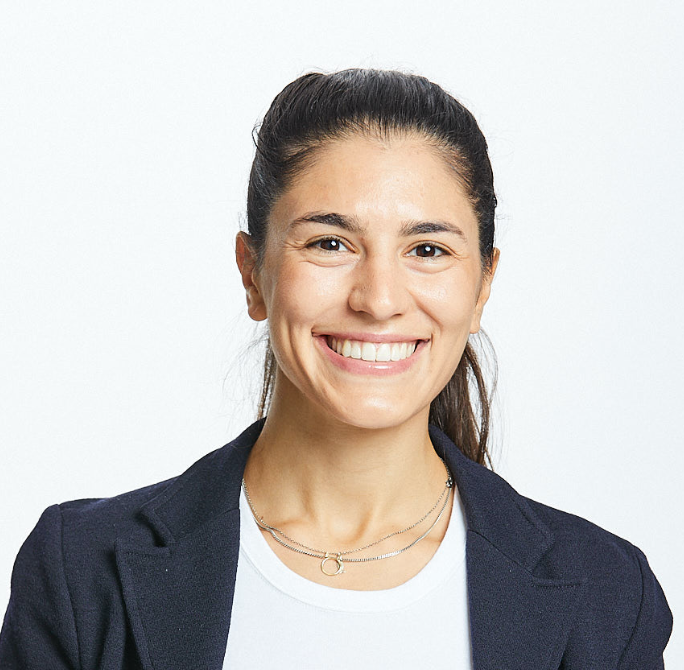
Co-founder and Chief Product Officer. Sheinman's partner since that 2013 dinner and her co-founder at NABU before Maka. Owns the product side of a company whose product is, in large part, what it refuses to do.
Chief Technology Officer. The engine behind a platform whose "algorithm" is pointed at development rather than attention - a harder technical problem than the usual engagement loop.
Chief Research Officer Fashina Aladé holds a Ph.D. in Media, Technology & Society and teaches at Michigan State. Advisor Nancy Close is an associate professor at the Yale Child Study Center. R&D is led by a developmental psychologist.
The composition is the strategy. Maka kept its headcount small - on the order of a dozen people - but loaded the roster with credentialed developmental scientists rather than growth hackers. For a company arguing that the children's media industry has no shared standard for quality, putting that expertise on the payroll is the credibility play. It is also a tell about who Sheinman is as a builder: she keeps assembling teams that look more like a research lab with a go-to-market plan than a typical consumer app shop.
That instinct traces straight back to the families of educators she and Leta both came from. They have now spent over a decade turning classroom values into ventures - first a nonprofit that handed out 15 million children's books, now a for-profit that wants to grade the screens those same kids stare into. Sheinman has been selected as a Founder Forward Fellow in Michigan's innovation ecosystem, a small marker of how quickly the local community has claimed her as one of its own since the 2025 move.