Founder · Web3 Security
Ido Ben-Natan
He took the craft of defending a nation's cyberspace and pointed it at the open, unforgiving world of the blockchain.
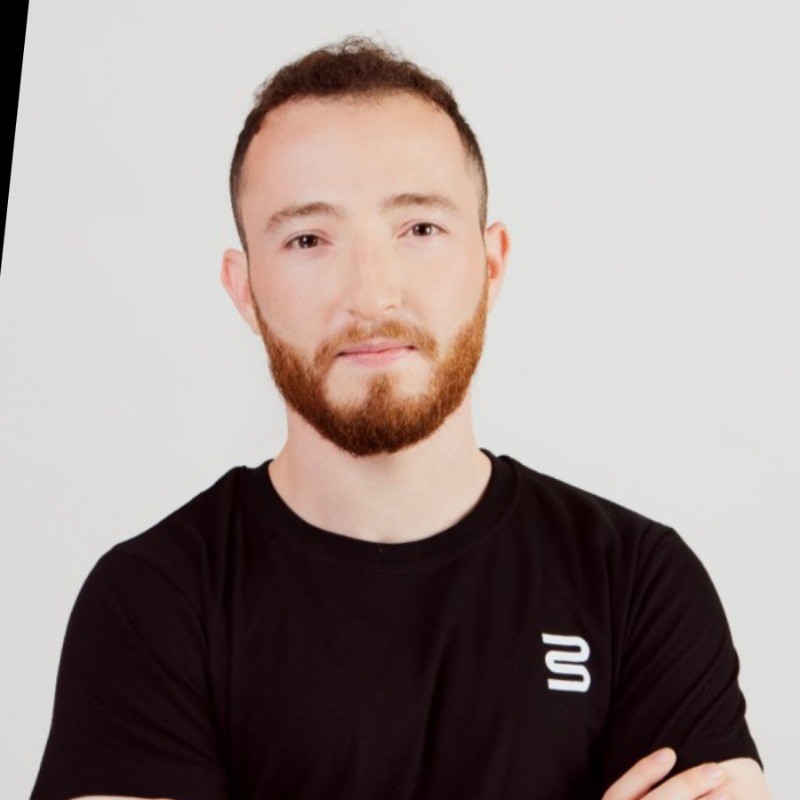 Co-Founder & CEO, Blockaid
He took the craft of defending a nation's cyberspace and pointed it at the open, unforgiving world of the blockchain.
Co-Founder & CEO, Blockaid
Ido Ben-Natan runs a company most crypto users have never heard of, yet many of them trust it dozens of times a day without knowing. Blockaid, the security firm he co-founded in 2022 and leads as CEO, sits quietly behind wallets and apps like Coinbase, MetaMask, Kraken, Uniswap and Stellar. Every time one of those products warns a user that a transaction looks like a scam, there is a good chance Blockaid is the reason.
The pitch is simple and the stakes are not. Blockchains move value instantly and irreversibly, which makes them a magnet for fraud. Blockaid monitors transactions, dApp connections and smart contracts in real time, flags the malicious ones, and can respond automatically before a user signs away their assets. The company says it has secured more than $101 billion in onchain assets, prevented over $5.3 billion in losses, and blocked more than 71 million attacks since coming out of stealth.
In February 2025, Blockaid raised a $50 million Series B led by Ribbit Capital, with Google's GV and existing backers joining. That brought total funding to roughly $83-89 million from a roster that also includes Sequoia, Greylock, Variant and Cyberstarts. Ben-Natan framed the round plainly: the goal is to "scale to meet the surging demand for our security platform as we protect the largest companies operating onchain."
"Security isn't just about catching bad actors - it's about preventing attacks before they happen."
Ido Ben-Natan, Co-Founder & CEO of Blockaid
Ben-Natan grew up in Cupertino, California, the town Apple calls home, where he was encouraged to chase computer science from an early age. His formal training in security came later and far from Silicon Valley. He spent roughly six years in Israel's Unit 8200 and the Office of the Prime Minister, rising to lead a cyber security R&D team. During that time he and his team won the Israel Defense Prize, an award handed out once a year for technical work that meaningfully contributes to national defense.
It was there he met Raz Niv, who would become Blockaid's co-founder and chief technology officer. The two carried the same instinct out of the military: study the adversary closely, build defenses that hold, assume attackers are patient. What changed was the target. Ben-Natan had become an early crypto user, and the more he used it the more one thing bothered him - the space was not built for people who were not technical. Ordinary users and non-crypto-native organizations were easy prey, and they had almost no tools to defend themselves.
The turning point he points to is the BadgerDAO attack, an exploit that drained tens of millions from a DeFi protocol. What frustrated him was not the sophistication of it but the opposite: a fairly straightforward assault could cause enormous harm because nobody was watching the door. That gap - between how much value was moving onchain and how little was protecting it - became the founding thesis of Blockaid.
"We founded Blockaid to build trust in blockchain technology by closing the massive security gaps that get exploited for fraud."
On the mission behind the company
Ben-Natan's mental model for where his industry is heading borrows directly from the history of classical cybersecurity. That field started with consumer antivirus, matured into enterprise tools like endpoint detection and response, and never stopped growing because attackers followed the money. He expects Web3 to walk the same road: from basic consumer protection toward onchain asset security and onchain detection-and-response systems.
His advice to builders is unusually blunt for a founder selling a product. Unless securing the chain is your full-time job the way it is for his team, he argues, you will not keep pace with how fast attacker tactics change - so hand that job to specialized tools rather than trying to build it in-house. On regulation he takes a measured line: well-designed rules that let enterprises participate without compliance risk are good for the ecosystem, and badly drafted ones that smother innovation are not.
Unless you're devoting all your time tracking adversary tactics, you won't stay current - focus elsewhere and delegate this duty to your tools.
We want to scale to meet the surging demand for our security platform as we protect the largest companies operating onchain.
Backers: Ribbit Capital, Sequoia, GV, Greylock, Variant, Cyberstarts
Security isn't just about catching bad actors - it's about preventing attacks before they happen.
We founded Blockaid to build trust in blockchain technology by closing the massive security gaps that get exploited for fraud.
He is the co-founder and CEO of Blockaid, a blockchain security company, and a former cyber security R&D team lead in Israel's Unit 8200 and the Office of the Prime Minister.
Blockaid is a Web3 security platform that monitors, detects and automatically responds to fraud and attacks across crypto wallets, apps and users, protecting customers like Coinbase, MetaMask, Kraken, Uniswap and Stellar.
Blockaid has raised roughly $83-89 million, including a $50M Series B led by Ribbit Capital in 2025, with backers such as Sequoia, GV, Greylock, Variant and Cyberstarts.
It is an award given once a year for outstanding technical achievement contributing to national defense; Ido Ben-Natan and his team won it during his military service.
As an early crypto user he saw that non-technical users and organizations were easy targets with no defenses, and the BadgerDAO attack pushed him to apply his nation-state cybersecurity experience to protecting the onchain world.