A tire, unmade and remade
Nearly a billion tires reach the end of the road every year, and for most of that history the options have been grim: burn them for fuel or bury them in a landfill. Ian Lowe's company, Arduro Sustainable Rubber, is built around a third path. Its patented process pulls an end-of-life tire apart into its original ingredients - rubber, carbon black and steel - and hands them back as raw materials that can go into new products at a competitive price.
The centerpiece is chemistry, not heat. Arduro uses a chloramine devulcanization process that runs at low temperature and low pressure, chemically loosening vulcanized rubber from its rigid state back into a malleable form that can be remolded and re-vulcanized. Company figures put material recovery at roughly 95%, and life-cycle analysis at up to a 75% smaller carbon footprint than conventional disposal. The first commercial product, ELDARIX r1000 recovered carbon black, is pitched as a like-for-like reinforcing filler for tire makers - low ash content, small particle size, PAH-compliant and 6PPD-free.
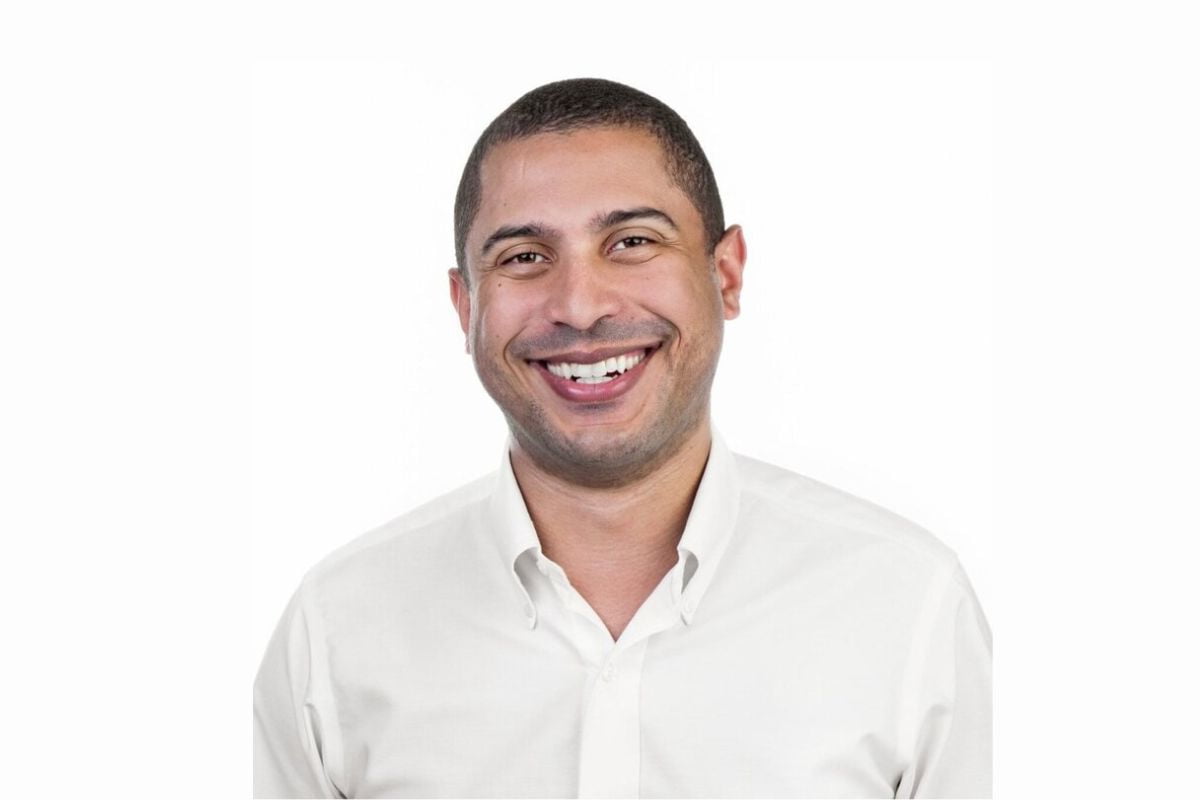
As CEO, Lowe is the one translating that lab chemistry into contracts, capital and a working plant. Arduro has been bringing a pilot-scale facility online in Cape Breton, Nova Scotia, sized as a proving ground where the company's largest prospective clients can run real material through the process before committing at industrial scale.
Capital is available from government programs and an engaged angel network. Nova Scotia is a logistics hub, with rail, sea and air links providing access to our key markets in North America and Europe.
— Ian Lowe, on siting Arduro's operationsFrom financing plants to building one
Lowe did not start in rubber. He started on trading floors and in project-finance deal rooms. At J.P. Morgan he rose to Global Financial Controller for the firm's Power & Gas commodities businesses. He then moved to Piper Jaffray as a project-finance banker and advisor, where his job was to fund the physical machinery of the energy transition - power plants and advanced-manufacturing facilities built around new renewable and sustainable technologies.
One of those deals pointed directly at his future: Lowe advised on and helped finance the first commercial-scale end-of-life-tire-to-carbon-black plant in the United States. He was, in other words, already fluent in the economics of turning old tires into something valuable long before he ran a company that did it. An MBA from NYU Stern sits under all of it.
The pivot from advisor to operator is the kind of move most bankers talk about and few make. Lowe made it - deciding that the highest-conviction position was not to finance the plant but to own the technology and build the business around it.
How the process stacks up
Figures as reported by Arduro. Bars illustrate company-stated metrics.
A discovery that started with a leak
The chemistry behind Arduro was found by accident. More than a decade ago, researchers at the University of Louisville were investigating why rubber components in the water-utility industry were failing prematurely. The culprit was a regulatory change: new EPA rules pushed utilities from chlorine to chloramine treatment, and chloramine was quietly degrading the rubber seals. Patrick Kroeger developed that observation into a 2012 master's thesis, and the team filed a provisional patent in 2014, with a full patent following in 2016.
What breaks a pipe seal, it turned out, could also un-cure a tire. Lowe came into the story from the outside. He noticed the project after the University of Louisville's Technology Transfer office posted it online, recognized the commercial potential, and used his industry connections to move it from research toward a real business. Kroeger, the co-inventor, became Arduro's chief technology officer; several other Louisville Speed School chemical-engineering alumni joined the team.
It is a founding story with a nice symmetry: a chemistry that ruined rubber in one industry became the key to rescuing it in another.
Fun & telling facts
- Arduro's core technology was discovered while studying failing water-utility seals - not while trying to recycle tires.
- The process swaps high-heat pyrolysis for chloramine chemistry at low temperature and pressure.
- Lowe went from financing other people's factories at JPMorgan and Piper Jaffray to building his own.
- The company's flagship, ELDARIX r1000, is marketed as PAH-compliant and 6PPD-free - regulatory features that matter to tire makers.
- Arduro chose Cape Breton, Nova Scotia for its pilot plant partly for the incentives and the rail-sea-air logistics reaching North America and Europe.