He runs the company that does the single most annoying part of selling your old clothes - which is to say, all of it.
FOUNDER & CEO, MINEIS (CHARAN)
There is a closet in your home full of clothes you will never wear again. Hyesung Kim built a business out of that exact closet.
Open the Charan app and the promise is almost suspiciously simple: box up the clothes you have stopped wearing, hand them over, and walk away. Charan does the rest. Pickup. Inspection. Sterilizing and scenting. Photography. Pricing. Listing. The sale. The shipping. The seller's only job is to stop owning the sweater.
That sequence is the life's work, for now, of Hyesung Kim, founder and CEO of Mineis, the Seoul company behind Charan. He did not build a marketplace where strangers haggle in subway exits. He built a warehouse-and-software machine that swallows the friction whole. Brand fashion, from SPA labels to luxury, resold at up to 90 percent off retail - because the previous owner never really wore it.
The platform launched in August 2023. Within roughly a year it had passed 400,000 cumulative users. Forbes Asia named it to the 2024 "100 to Watch." In September 2025 Mineis closed a 16.8 billion won Series B, pushing total funding to 32.2 billion won, with Hashed, Altos Ventures, SBVA and Bon Angels on the cap table. The thesis under all of it is unglamorous and exact: most people want to resell their clothes and almost no one wants to do the work.
Operator of Charan, a full-fulfillment fashion recommerce platform.
Fulfillment and inspection center in Namyangju, Gyeonggi.
B.A. in Economics, 2010-2014. Started his first company before he finished it.
"The success or failure of the business depends on thorough quality inspection of clothing."
The founding instinct showed up early. In 2012, while still an undergraduate studying economics at the University of Chicago, Kim started Freenters, an ad-tech company. Most students that age are deciding on a major. He was deciding on a business model.
After Chicago he crossed to the other side of the table and became an investor, working as an analyst in venture capital, including stints connected to KTB Network and SparkLabs Global Ventures. He learned to read markets the way a VC does - looking for the gap between what people say they want and what they actually do. He also co-founded a digital health startup, EarlierCare, as its CSO. By the time he started Mineis in January 2022, he was a serial founder with an investor's eye, which is a rare and useful combination.
The Charan idea came from a number that stuck. By Kim's telling, the World Economic Forum reckons 85 percent of textiles are thrown out every year, and a truckload of clothing is burned or buried every second. He looked at that and at the half-finished resale attempts cluttering people's phones, and saw the same thing twice: enormous supply, blocked by tedium. Photos no one wants to take. Meet-ups no one shows up for. Buyers no one can trust. Remove the tedium and the supply pours out.
Charan was the first in its market to take every one of these steps off the seller's plate. The hard, expensive part is the middle: a roughly 1,200-pyeong inspection and fulfillment center in Namyangju where every garment is checked, cleaned and scented before it is photographed. Kim treats that center as the whole moat. Trust, in secondhand, is a physical product.
Charan's AI identifies each item's color, material, season and size on its own, turning a pile of returns into a structured catalog.
Generative AI puts secondhand clothing on virtual models so buyers can judge the fit before they commit.
The system recommends an optimal selling price to sellers and curates items to buyers based on their taste.
A 2025 peer-to-peer service built to kill the fraud and anxiety that haunt direct secondhand deals.
Kim wants Charan to span luxury, contemporary and SPA - a slice of Korea's 40 trillion won fashion market.
About 60% of buyers come back and roughly 70% of listings sell - the quiet metrics that tell you the model holds.
Charan says reselling used clothing cuts roughly 9,000 tons of carbon a year - which the company translates, memorably, into the work of about 990,000 pine trees. Kim's pitch fuses the two motives that rarely sit together: cheaper shopping and a smaller footprint, in the same transaction.
"Charan, as a first mover in recommerce, has strengthened its competitiveness by setting a new standard. We will grow into a platform where consumers enjoy both rational consumption and environmental value at once."
"StartingLine isn't an ordinary financial investor - it's a company builder that creates the first momentum alongside early-stage startups."
Plenty of founders would have built the easy version: a listings app, a cut of each sale, no inventory, no warehouse, no smell of fresh-scented denim at 9am in Namyangju. Kim went the other way on purpose. A peer-to-peer board is cheap to run and impossible to trust. A fulfillment operation is brutal to run and easy to trust. He chose trust, and trust turned out to be the thing you can charge for.
The timing was unforgiving. Early backers recall that when Charan was raising, most investors were steering clear of commerce and platform startups entirely. The company builder StartingLine, led by Park Seok-min, put in the first conviction money and helped shape the milestones before the larger names arrived. Hashed led the Series A. By the Series B, Altos Ventures, SBVA and Bon Angels were in too - the kind of roster that suggests the warehouse bet is starting to look like a category bet.
What makes Kim worth watching is not that he found a clever app. It is that he picked the boring, physical, capital-hungry version of a problem everyone else wanted to solve with software alone, and then wired the software back in where it actually helps - tagging, try-on, pricing. The result is a company that is part logistics, part machine learning, and part argument that the most sustainable garment is the one already hanging in someone's closet.
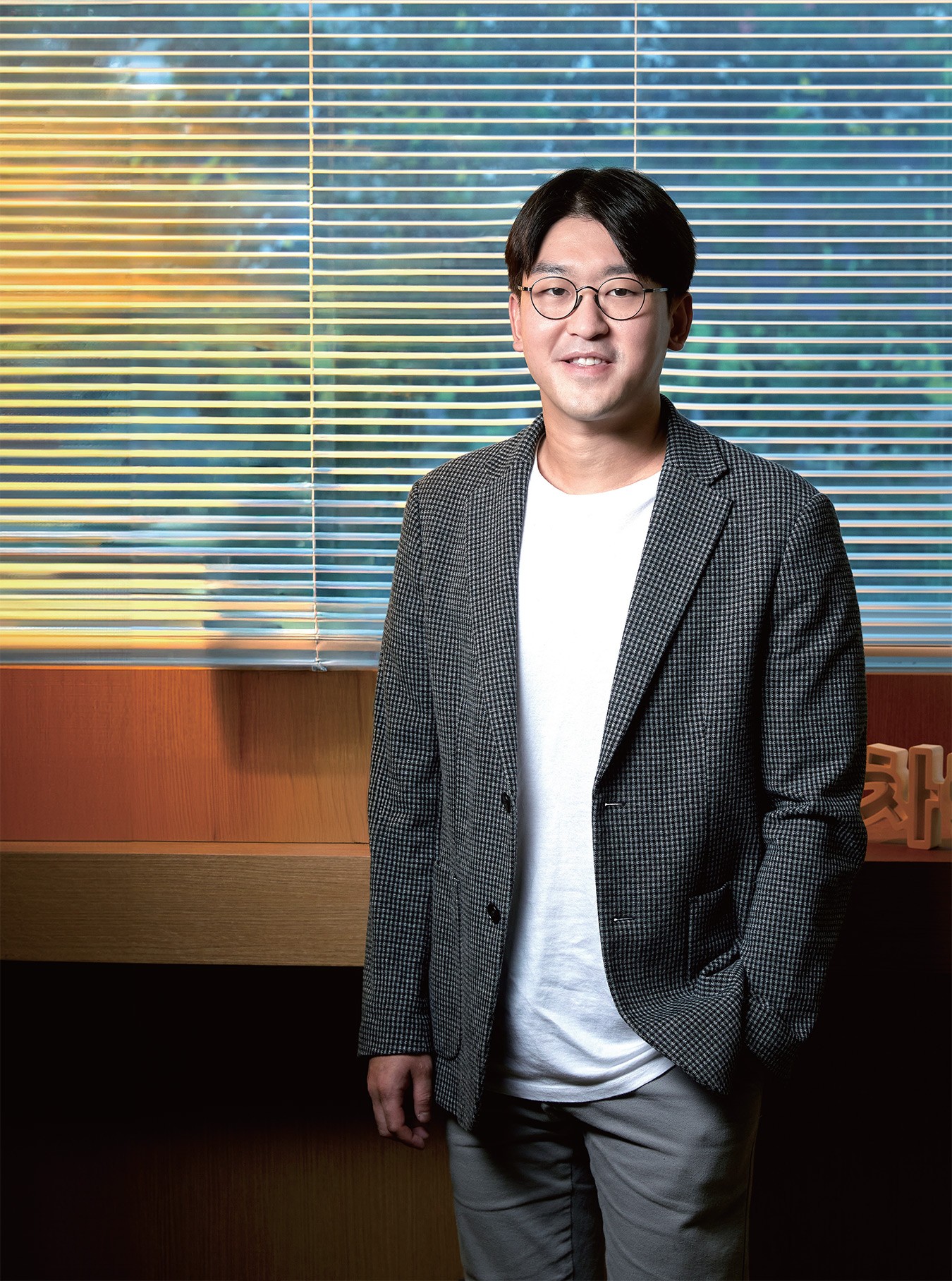
Brand clothing at a fraction of retail, because it was barely worn the first time.
He started Freenters as a Chicago undergrad in 2012.
He read decks as a VC before he had to defend one.
Sources: LinkedIn · Forbes Korea · Wowtale (Series B) · Platum (carbon) · Venture Square · E2News · THE VC