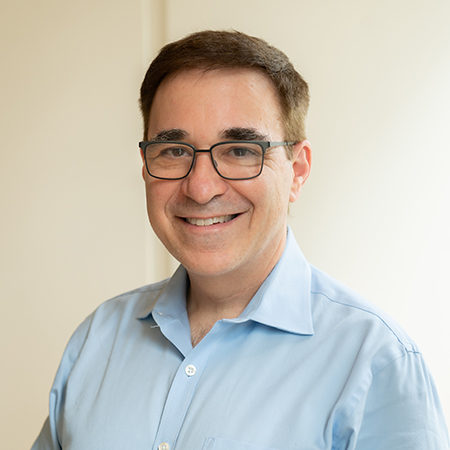
The scientist who keeps taking his own ideas to the clinic
Howard L. Kaufman spends his days on a single, stubborn problem: cancer's most powerful immune drugs are often too dangerous to use. As President and CEO of Ankyra Therapeutics, a clinical-stage biotech on Newbury Street in Boston, he is trying to change that by anchoring those drugs where they are needed and keeping them there. It is the kind of problem he has circled for most of his career, first as a surgeon, then as a laboratory scientist, and now as the executive responsible for turning the science into medicine.
Ankyra's lead candidate is tolododekin alfa, known in trials as ANK-101. It is built around interleukin-12, or IL-12, a cytokine that can trigger a strong anti-tumor immune response. IL-12 has been known for decades, and it has always carried the same catch: given throughout the body, it is toxic. Kaufman's team took a different route. Rather than flooding a patient's system, they anchor the drug directly inside a tumor so it stays put and works locally.
"IL-12 anchoring has resulted in 6-fold higher local IL-12 delivery to established cancers compared with what has been achieved with systemic administration," Kaufman said of the early data. In September 2025, Ankyra published Part 1 results from its first-in-human ANCHOR trial in Nature Communications, reporting that the therapy had a tolerable safety profile and showed activity across several cancer types. The company also began combining it with immune checkpoint drugs like cemiplimab, and reported an intriguing early signal: the level of certain natural killer T cells in a patient's blood at baseline may help predict who responds.
"Tolododekin alfa demonstrated a tolerable safety profile and treatment was associated with monotherapy clinical activity in several types of cancers."
Howard L. Kaufman on Ankyra's Phase 1 ANCHOR dataThe idea of anchoring a drug is not just a technical trick. It is the logical extension of a belief Kaufman has held for a long time: that the local tumor environment matters, and that treating it directly can spare patients the collateral damage of whole-body therapy. That belief also runs through the achievement he is best known for.
A virus that fights cancer
In 2015, the FDA approved talimogene laherparepvec, sold as Imlygic and widely called T-VEC. It was an engineered herpes virus designed to attack melanoma, and it was the first oncolytic virus ever approved for cancer treatment. Kaufman helped lead the pivotal Phase III OPTiM trial that made the case to regulators.
What made the moment significant was not one drug but a category. "I think the real importance of T-VEC's FDA approval is that it brings an entirely new class of drugs to patients with this cancer," Kaufman said at the time. He had also framed the earlier data plainly: it was "the first randomized trial of an oncolytic virus in patients with cancer," and it suggested the treatment was "safe and can result in durable clinical responses with a trend toward improved survival."
T-VEC was not his only mark on melanoma and skin cancer care. He also directed the pivotal trial of avelumab, an anti-PD-L1 antibody, which went on to gain approval for Merkel cell carcinoma - a rare and aggressive skin cancer that had few good options.
"The real importance of T-VEC's FDA approval is that it brings an entirely new class of drugs to patients with this cancer."
Howard L. Kaufman, on the first FDA-approved oncolytic virusSurgeon, lab director, CEO
Kaufman earned his M.D. from Loyola University, completed a general surgery residency at Boston University, and trained in tumor immunology and surgical oncology at the National Cancer Institute. From there he built a career that moved steadily between the operating room, the laboratory, and the administration of major cancer programs.
He served as Chief of the Division of Surgical Oncology and Associate Director of the Herbert Irving Comprehensive Cancer Center at Columbia University. He directed the Rush University Cancer Center, and was Associate Director for Clinical Sciences at the Rutgers Cancer Institute of New Jersey. Throughout, he kept a funded tumor immunology lab running for more than 20 years and published over 500 papers, reviews, and abstracts.
His move into industry followed the same thread. He was Chief Medical Officer at Compass Therapeutics and at Replimune, and Head of Research and Development at Immuneering, before joining Ankyra as Chief Medical Officer in 2021 alongside the company's $45 million Series B financing. In March 2022, he was promoted to President and CEO - a physician-scientist put in charge of the company built on the science he had spent a career developing.
Key moments
- 2014 - 2016President of the Society for Immunotherapy of Cancer (SITC), leading the field's professional society.
- 2015The pivotal Phase III OPTiM trial of T-VEC leads to the first FDA approval of an oncolytic virus for cancer.
- 2021Joins Ankyra Therapeutics as Chief Medical Officer as the company closes a $45M Series B.
- 2022Appointed President and CEO of Ankyra Therapeutics.
- 2025Ankyra publishes Phase 1 ANCHOR data for ANK-101 in Nature Communications and advances combination trials.
The anchored advantage
Figures per Ankyra Therapeutics and reported Phase 1 data. Bars are illustrative.
In his words
"These data are significant because this is the first randomized trial of an oncolytic virus in patients with cancer and suggests that talimogene laherparepvec treatment is safe and can result in durable clinical responses with a trend toward improved survival."
On the OPTiM trial results"IL-12 anchoring has resulted in 6-fold higher local IL-12 delivery to established cancers compared with what has been achieved with systemic administration."
On Ankyra's anchored immunotherapy approach