Profile / Housing & Civil Society
Howard Husock
He counted what the bulldozers missed. Four decades arguing that American housing policy keeps demolishing the wrong thing.
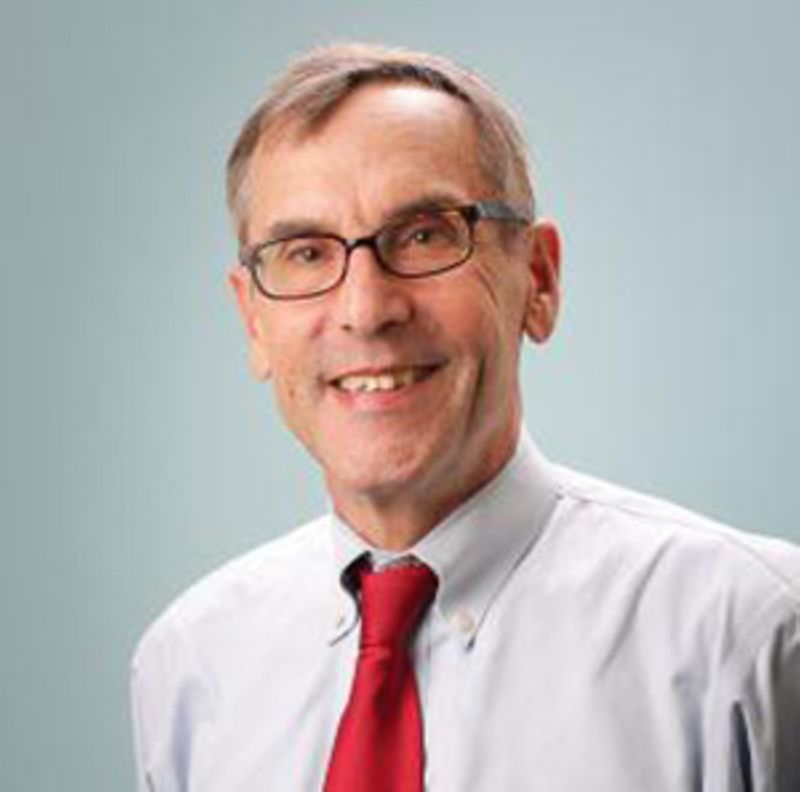 The filmmaker who never stopped looking
He counted what the bulldozers missed. Four decades arguing that American housing policy keeps demolishing the wrong thing.
The filmmaker who never stopped looking
In 2003 he gave a book a title that sounded like hyperbole: America's Trillion-Dollar Housing Mistake. Twenty years later the trillion-dollar number stopped sounding big. The mistake, he argues, never went away.
Howard Husock is a senior fellow in Domestic Policy Studies at the American Enterprise Institute, where the file folders read like a map of how cities actually work: municipal government, urban housing, civil society, philanthropy. His latest book, The Projects: A New History of Public Housing, landed from NYU Press in 2025 and does something the genre rarely tries. It treats the demolished neighborhood, not the demolished building, as the loss worth grieving.
The book opens inside a coalition that almost nobody would assemble today: New York philanthropists, business magnates, Eleanor Roosevelt, and the city-flattening Robert Moses, all certain that public housing would cure urban blight. Husock follows their certainty to its end. From the Hill District in Pittsburgh to Black Bottom in Detroit, predominantly Black neighborhoods were graded only on the quality of their housing stock - and judged guilty. What the graders never counted were the riches: the churches, the corner institutions, the August Wilsons who grew up there.
His policy conclusion is the part that makes a room of planners shift in their chairs. The fix for failed public housing, he writes, is not another round of repair and reform. It is ownership, smaller-scale, and an honest reckoning with what the projects took from the people they were built to help.
Public housing judged neighborhoods only by the quality of their buildings, and missed everything else they held.- Howard Husock, on the central error of The Projects
To understand why he reads cities this way, rewind to the camera. Husock did not arrive in policy through a graduate seminar. He arrived through a viewfinder. In the late 1970s he was a broadcast journalist and documentary filmmaker at WGBH in Boston, and his series Community Disorder: Racial Violence in Boston won the Robert F. Kennedy Journalism Award. His WGBH work collected three Emmy Awards, including a National News and Documentary Emmy in 1982. He learned to tell a city's story by standing on its corners, not by reading its zoning code.
That training shows. Where most housing scholars lead with units and budgets, Husock leads with people and the places that made them. The case-study habit became literal: from 1987 to 2006 he directed case studies in public policy and management at Harvard's Kennedy School of Government, and was a fellow at the Hauser Center on Nonprofit Organizations. Teaching public managers to reason from messy real situations is, in a sense, the whole method of his later books.
From 2006 to 2019 he ran research and publications as a vice president at the Manhattan Institute, where he founded its Civil Society Initiative and became a contributing editor at City Journal. The civil-society work produced Who Killed Civil Society? in 2019, an argument that bourgeois norms and the small institutions that transmit them - not government programs - are what actually lift people. Philanthropy Under Fire (2015) made the case that charitable giving should stay independent, plural, and a little unruly, precisely because it answers to no single bureaucracy.
He is not only a critic from the outside. From 2013 to 2017 he served on the board of the Corporation for Public Broadcasting after a nomination from President Obama and confirmation by the Senate - a conservative housing skeptic helping steer public media, which is its own small lesson in how a pluralistic society is supposed to disagree.
His byline has traveled widely: the Wall Street Journal, the New York Times and its Magazine, National Affairs, the Chronicle of Philanthropy, the Wilson Quarterly, and the now-closed Public Interest. The through-line across all of it is suspicion of the grand plan and affection for the small, durable thing - the block, the congregation, the family that buys rather than rents.
The poor side of town is not a failure to be cleared. It is a ladder, and we keep sawing off its lower rungs.- A paraphrase of the thesis in The Poor Side of Town (2021)
That 2021 book, The Poor Side of Town and Why We Need It, is the cleanest statement of his contrarian streak. Modest, mixed, even shabby neighborhoods, he argues, have historically been engines of upward mobility - places where newcomers could buy in cheap and climb. A century of clearance, zoning, and subsidy aimed at erasing those neighborhoods has, in his telling, erased the climb along with them. It is a deeply unfashionable claim, delivered with a documentarian's eye for the specific.
What makes Husock worth reading, even for those who disagree, is that he rarely argues from theory first. He argues from the corner he once filmed, the case he once taught, the neighborhood that produced a playwright nobody saw coming. He is catching up the reader to a city he has already walked. And in 2025, with The Projects, he is still walking it, still counting what the planners left out of the ledger.
A new history of public housing, told through the neighborhoods it cleared.
Why modest, mixed neighborhoods are mobility engines worth keeping.
How big government crowded out the small institutions that transmit norms.
A defense of independent, plural, unruly charitable giving.
The title that named the number before the number got famous.
Films Community Disorder: Racial Violence in Boston at WGBH; wins the RFK Journalism Award.
Earns a National News and Documentary Emmy; three Emmys in total for his broadcast work.
Directs case studies in public policy at Harvard's Kennedy School; fellow at the Hauser Center.
VP for research at the Manhattan Institute; founds its Civil Society Initiative; City Journal editor.
Serves on the Corporation for Public Broadcasting board after Obama nomination and Senate confirmation.
Joins the American Enterprise Institute as a senior fellow in Domestic Policy Studies.
Publishes The Projects; testifies before a U.S. House committee on housing policy.