Profile / Biotech
Howard Davis
He wants to send cancer therapy through your bloodstream and have it find the tumors a needle never could.
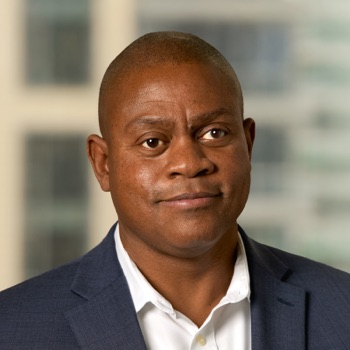
Howard Davis, Ph.D. // CEO, Akamis Bio
He wants to send cancer therapy through your bloodstream and have it find the tumors a needle never could.
Howard Davis, Ph.D. // CEO, Akamis Bio
Most cancer vaccines need a doctor to push a needle straight into the tumor. Howard Davis decided that was the wrong place to start.
At Akamis Bio, the science isn't a molecule. It's a delivery route. The company's T-SIGn platform uses an engineered adenoviral vector that can be dripped into a vein and still home to tumors - including the metastatic ones tucked into compartments no injection can reach. Once there, the therapy instructs the tumor's own cells to manufacture immune-activating payloads. The tumor, in effect, starts producing its own treatment.
The lead candidate, NG-350A, is built to drive a CD40 agonist antibody to express inside primary and metastatic epithelial-derived solid tumors. Davis runs the company from Kendall Square in Cambridge, and he has been blunt about the clock he's running against: the FORTRESS study is where the idea either proves itself or doesn't.
What makes the approach worth watching is the order of operations. Conventional thinking treats the drug as the product and delivery as a logistics problem to solve later. Akamis inverts that. The vector and its tumor-selective switch are the invention; the payload is almost interchangeable. Solve delivery once, and a whole library of transgene payloads becomes deliverable to the same hard-to-reach addresses. That is the difference between a single therapy and a platform - and it is the reason Davis keeps the company's story pointed at the route rather than any one molecule.
He took over a company called PsiOxus Therapeutics in July 2022, rebranded it Akamis Bio, and narrowed its focus. The bet underneath the rename is simple to state and hard to deliver - that the future of immuno-oncology for solid tumors arrives intravenously, not by injection.
A rebrand is rarely cosmetic in biotech. It signals a reset of the story a company tells investors, partners and regulators. PsiOxus had a history and a pipeline; Akamis Bio is the version Davis chose to build around the delivery thesis. The T-SIGn name - tumor-specific immuno-gene - says the quiet part out loud: the platform is engineered to be selective, switching on its payload in tumor tissue rather than broadcasting it across the body. The therapy is designed to deliver multiple transgene combinations at once - cytokines, chemokines, antibodies - for expression by the tumor cells themselves, which is a meaningfully different proposition from a single-payload drug.
Our aim over the next 12-18 months is to deliver clinical proof-of-concept data for NG-350A via the FORTRESS study.
Davis trained first as a chemical engineer at Yale, then went deeper into the biology with a Ph.D. in biomedical engineering from the joint Harvard-MIT Division of Health Sciences & Technology. That combination - someone fluent in both process and physiology - turns out to be unusually well-suited to a company whose entire thesis is about getting a payload to the right address inside the body.
He didn't start in a lab coat. His industry career began in the healthcare practice at Boston Consulting Group, the kind of seat where you learn how drugs become businesses before you learn how they fail in trials. From there he moved through Novartis and Biogen across commercial, manufacturing, pipeline program leadership and corporate strategy. At Biogen he served as VP and asset executive for gosuranemab, an antibody program - a job that is equal parts science, schedule, and salesmanship.
Then he crossed over to the company-building side. As a Principal at Flagship Pioneering, he worked on corporate strategic partnerships and helped spin up new companies. With Atlas Venture he helped launch Third Harmonic Bio, where as COO he owned business development, finance, HR, legal, IP and IT, and led the fundraising that brought in $155 million for the company's lead molecule.
Read the resume backwards and it looks like a deliberate apprenticeship for the job he holds now: the consulting eye, the big-pharma operating scars, the venture instinct for what's fundable, and the engineering brain for what's actually hard about delivery.
It is also a resume built across two of the most demanding addresses in the industry. Flagship Pioneering invents companies for a living, and the discipline there is brutal clarity about why a new venture should exist at all. Atlas Venture, where he helped launch Third Harmonic Bio, plays a similar game from a different angle - assembling teams and capital around a single sharp scientific idea. Davis sat inside both of those machines before running one himself, which means he has watched, up close, how the companies that survive differ from the ones that don't.
Immunotherapy reshaped cancer treatment, but it has stumbled badly against solid tumors. They hide. They build stromal walls. They switch off the immune signals that would otherwise mark them for destruction. Injecting a therapy directly into a tumor works only if you can find and reach that tumor - and metastatic disease, by definition, scatters.
The Akamis approach is to stop fighting the geography. A vector that survives the bloodstream and selectively switches on inside tumor tissue can reach what surgeons and radiologists can't. Earlier clinical data showed a consistent safety profile and sustained transgene expression - exactly the two things that have to be true before any of the rest matters. Davis's framing on the podcast circuit is characteristically plain: the therapy turns tumors against themselves to provoke an immune response.
That phrasing is doing a lot of work. The tumor microenvironment is, in many cancers, an actively hostile place for the immune system - cold, walled off, chemically discouraging to the T-cells that might otherwise do the job. Remodeling that environment from the inside, by having the tumor express immune-stimulating molecules locally, is a way to flip a cold tumor hot without flooding the whole patient with toxic systemic doses. The lead candidate's CD40 agonist payload is meant to do exactly that kind of local activation.
The FORTRESS study puts the theory in front of patients. It is a Phase Ib trial pairing NG-350A with chemoradiotherapy in locally advanced rectal cancer patients who carry recurrence risk factors. Rectal cancer is a pragmatic proving ground: the disease is accessible to standard-of-care chemoradiation, and adding a gene therapy on top creates a clean way to ask whether the new mechanism adds anything. The next year-plus is, in Davis's own words, about proof of concept - the moment when a promising platform either earns its next round of belief or doesn't.
The Series A came in at $60 million, led by Sedgwick Yard, with two of its managing directors joining the board. In parallel, Akamis granted Xuanzhu Biopharma exclusive rights to NG-350A in Greater China - upfront payments, milestones, tiered royalties. For a clinical-stage company, that's two things at once: cash to run FORTRESS, and validation that someone else will pay to bet on the same molecule.
It's the kind of structure Davis spent years learning to build from the other side of the table. Now he's the one signing.
There is a tidy logic to the China deal beyond the cash. A clinical-stage company has finite attention and finite runway. Licensing a single asset into a single large market lets a partner shoulder regional development and commercialization while Akamis keeps its focus pointed at the data that matters most - the readout from FORTRESS. For a CEO who spent time in big-pharma corporate strategy and venture-backed company creation, it is a familiar move executed from the founder's chair: trade breadth you can't fund for depth you can.
Look at the arc and a pattern emerges - not of someone climbing a ladder, but of someone steadily narrowing the question. Consulting taught him how the whole industry works. Big pharma taught him how a single asset is run through commercial, manufacturing and program leadership. Venture taught him how companies are conceived and capitalized. Each stop traded scope for specificity. The job he holds now is the narrowest of all: one platform, one lead molecule, one trial, one window.
That is the strange comfort of a clinical-stage CEO's life. The to-do list is enormous, but the scoreboard is brutally simple. Either NG-350A delivers proof-of-concept data on the timeline he named, or it doesn't. Davis has spent two decades and two engineering degrees assembling exactly the kind of judgment that decision requires - and now he gets to find out, in public, whether the delivery thesis holds.
Chemical engineer first, biologist second. The delivery problem at Akamis is, at heart, an engineering problem - and he's wired for it.
He inherited the company as PsiOxus and runs both the rebrand and the science. Akamis is his name on someone else's foundation.
The whole pitch is the address, not the package: get the therapy to ride the bloodstream instead of being injected into a tumor.
His office sits in Kendall Square - arguably the densest square mile of biotech anywhere on Earth.
Compiled from public sources - Akamis Bio, LinkedIn, GEN News, BioCentury, Crunchbase.
Facts only. Where the record was silent, so are we.