Company Profile · Avatar Software · Est. 2013
Holotech Studios
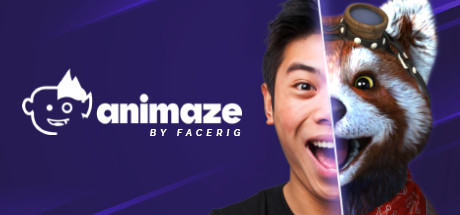
The Romanian-American studio that turned an ordinary webcam into a dragon, an anime idol, or whatever else you feel like being today. Makers of FaceRig and its successor, Animaze.
The Romanian-American studio that turned an ordinary webcam into a dragon, an anime idol, or whatever else you feel like being today. Makers of FaceRig and its successor, Animaze.
There is a genre of technology company that is, essentially, correct about the future but early, and Holotech Studios is a good example of it. In 2013 a group of five veteran game developers - the kind of people who spend their days rigging faces and shading dragons for a living - decided to build software that would map your actual facial expressions onto a digital character in real time. The pitch, more or less, was: have you ever dreamed of being a dragon? On a video call? They put it on Indiegogo. It raised more than twice its goal. This was, to be clear, several years before the word "VTuber" meant anything to anyone.
The product was called FaceRig, and the useful thing to understand about it is that it was slightly absurd and completely serious at the same time. Absurd, because the core use case was letting people appear as cartoon foxes during their livestreams. Serious, because doing that well - tracking a human face through a cheap webcam and driving a rig convincingly, at frame rate, on a normal consumer PC - is a genuinely hard engineering problem, and the FaceRig team happened to be exactly the people who had spent a decade learning to solve it. CEO and co-founder Dragos-Florin Stanculescu had put in more than ten years as a technical artist and technical art director at FUN Labs before this. The whole thing started as an evenings-and-weekends project. It turned into a company.
FaceRig went on to be used by millions of people, including the sort of creators - PewDiePie, JackSepticEye, Good Mythical Morning - whose endorsement is worth more than any ad campaign, because they weren't endorsing it, they were just using it, visibly, in front of enormous audiences. This is the best kind of distribution a small studio can have: a product that creators want to be seen using. And Holotech stayed small. The team is about six people. The revenue is modest. But the surface area is not, because software of this type scales without much need for headcount.
In January 2018, the venture fund SignalFire wrote a $2 million check - a Series A - to expand the product line. That is not a huge sum by the standards of hyped startups, and Holotech is not a hyped startup. It is something rarer and, arguably, more interesting: a company that was right early, stayed lean, and then waited. When the VTuber wave finally arrived - livestreamers all over Twitch and YouTube and TikTok performing as animated avatars - Holotech was already standing on the beach with a working product and years of hard-won experience. Timing you cannot buy. You can only survive long enough to meet it.
The hardest thing a company can do after making a beloved novelty is to turn it into infrastructure, and that is roughly what Holotech attempted with Animaze. FaceRig was a product. Animaze - which entered Steam Early Access in 2020 and hit its full 1.0 release, with native Twitch integration, in November 2021 - is closer to an ecosystem. It ships free-to-play with more than sixty avatars, but the point is that you are not stuck with them: you can import your own models in Live2D, VRM, or Ready Player Me formats, which is to say Animaze made a deliberate bet on being format-agnostic, a place where avatars from anywhere can come to live.
Around the app sits the rest of the machinery. There's the Animaze Editor for building, rigging and customizing your own characters, props and backgrounds. There are mobile apps for iOS and Android. There's a creator marketplace, and - the part that matters most for the company's long-term shape - an SDK that lets other developers drop avatar technology directly into their own iOS, Android and PC apps. That last piece is the difference between selling a tool and building the rails other people's products ride on.
The debut product: real-time webcam face-tracking that maps your expressions onto a 2D or 3D avatar. Used by millions of streamers and YouTubers.
FaceRig's successor. A free-to-play avatar app for livestreaming, video calls and content creation, with 60+ avatars, Twitch integration, and Live2D / VRM / Ready Player Me imports.
A creation suite for building and rigging custom avatars, props and backgrounds - plus iOS and Android apps bringing face tracking to phones.
A creator marketplace and an SDK for embedding avatar tech into third-party apps - the studio's move from product to platform.
Holotech never chased hypergrowth capital. It crowdfunded a prototype, shipped, and took a single institutional round years later. Endurance, in this business, is an underrated moat.
Five veteran game developers launch an Indiegogo campaign for FaceRig that raises over 2x its goal.
The real-time face-tracking software reaches streamers and content creators worldwide.
Funding fuels development and sales for the growing FaceRig product line.
The FaceRig successor debuts to VTubers, with 20+ feature updates over the following year.
Full release adds native streaming support and a broader avatar ecosystem.
Go live on Twitch or YouTube as a 2D or 3D character with native streaming and OBS compatibility - no green screen, no studio.
Drop an avatar into video chats and meetings. Anonymity, play, and expression, all through your existing webcam.
Use the Animaze Editor to create custom avatars, props and backgrounds - or import a Live2D, VRM, or Ready Player Me model you already own.
Developers can license the Animaze SDK to embed real-time avatar tech into their own iOS, Android and PC products.
Dragos-Florin Stanculescu - co-founder and CEO - founded Holotech Studios at the end of 2013 and took the CEO role in 2014. Before that he spent more than a decade at FUN Labs in roles running from texture and FX artist to technical art director, which is the sort of resume that explains why FaceRig looked and performed the way it did. The founding team were five game developers who built the first prototype on nights and weekends.
The company today is Romanian-American: engineering roots in Romania, headquarters in San Francisco, and a team of roughly six people serving an audience many orders of magnitude larger. It's a deliberately small operation built around a playful thesis - that anyone should be able to embody an avatar in real time, and that the tools, the marketplace and the SDK to do it belong in one place.
Real-time avatar and face-tracking software - FaceRig and its successor Animaze - that let people livestream, video-chat, and create content as 2D or 3D characters.
It was founded in 2013 by a group of veteran game developers; Dragos-Florin Stanculescu is co-founder and CEO.
FaceRig was the original 2014 product. Animaze is its 2021 successor, adding Twitch integration, more avatar formats (Live2D, VRM, Ready Player Me), a marketplace, and an SDK.
About $2.31M total, including a $2M Series A from SignalFire in January 2018, on top of its 2013 Indiegogo crowdfunding.
Millions of streamers, VTubers, and creators worldwide - including PewDiePie, JackSepticEye, and Good Mythical Morning, plus virtual beings like PuffPuff.
Sources: Animaze.us · Crunchbase · Tech.eu · BusinessWire · Steam · Animation Magazine