James Hooker arrived at Hack The Box as a player. According to founder Haris Pylarinos, he finished the available content, stayed to help other members, and found a vulnerability in the platform itself. He reported it. The two became friends. Weeks later, Pylarinos offered him a co-founding role. A customer had become a colleague by doing precisely what the product encouraged: looking closely enough to discover something unexpected.
- Practice attacking and defending systems inside controlled labs.
- Use Academy for instruction, then test yourself on unfamiliar problems.
- Give teams repeatable exercises and examine what happens between decisions.
That story explains the company more neatly than a list of features. Hack The Box sells cybersecurity training, but its organizing idea is that expertise becomes visible when someone has a problem to solve. Watching an explanation and finding the answer yourself are different experiences. The company built a place for the second one, then added instruction, credentials, hiring tools, and a business around it.
The ceiling was imaginary
Pylarinos started in 2017 with something modest: a project he wanted for his own hacking practice. In a 2021 interview, he recalled spending roughly two months coding and creating content. Success meant people enjoying it, meeting one another, and exchanging knowledge. At a thousand users he was amazed. At ten thousand, he expected the supply of hackers might begin to run out.
“It took me around two months to code and create the content.”Haris Pylarinos, recalling the beginning in 2021
What failed early was that estimate of the audience. By July 2021, Hack The Box reported 670,000 community members. Its current company page reports more than 4.3 million learners. Those figures measure participation, not paying customers or qualified professionals. Even with that distinction, the founder’s imagined ceiling had disappeared. The challenge became serving people with very different starting points.

A classroom with something to break
The original attraction remains: deliberately vulnerable machines and challenges. A learner investigates a system, works out an attack path, and submits a flag as evidence of progress. The target is provided for practice. You can get stuck, restart, and try again without turning somebody else’s working network into your experiment.
Academy, launched in 2020, supplies the more guided route. Courses and learning paths explain techniques before asking learners to apply them. Labs provide problems; Professional Labs expand the setting into connected enterprise environments, including Active Directory estates. Practical certifications add an assessment layer. The progression makes sense: learn a technique, use it, then demonstrate that you can work through a task.
Each attempt should change the next one.
This places Hack The Box in the market for applied skills development. TryHackMe also offers guided lessons, labs, simulations, and business training. Hands-on learning alone is therefore no exclusive claim. Hack The Box’s distinctive combination is its hacker community, challenge culture, enterprise attack environments, and growing range of defensive exercises. The useful comparison is the work you need to rehearse, rather than which platform has the louder leaderboard.
The defenders get a turn
The customer base reaches beyond individual enthusiasts. Company materials name organizations including Siemens, Electronic Arts, and NVISO among businesses that have worked with it. Governments, universities, and managed security providers are also part of the intended audience. For an employer, the question changes. Someone’s ability to solve a machine is useful; the team’s ability to investigate and coordinate needs its own test.
Hack The Box acquired LetsDefend in September 2025, adding a platform built around simulated security operations work. Its current enterprise offering distinguishes individual SOC practice from full-chain team incident exercises. Crisis Control stretches further, bringing executives, legal, communications, and technical responders into a facilitated tabletop scenario. An engineer may understand the intrusion while everybody else is still deciding who calls the customer.
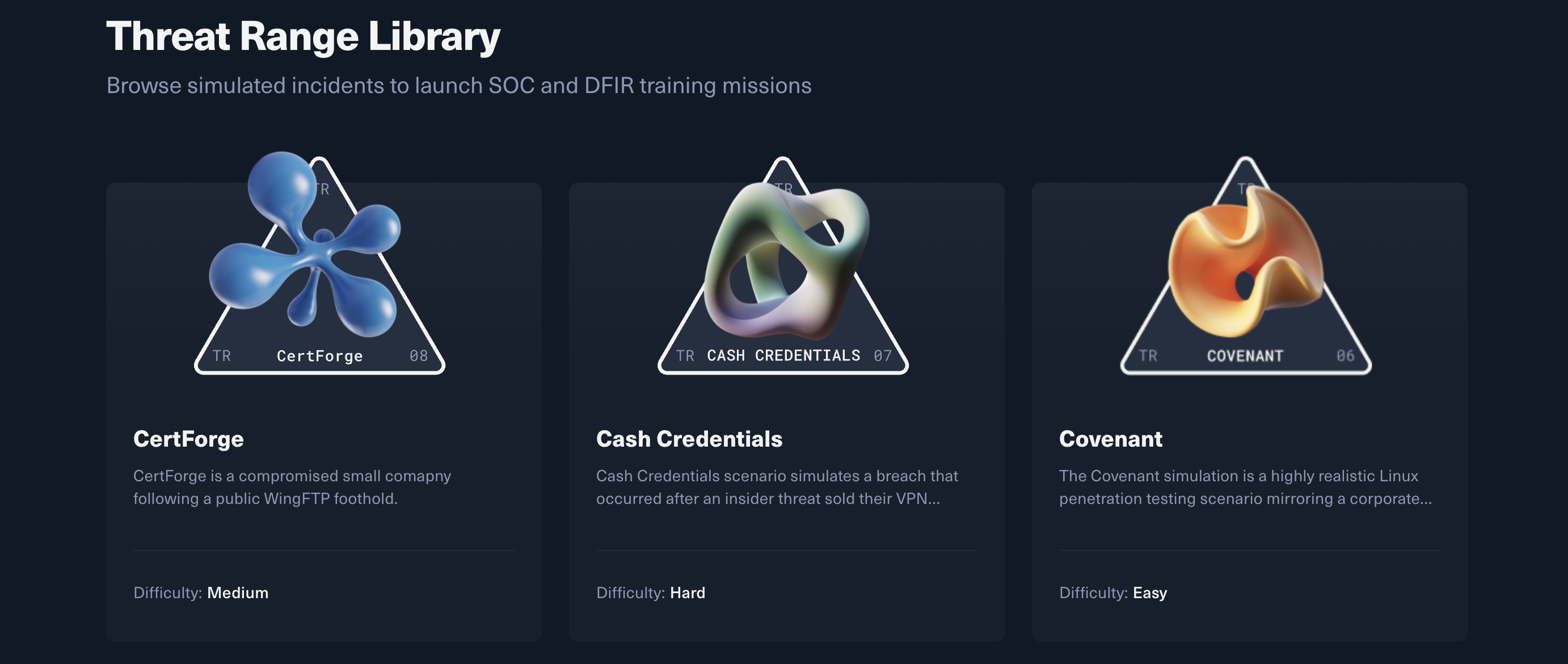
The expansion makes the product less dependent on one kind of hacker. It also makes evaluation more demanding. A quick flag submission cannot tell a manager whether escalation was sensible or whether colleagues shared evidence clearly. The debrief matters because it reveals decisions the score misses.
The people making those problems are part of the story. A March 2024 company article described a 40-person content team, most of them former platform users. It divided the work among community, business, competition, and defensive content. That is a useful feedback loop: people who have struggled through an exercise can recognize where another learner might struggle. It also supplies a recruitment channel. Participation lets the company see technical curiosity before a candidate sits down for a conventional interview.
The price of another attempt
Hack The Box combines free entry material with paid individual access, module purchases, certifications, and enterprise contracts. In April 2021 it announced a $10.6 million Series A. A $55 million Series B, announced in January 2023 and led by Carlyle, supported further product development and international expansion. Investment in the company and the price of a learner’s subscription are separate numbers.
As of October 10, 2026, Academy has announced a pricing change for October 12. The student monthly rate moves from $8 to $10; Silver moves from $18 to $30. Monthly subscriptions will unlock modules within specified tiers instead of distributing fixed cube allowances. Standalone cube purchases remain. The company says learners wanted fewer interruptions from managing balances. Access friction had become a product problem worth changing.
Borrow the rehearsal
There is a practical lesson here for anyone responsible for a team: start with an observed weakness, assign relevant practice, and return to a comparable task. Protect time for the exercise. Ask people to explain the evidence they trusted and the assumptions they abandoned. Those steps are an editorial recommendation drawn from the training model, not a promise of a particular performance gain.
The conditions matter. A leaderboard rewards challenge completion; production work also involves ambiguous evidence, maintenance, and communication. A subscription cannot create practice time, and a walkthrough can let someone finish without learning to choose the next step. Hack The Box provides the setting. The learner still has to do the uncomfortable part: stay with a problem long enough to understand why the first answer did not work.