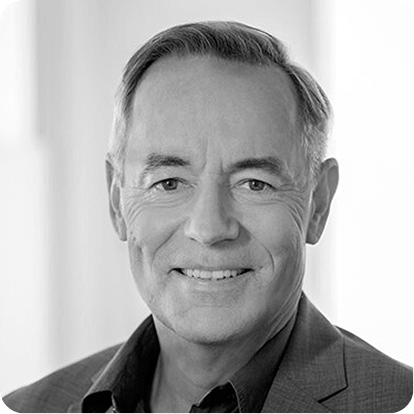
The scientist running toward the hard problems
Gerhard Koenig runs a company that is trying to do something the drug industry has struggled with for years: turn HDAC6 inhibition into a real medicine. As chief executive of Augustine Therapeutics, a spin-off of VIB-KU Leuven with roots in both Belgium and Boston, he leads a small team building highly selective small-molecule inhibitors aimed at severe neuromuscular, neurodegenerative and cardiometabolic diseases. The first target is Charcot-Marie-Tooth, a hereditary nerve disorder that affects thousands of people and still has no disease-modifying treatment.
Koenig took the CEO seat in January 2025, at a deliberate moment. Augustine was preparing to move its lead candidate, AGT-100216, out of the discovery phase and toward a proof-of-concept clinical trial. That transition - from a research company into a clinical-stage one - is where many biotechs either find their footing or fall apart. He did not arrive as an outsider. He had sat on Augustine's board as a non-executive director since May 2022, and stepped up to executive chairman in June 2024 before taking the top job.
"As Executive Chairman I have seen close up the tremendous therapeutic potential of Augustine's best-in-class HDAC6 inhibitors," he said on his appointment, framing the CEO role less as a new adventure than as a natural next step in a company he already knew from the inside.
"Now as CEO, I am excited to lead the business as it transitions into a clinical-stage company... to advance the Company's pipeline into the clinic."
Gerhard Koenig, on taking the helm at AugustineThe reason HDAC6 matters is worth spelling out. It is a cytoplasmic enzyme tied to how cells manage protein clearance and the transport of cargo along nerve axons. Inhibit it selectively, the thinking goes, and you might slow or reverse the damage behind a range of diseases. The catch has always been chemistry. Earlier attempts leaned on chemical structures that carried unwanted liabilities, which made them hard to develop into safe, precise drugs.
Koenig's pitch is that Augustine got past that wall. "At Augustine, we believe we have solved these challenges with a novel non-hydroxamate, non-hydrazide producing chemotype which is highly selective and avoids typical liabilities of prior chemotypes, unlocking HDAC6 inhibition as a therapeutic approach," he said when the company announced its financing. It is a technical claim, but it is the whole wager: better chemistry, cleaner selectivity, a target that finally becomes druggable.
A career built one company at a time
Koenig did not come up as a pure operator or a pure financier. He trained as a scientist first, earning MS and PhD degrees in molecular and cellular neurobiology, with a minor in biochemistry, from the University of Heidelberg in Germany. He graduated summa cum laude. That grounding in the biology of the nervous system runs through nearly every job he has held since.
His early career was inside big pharma, in multiple senior research and development roles at Bayer AG. From there he moved into the venture world as vice president of scientific programs and evaluation at Fidelity Biosciences Group, now known as F-Prime Capital - the kind of seat where you learn to judge which science is worth backing. Then came a run of operating roles: chief scientific officer and senior vice president at FORUM Pharmaceuticals, and chief executive of Quartet Medicine.
The chapter that best explains his current job is Arkuda Therapeutics. Koenig co-founded the Boston company and served as its president and CEO, building it around lysosomal function enhancers for neurodegenerative diseases including Alzheimer's and Parkinson's. In January 2025 - the same month he stepped into the Augustine CEO role - Arkuda's portfolio was acquired by Johnson & Johnson. Founding a company, developing its science, and seeing a pharma giant take the reins is the arc Koenig has now run more than once.
He keeps a hand in the ecosystem that produces companies like these, too, serving as an advisor and entrepreneur-in-residence with Atlas Venture, one of Boston's best-known biotech investors, and sitting on the board of Vigil Neuroscience.
"We believe we have solved these challenges with a novel... chemotype which is highly selective and avoids typical liabilities of prior chemotypes."
Koenig, on Augustine's approach to HDAC6Fuel for the first trial
Ambition in biotech needs financing, and Augustine got a large dose of it. In March 2025, shortly after Koenig became CEO, the company closed a Series A of roughly €78 million - about $85 million - co-led by Jeito Capital and Novo Holdings. The syndicate around them read like a who's who of life-science backers: Asabys Partners, Eli Lilly, AdBio Partners, V-Bio Ventures, PMV, VIB, the Gemma Frisius Fund, Newton Biocapital, and the Charcot-Marie-Tooth Research Foundation, a patient organization with direct stakes in the outcome.
The money has a job. It is meant to carry AGT-100216 through a proof-of-concept clinical trial in Charcot-Marie-Tooth disease and to broaden the pipeline behind it. Two additional programs sit in discovery for undisclosed indications, and the company has openly pointed to cardiometabolic disease as a place its inhibitors could reach beyond neurology.
Illustrative stage overview based on public statements; not a precise development timeline.
Two hubs, one throughline
What ties Koenig's story together is not a single company or a single disease. It is a pattern of choosing hard, unsolved biology and building the vehicle to attack it. His companies have spanned Alzheimer's, Parkinson's, pain, and now rare nerve disease, and his footprint spans Boston's dense biotech corridor and Leuven's academic-industrial cluster around KU Leuven.
He is, by background, more comfortable in the mechanism of a disease than in the theater of a pitch - a neurobiologist who happens to run companies rather than an executive who picked up some science along the way. That shows in how he talks about Augustine: the language is about chemotypes and selectivity and liabilities, the vocabulary of someone who reads the data himself.
The next chapter will be written in the clinic. If AGT-100216 performs, Koenig will have helped validate a target the field has chased for years and delivered a first therapy to patients who have had none. If it does not, he has been here before, and the pattern suggests he will build the next thing anyway.
Common questions
Who is Gerhard Koenig?
A biotechnology executive and trained neurobiologist who serves as CEO of Augustine Therapeutics, with more than 30 years of drug development experience across big pharma, venture and startups.
What company does he lead?
Augustine Therapeutics, a VIB-KU Leuven spin-off with operations in Leuven, Belgium and Boston, developing selective HDAC6 inhibitors.
What did he do before Augustine?
He co-founded and led Arkuda Therapeutics (portfolio acquired by Johnson & Johnson), was CEO of Quartet Medicine, CSO at FORUM Pharmaceuticals, a VP at Fidelity Biosciences Group, and held senior R&D roles at Bayer AG.
What is Augustine's lead program?
AGT-100216, a selective HDAC6 inhibitor being advanced toward a proof-of-concept trial in Charcot-Marie-Tooth disease.
What is his educational background?
MS and PhD degrees in molecular and cellular neurobiology, with a biochemistry minor, from the University of Heidelberg, graduating summa cum laude.