Profile · Healthcare · The Contrarian
Geoffrey Chaiken
He was supposed to be a doctor. Instead he went after the one thing doctors rarely fix - the price tag stapled to the cure.
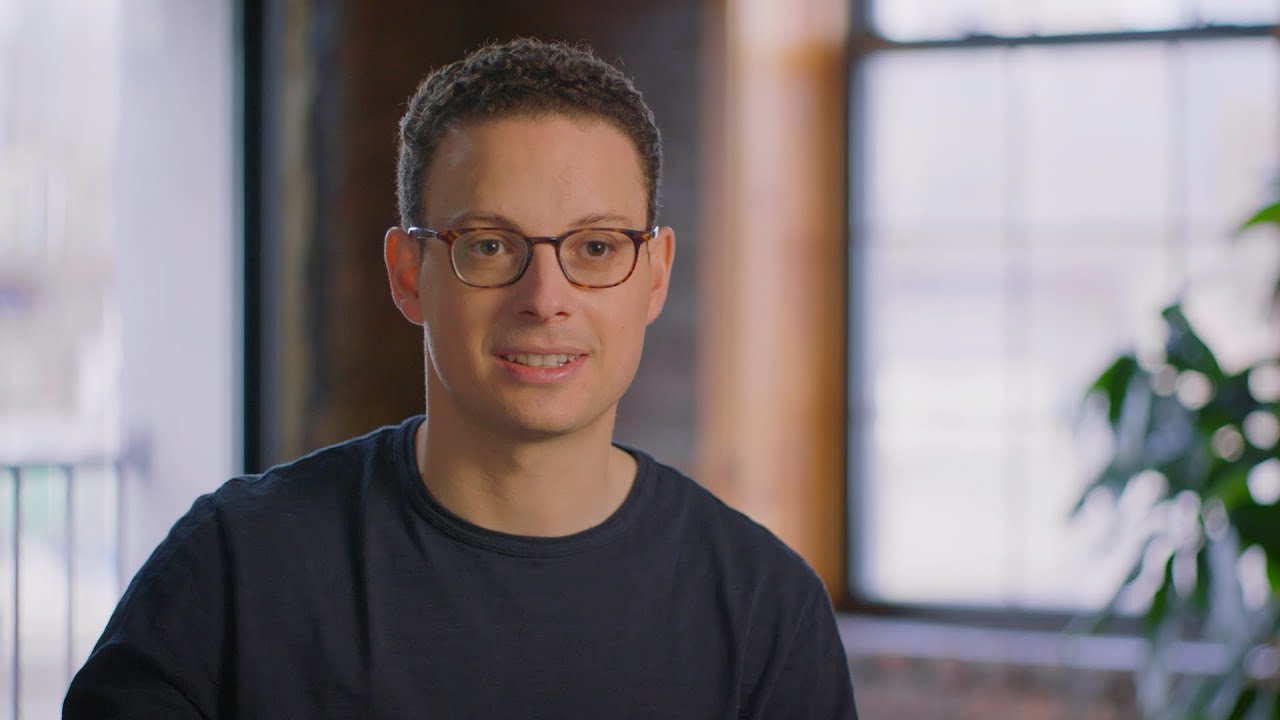
He was supposed to be a doctor. Instead he went after the one thing doctors rarely fix - the price tag stapled to the cure.
Walk into a pharmacy in America and the price you pay is a guess dressed up as a number. A web of middlemen - benefit managers, rebate brokers, networks - sits between the manufacturer and your hand, and each one quietly takes a slice. Geoffrey Chaiken built BlinkRx to delete that web. The pitch is almost rude in its simplicity: let the patient see the real price, pay it online, and pick up the medicine. No theater.
Chaiken is co-founder and CEO of BlinkRx, the New York company that grew out of Blink Health, which he launched publicly in February 2016 with his younger brother Matthew. The product began as a way to pre-pay for cheaper prescriptions; it has since grown into something more ambitious - a platform that digitizes both ends of the drug trade at once. On one side, the patient gets a clean app and a transparent price. On the other, pharmaceutical manufacturers get a direct, software-driven channel to the people taking their drugs. Strip out the friction in the middle, the theory goes, and prices fall while access rises.
What makes Chaiken interesting is not that he is in healthcare. It is that he comes from healthcare's priesthood and walked out of the temple. His father was a physician. So was his grandfather. The family expectation pointed straight at medical school. He pointed somewhere else.
Prescription medications are as vital as food, air, and water, and everyone should have access to the same prices.- Geoffrey Chaiken
When Geoffrey told his grandfather he would not become a doctor, the old man did not argue. He asked a question instead: "How, then, will you help people?" Chaiken has spent the rest of his life answering it.
The seed was planted earlier. He was ten when managed care swept through American medicine in the early 1990s and his father was handed insurance contracts to sign. His father read them and said no - he objected to anything that compromised the doctor-patient relationship. A kid does not understand reimbursement economics. But Geoffrey understood that something was being taken away, and that the people losing it were the patients.
By thirteen he had joined Model Congress, comparing healthcare systems and drafting reform proposals for fun. In college he built a custom major to study why the pharmaceutical industry was so unproductive at getting medicine to people. Then he did the thing curious people do when a question gets loud enough - he went to find the answer in the real world, founding a pharmaceutical company and watching, up close, how badly patients struggled to afford what doctors prescribed.
There is an earlier tell, too. As a young man he wanted to work in the Rockefeller University lab of Paul Greengard, the Nobel Prize-winning neuroscientist. He was turned down. His mother told him to keep at it. He did, and he got in. Tenacity, it turns out, is a load-bearing trait for someone who decided to take on the drug supply chain.
“My father looked at those contracts and said 'no.' He ethically objected to compromising any part of the doctor-patient relationship.”
“The most important challenge in healthcare was not discovering new cures, but ensuring existing cures actually reached patients who needed them.”
“How, then, will you help people?”
Not a straight line. A switchback - science, finance, then the company he calls his life's work.
Interns at Rockefeller University in the lab of Nobel laureate neuroscientist Paul Greengard - after getting in only because he refused to take the first no.
Founds Marinus Pharmaceuticals, a specialty pharma company developing treatments for severe epilepsy. Licenses its lead product and closes a $30M financing round.
Becomes an investor at Brave Warrior Advisors, helping manage roughly $3B with a focus on technology and the pharmaceutical supply chain - the system he would later try to rewire.
Co-founds Blink Health with his brother Matthew.
Launches Blink Health publicly - patients pre-pay online for lower-priced prescriptions, then pick them up at the pharmacy.
Named, with Matthew, to Fortune's 40 Under 40.
Leads BlinkRx deeper into direct partnerships with manufacturers - launching "Operation Access Now" and a December collaboration with Scienture to widen access to a ready-to-use losartan suspension.
Chaiken once described Blink's idea as building a "patient union" - leverage for the many small buyers who, alone, have none. The mechanism is software. BlinkRx wires together prescribers, drug makers, and a national pharmacy network so a prescription can travel from the doctor's note to the patient's door without the usual toll booths.
The model has put BlinkRx at the center of the loudest fight in American healthcare. In 2025, as Washington leaned on pharmaceutical companies to lower prices through direct-to-consumer channels, BlinkRx launched "Operation Access Now," and its name started appearing in the same breath as federal drug-pricing initiatives. Building the rails that connect pharma directly to patients means you end up standing exactly where policy and commerce collide. That is either a great place to be or a very exposed one - usually both.
Through it all, the founding logic has not moved. Chaiken treats medication access as an engineering and business-model problem rather than a scientific one. The cures, mostly, already exist. The plumbing is what is broken. Fix the plumbing - lower the price, smooth the experience, return value to manufacturers so they keep inventing - and the whole system works a little better. It is a deeply unromantic thesis for a man whose family romanticized the white coat. That may be the point.
FACT 01He is the son and grandson of physicians - and deliberately chose business over medicine.
FACT 02He interned under Nobel Prize-winning neuroscientist Paul Greengard at Rockefeller University.
FACT 03He built a custom college major just to study pharmaceutical-industry productivity.
FACT 04Before BlinkRx, he helped manage roughly $3 billion at an investment firm.
FACT 05He calls the company's strategy a "patient union" - collective leverage for individual buyers.
FACT 06His first company, Marinus Pharmaceuticals, tackled severe epilepsy and closed a $30M round.
Sources include CSQ, Aspen Ideas, Fortune, Crunchbase, and Geoffrey Chaiken's own writing. Only publicly reported facts are included. Some figures are as reported and may have changed.