Gajus
Worthington
He built integrated circuits that move blood instead of electrons. Now he wants them to read your brain.
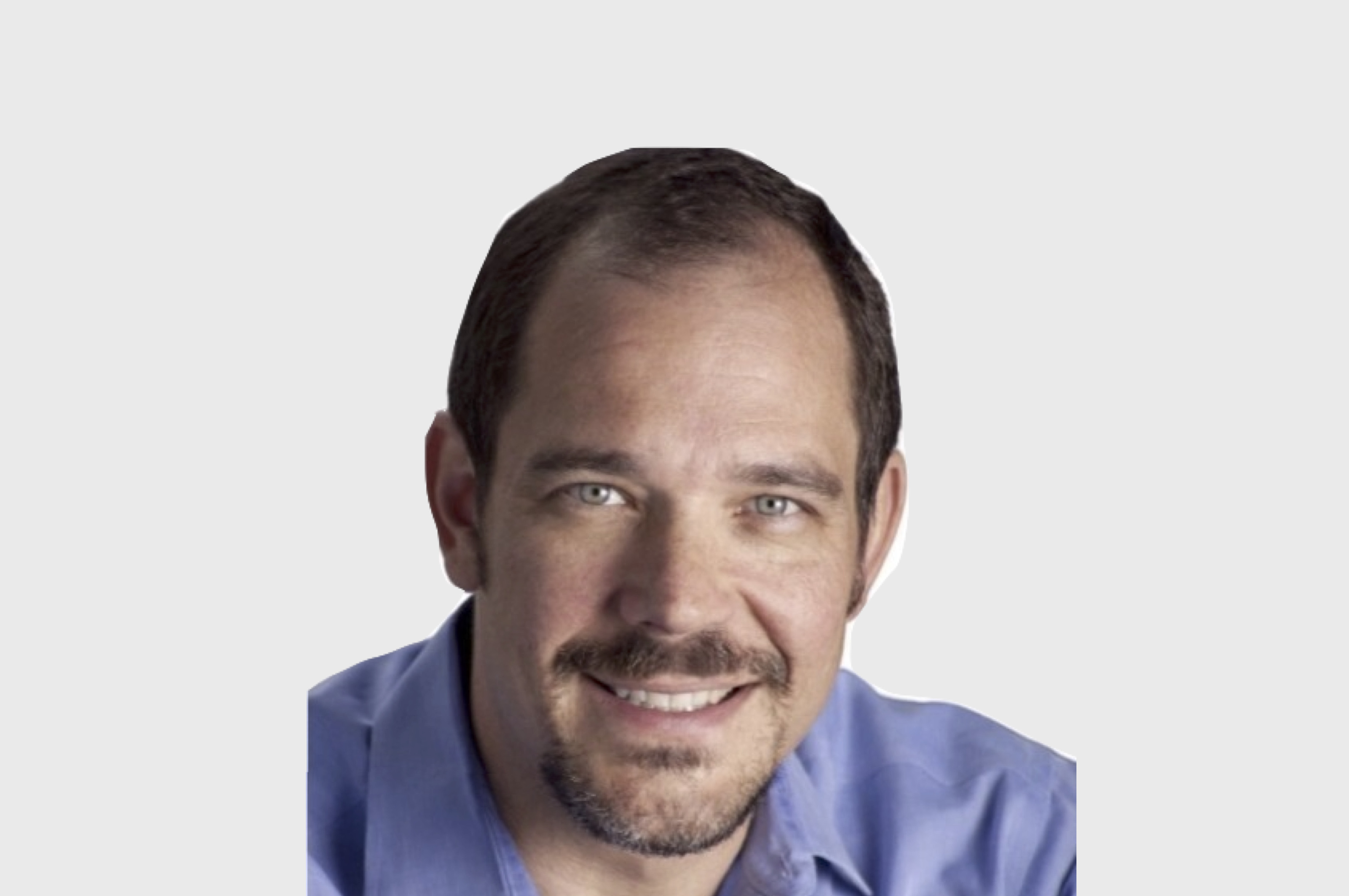
Walk into Superfluid Dx in South San Francisco and the pitch is almost absurd in its ambition: take a tube of blood, fish out the messenger RNA that brain cells quietly shed into the bloodstream, and read it like a transcript of what the brain is actually doing. Gajus Worthington runs the company that thinks this is the future of diagnosing Alzheimer's.
The bet is specific. Existing Alzheimer's tests chase amyloid beta and tau - the plaque-and-tangle proteins everyone has heard of. Worthington's team argues that approach misses up to a third of developing cases and misdiagnoses another third. So they went after a different signal entirely: cell-free messenger RNA, a direct readout of pathology rather than a proxy for it. It is the kind of contrarian, manufacturing-hard idea he has spent a career chasing.
He is not a biologist. He is a physicist and an electrical engineer who learned to treat biology like a fabrication problem - and that lens is exactly what makes his story unusual.
One million Americans per year develop Alzheimer's Disease and the need for a fast and accurate diagnostic test is acute and expanding.- Gajus Worthington, on the Superfluid Dx Series A
A career measured in hard things
Circuits that carry fluid
In 1999 he co-founded a company called Mycometrix with Steve Quake, then a young scientist whose Caltech lab had figured out something strange: you could build the equivalent of an integrated circuit, except the channels routed liquids instead of electrons. Microfluidic large-scale integration. A chip for biology. By 2001 the company had a better name - Fluidigm - and a mission to manufacture devices nobody else knew how to make.
The instruments sold for roughly $200,000 each, and the company became, by 2009, described as the world's leading maker of microfluidic devices. None of it was smooth. An IPO attempt in 2008 collided with the financial crisis and failed. The company piled up nine figures of accumulated deficit. Worthington stayed. In February 2011 Fluidigm tried again and raised about $75 million.
He had come to all of this from semiconductors. From 1994 to 1999 he worked at Actel Corporation, a public chip company, rising to Director of Strategic Marketing and Product Planning before leaving to bet on fluids. The semiconductor habit of mind - yield, process, scale - never left him.
This is a pivotal moment for Alzheimer's Disease diagnostics.
Quake, again
Steve Quake co-founded Fluidigm with Worthington in 1999. Two decades later he sits on the Superfluid Dx board while Worthington runs it. The diagnostic traces back to Quake's lab work at Stanford and Scripps - a long collaboration getting a second act.
Timeline
He keeps starting things
Superfluid Dx
Chairman & CEO. A liquid biopsy reading cell-free messenger RNA from brain cells to diagnose Alzheimer's earlier and more precisely than amyloid/tau tests.
Fluidigm
Co-founder and CEO for 17 years. Pioneered integrated fluidic circuits and took the company public. Now operates as Standard BioTools.
Kaizen Therapeutics
Co-founder. Developing broad-spectrum antivirals.
StatOS
Co-founder. A machine-learning and AI-driven healthcare company.
WRQ Sciences
Managing Partner. The firm that led Superfluid Dx's Series A and acquired majority ownership of its predecessor, Molecular Stethoscope.
Chan Zuckerberg Biohub
Chief Operating Officer for nearly five years, helping build and scale the research organization.
In his own words
What the resume doesn't say
There is a pattern in the work, and it is not subtle. Worthington is drawn to the technology that is hard to manufacture - the thing other people sketch on a whiteboard and abandon because the yield is impossible. Fluid circuits. RNA fished out of blood. He treats biology with the discipline of a chip fab, and he stays through the ugly part of the curve. The 2008 IPO failure did not move him off the project; the deficit did not move him. That is rarer than it sounds.
The other tell is who he keeps working with. The collaboration with Steve Quake has now spanned the better part of three decades and two companies. People who are easy to work with attract that; people who are merely brilliant do not.
He is an elected member of the American Institute for Medical and Biological Engineering - a small recognition that hides a large point. The engineer's medal, awarded for the biology.
His company invented integrated circuits that move fluids instead of electrons.
Trained as a physicist and electrical engineer - then spent a career in life sciences.
Fluidigm's microfluidic instruments sold for around $200,000 each.
Superfluid Dx grew out of a company once named "Molecular Stethoscope."
He has co-founded at least four companies across diagnostics, antivirals, and AI.
The aspiration is plain: a fast, accurate, minimally invasive blood test that catches Alzheimer's the current tools miss - and a platform that turns liquid biopsy into a window on the brain.- The Superfluid Dx mission, as Worthington frames it