The Infrastructure Instinct
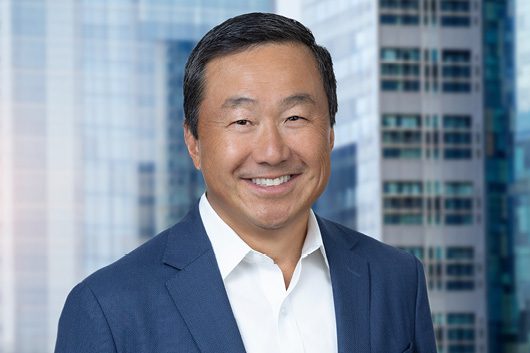
Fred Wang was writing code at Intuit when it had fewer than ten people and no product manager. He became the first one. That was the late 1980s. Today, as a General Partner at Adams Street Partners, he runs growth equity investments out of Menlo Park - backing the infrastructure companies that protect and enable the enterprise. The instinct for what comes next in technology, developed when he was debugging early financial software, has not dulled.
The pattern in his portfolio is legible: cybersecurity, AI infrastructure, data tooling. Companies like Arctic Wolf Networks, Axonius, Snyk, Cyberhaven, and Arize AI. Not consumer apps chasing trends, but the software that other software depends on. When enterprises get serious about AI, they have to get serious about observability. Wang was already there.
In February 2025, Adams Street led Arize AI's $70 million Series C - a bet on AI observability as a category that large organizations cannot ignore. Wang's framing was direct: "We believe AI observability is the missing piece in making AI truly enterprise-ready." Six months earlier he had been on stage at the Asia Investor Conference in Seoul. His institutional LP relationships run deep, and his geographic reach extends well past Sand Hill Road.
"I'm excited to be joining the Adams Street Partners team. Their sterling reputation and their outstanding fund performance were certainly key attractions for me, but the deciding factor was their strong values focused on helping their entrepreneurs successfully grow their businesses."
- Fred Wang, on joining Adams Street Partners (2017)
Before VC, There Was Code
Sometime in the late 1980s, Fred Wang joined a small software company in California that made financial tools for ordinary people. He was the third employee. The company was Intuit - before the IPO, before TurboTax became a household name, before the company grew into a $175 billion enterprise software giant. Wang was there writing code and figuring out product. He invented his own job title.
After Intuit, he moved through Mindscape Inc. and then The Boston Consulting Group, building the strategic and operational fluency that separates operators who become good investors from operators who become mediocre ones. His next move was Spectrum Equity Investors, where he sourced and led investments across multiple technology-focused funds.
Then came Trinity Ventures in 1999 - and eighteen consecutive years as a General Partner. In venture capital, where seven years is a long tenure, eighteen years at a single firm is either a remarkable loyalty or proof that the fit was genuinely good. Probably both.
Two Stanford degrees (Electrical Engineering and Industrial Engineering) plus an MBA from Harvard Business School. The combination - technical depth, systems thinking, and financial fluency - is the exact toolkit for evaluating enterprise infrastructure companies at scale. Not an accident.
The Growth Equity Thesis
Wang joined Adams Street Partners on April 1, 2017. Adams Street is not a typical venture fund - it's a global private markets firm with a multi-strategy approach spanning buyout co-investments, secondaries, private credit, and direct growth equity. Wang sits on the Growth Equity Investment Committee, where his focus is infrastructure software with real commercial traction and significant expansion potential.
His typical check size is $40-50 million - large enough to lead rounds, small enough to remain focused on companies at a specific stage of growth: past the chaos of early product-market fit, not yet mature enough for public markets. It's the gap where technical differentiation meets enterprise sales motion, and where his engineering background gives him a genuine edge in diligence.
"We believe AI observability is the missing piece in making AI truly enterprise-ready."
- Fred Wang, on Adams Street's $70M Arize AI Series C, February 2025