Frank Weishaupt spends his days on the question most companies still cannot answer: how do you run a meeting when half the room is somewhere else? As CEO of Owl Labs, he sells the hardware built for exactly that moment - the Meeting Owl, a tall, wide-eyed device that sits at the center of a table and uses a single 360-degree lens to keep everyone in frame, whoever is talking, wherever they sit.
The product is the easy part to describe. The harder, more interesting thing Weishaupt has built is a point of view. Every year Owl Labs publishes its State of Hybrid Work Report, a survey of thousands of workers that has become a reliable irritant to executives hoping the last few years were a blip. His reading of the data is blunt: the office is not going back to what it was, and pretending otherwise creates more friction than it solves.
"The reality is that offices may never return to how they were pre-pandemic."
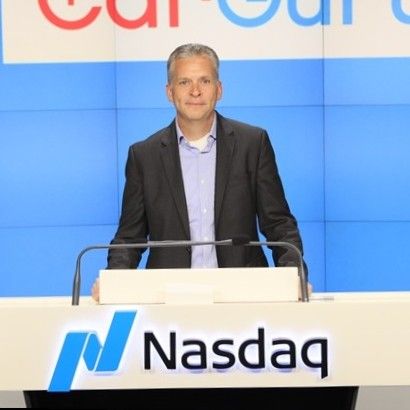
That stance did not come from a career in remote-work advocacy. It came from two decades in sales and operations. Before Owl Labs, Weishaupt held executive roles at Yahoo, ran sales at the retargeting company Criteo through its 2013 IPO, served as chief operating officer at the mobile ad platform Jumptap, and led sales at CarGurus in the run-up to its 2017 public offering. He is, by training and instinct, someone who scales revenue and grows teams. When Owl Labs' founders went looking for a CEO in 2018, that operating background was the pitch.
What he found at Owl Labs was a company whose product only makes sense if you take remote workers seriously. A 360 camera is not a gadget for the people already in the room - it is a promise to the person dialing in that they will not be a shrunken tile in the corner, talked over and forgotten. Weishaupt has turned that promise into something close to a mission.
"I would inspire a movement to never count employees out, period - whether it's age, gender, experience or, in our case, location."
He backs it with numbers rather than slogans. Owl Labs' research has popularized a whole vocabulary for how work is bending: "coffee badging," the practice of showing your face at the office just long enough to be seen before leaving; and "micro-shifting," the quiet reshuffling of the workday into blocks that fit around life rather than a nine-to-five block. Weishaupt uses that data to make an argument he clearly enjoys making - that flexibility has moved past the question of where.
"Workplace flexibility has entered a new era: it's no longer just about where we work, but also when."
It is a message aimed squarely at the return-to-office push. As employers dial up in-office mandates, Weishaupt's surveys keep finding employees pushing back for control over their time - and, notably, hybrid and remote arrangements continuing to take share from fully in-office work rather than fading away. He is careful not to frame it as a war so much as a mismatch: leaders trying to turn back a clock that most workers have already reset.
The engineering side of him shows up in how he talks about the tools. Owl Labs has leaned into AI-driven features - automatic framing, speaker tracking, meeting summaries - and expanded internationally, including a launch into Australia. But Weishaupt tends to route every feature back to the same test: does it make the remote participant more present, or less? For a company named after a bird famous for seeing in every direction, that is a fitting north star.
He also has opinions about the humans running these meetings. In a widely read set of remarks, he laid out the habits bad bosses should drop - a reminder that his interest in hybrid work is as much about management behavior as about cameras and microphones. Good technology, in his telling, cannot rescue a leader who counts people out.
Weishaupt studied engineering at Northeastern University in Boston, the city where Owl Labs is still based. It is a compact company - around 150 people - with an outsized voice in a conversation that touches nearly every office on earth. That gap between company size and cultural footprint is largely his doing: he took a hardware startup and gave it a thesis, then spent years collecting the evidence to defend it.
Where it goes next is the open question. The debates keep shifting - four-day weeks, AI in the meeting room, the slow erosion of fixed hours - and Weishaupt seems content to keep measuring them rather than predicting a tidy ending. His bet is not that any single arrangement wins. It is that the people who insist on flexibility are not going away, and that whoever builds for them, honestly, will be the ones still in the room.