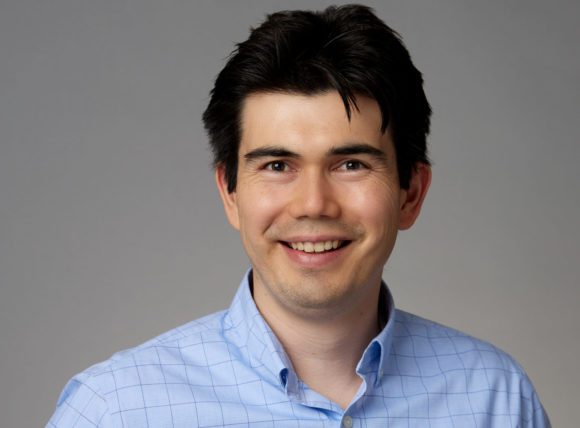
The Rocket Scientist Who Fixed the Gas Station
Frank Mycroft had the kind of resume that makes people at dinner parties go quiet. Princeton aerospace engineering, master's degrees from Stanford, MBA from Harvard. Stints at NASA Goddard, NASA Kennedy, Boeing, McKinsey. Then VP of Strategy at Planetary Resources - a startup building robots to mine asteroids in deep space.
He walked away from all of it because he couldn't get gas safely at midnight.
His wife was pregnant. He was logging 100-hour weeks. And every late-night trip to a gas station felt like exactly the kind of problem that someone, somewhere, should have already solved. As a former private pilot, Mycroft knew planes don't taxi to the pump. Fuel comes to the plane. He spent a few years mining asteroids in a spreadsheet. Then he decided fleets and families were a more immediate opportunity.
In December 2014, Mycroft co-founded Booster with Diego Netto and Tyler Raugh. The idea was simple and strange: instead of building more gas stations, put the fuel on a truck and bring it to where vehicles actually park. Booster's custom mini-tankers show up overnight in corporate parking lots, at fleet depots, and at logistics hubs, filling up vehicles while drivers sleep. No pumps. No plastic gloves. No 11pm drives.
"The supply chain powering transportation is overly reliant on costly fixed infrastructure."- Frank Mycroft, Booster Series D Announcement, 2022
Today, Booster's platform serves some of the most demanding logistics operations in the country - Amazon, UPS, PepsiCo, Facebook, Cisco, Oracle, eBay, and Imperfect Foods, among others. The company has raised over $242 million and grown into a multi-fuel platform delivering conventional gasoline, diesel, biodiesel, renewable diesel, and diesel exhaust fluid directly to fleets anywhere vehicles are parked.
From Orbital Mechanics to Oil Logistics
There's a specific kind of person who does stints at two separate NASA facilities before finishing their undergraduate degree. Mycroft was at Goddard and Kennedy between 2005 and 2006, as part of a research fellowship at Princeton. He graduated in 2007 with a BSE in aerospace engineering, went straight to Boeing as a spacecraft systems engineer, collected master's degrees from Stanford (2009-2010), and then went to Harvard Business School for his MBA in 2012.
Most people slow down after that kind of credentialing. Mycroft joined Planetary Resources, the Eric Anderson and Peter Diamandis-backed venture that wanted to mine water and rare metals from near-Earth asteroids. In 2013 he co-authored a peer-reviewed academic paper on the company's vision - "Planetary Resources - The Asteroid Mining Company" - published in a space journal alongside company founders and aerospace scientists.
He was VP of Strategy there from 2012 to 2015. By then, the sleepless new-father problem had been gestating for a couple of years, and he made the call that often startles people: he left what he called a dream job to start a company that delivers gasoline to parking lots.
"Bold to me is the mindset - it's really in the DNA of who we are."- Frank Mycroft, Booster
That contrast - asteroid ambitions, parking lot execution - tells you something about how Mycroft thinks. The scale of the vision isn't in the headline of the problem. It's in the infrastructure beneath it. The gas station isn't just inconvenient. It's a fixed node in a supply chain that hasn't fundamentally changed since the early 20th century. Mycroft saw a system to reinvent, not just a service to add.
Building Booster: Seven Years of Supply Chain Surgery
Booster was still in stealth mode when it raised $3.1 million from Madrona Venture Group and others in 2015. By 2016, Maveron and Version One were in. By 2017, $20 million in Series B capital had closed under Conversion Capital's lead, and Booster was generating $65 million in annualized revenue - $180,000 per day.
The 2019 Series C brought in $55 million and pushed the company into new markets: Seattle, Washington D.C., Maryland. By the time the $125 million Series D closed in May 2022 - led by Rose Park Advisors, with participation from Equinor Ventures, Mitsubishi Corporation, and Thayer Ventures - Booster had grown Q1 2022 revenues by more than 125% year-over-year.
Funding Timeline
Mycroft has been deliberate about how he thinks about growth. Rather than chasing maximum market coverage, Booster scales to what he calls "minimum viable density" in each market - enough route density to actually validate unit economics before expanding further. That's less a growth hack and more a lesson from aerospace: test under load before you ship.
On regulation, he's taken a similar posture that looks out of step with most tech founders. Rather than treating permitting as friction to route around, Booster engages regulators early - in some cases helping draft legislation, like Washington State's HB 2873 to streamline mobile fueling permits. The philosophy: regulators are ecosystem partners, not obstacles.
"To win and build meaningful partnerships with regulators, you have to start conversations very early."- Frank Mycroft, 20VC Podcast
More Than Gas Delivery
The company's original pitch - fuel delivered to your parking lot - was never the end state. Mycroft positioned Booster early as a platform agnostic to fuel type. The real product is the mobile delivery infrastructure and the software layer on top of it: route optimization, real-time inventory tracking, fleet data analytics, and decarbonization tooling.
By 2021, Booster had entered a strategic partnership with Renewable Energy Group (REG) to supply biodiesel and renewable diesel to fleets through the same mini-tanker network. REG became both an exclusive supplier and an investor. In 2024, Booster partnered with AmeriGas to reduce carbon emissions through mobile fueling solutions, and launched its first international operation in Saudi Arabia with local partner Front End.
Mycroft has described his long-term ambition as making Booster the Amazon of vehicle energy - a platform capable of delivering any fuel type to any vehicle, anywhere it parks. As the fleet industry navigates a complicated transition between diesel, renewable diesel, biodiesel, compressed natural gas, and eventually electric, Booster's contactless delivery model removes the infrastructure overhead of that transition. You don't need a new fueling station for every new fuel type. You need a software platform and a truck.
What Frank Mycroft Actually Says
"Since our founding seven years ago, Booster has been singularly focused on reinventing that supply chain with solutions built on data, mobility and the digital-first experience that customers want."
"Given the extraordinary growth of the 'delivery-of-everything' economy, customers need reliable solutions that enable them to become more carbon-efficient today without compromising on cost or flexibility."
"Let's focus on healthy growth that has the density to drive our hypothesis about how you can actually make money."
"I don't think anything could be farther from the truth of what we're trying to build." - on being compared to an 'Uber for gas'
Achievements & Milestones
Silicon Valley Business Journal 40 Under 40 (2020)
Forbes America's Best Startup Employers (2021 & 2022)
Inc. 2022 Best in Business - Logistics & Transportation
Top Company for Women to Work For in Transportation
3M+ gallons delivered in Booster's first 18 months
125%+ YoY revenue growth, Q1 2022
Co-authored peer-reviewed paper on asteroid mining (2013)
$242M+ raised across five rounds since 2015