BREAKING Quantum Boost founder Filip Auksztol bets against trial-and-error chemistry PhD in atomtronics → AI for the lab bench Claims 50–80% cuts to formulation time Backed by Entrepreneurs First & Inovo VC Oxford materials science · Singapore quantum lab · London HQ BREAKING Quantum Boost founder Filip Auksztol bets against trial-and-error chemistry PhD in atomtronics → AI for the lab bench Claims 50–80% cuts to formulation time Backed by Entrepreneurs First & Inovo VC Oxford materials science · Singapore quantum lab · London HQ
Profile · Founder & Scientist

Filip
Auksztol

He spent years trapping ultracold atoms in rings of laser light. Then he pointed the same precision at a messier target: the slow, guess-and-check ritual of mixing chemicals.

CEO & FOUNDER, QUANTUM BOOST · LONDON

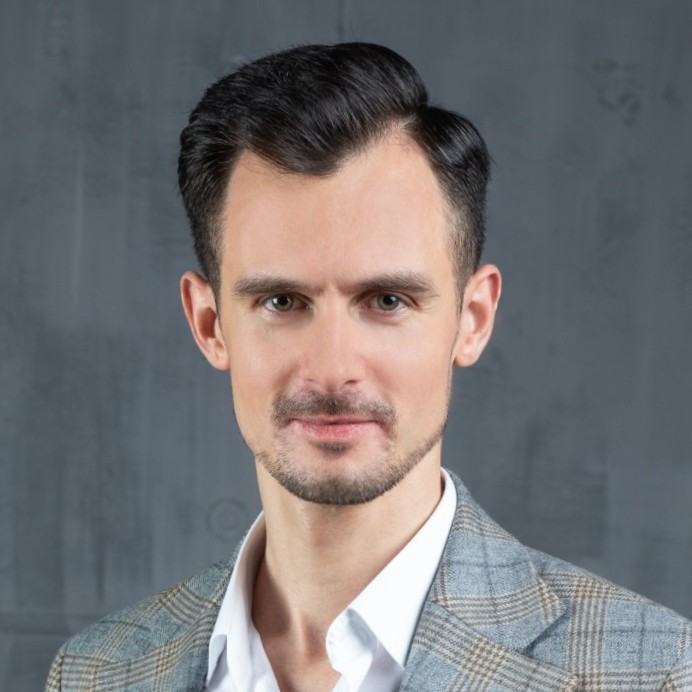
Filip Auksztol, CEO and founder of Quantum Boost Filip Auksztol · QB

The quantum physicist turned founder —
building an AI co-pilot for the lab bench.

The File

Role
CEO & Founder, Quantum Boost
Field
AI for chemical formulation
Training
PhD physics (NUS) · Materials science (Oxford)
Backers
Entrepreneurs First · Inovo VC
Base
Shoreditch, London EC2A
Nationality
Polish

Most founders sell a faster horse. Filip Auksztol is trying to retire the horse - the centuries-old habit of discovering new materials by stirring, waiting, and trying again.

Quantum Boost is a small company with an enormous grudge: against guesswork. Auksztol founded it in 2021 to do something chemists have wanted forever and rarely had - design the next experiment instead of stumbling into it. The platform is, in the company's own words, "your own AI formulation assistant," a system that watches the results of each lab experiment and tells you, with a statistician's nerve, what to mix next.

The pitch is unglamorous and exact. Take a chemist developing an ink, a coating, a drug formulation, a specialty polymer. They have dozens of dials - concentrations, additives, temperatures, ratios - and a near-infinite space of combinations. The old way is intuition plus a lot of failed beakers. Quantum Boost's way is Bayesian optimization: a model that learns from every data point and steers the next experiment toward the answer. The claim that follows is bold and specific - formulation development time cut by 50 to 80 percent, and fewer wasted experiments along the way.

It is the kind of promise that only sounds reasonable coming from someone who has spent years thinking about systems most people will never see. Auksztol is, by training, a quantum physicist. Before he was selling chemists a better way to run their benches, he was building qubits out of cold atoms.

That is the strange, specific fact at the center of his story. The math that now recommends your next paint experiment grew out of a doctorate spent shaping light into traps for matter that behaves like a single quantum wave.

Apply modern AI to formulation, and a chemist can cut development time by 50 to 80 percent - and beat the benchmark while doing it. — The Quantum Boost thesis, in one breath
By the Numbers

A founder measured in unlikely units

0
% faster, claimed*
0
Year founded
0
Research citations
0
Industries targeted

*Quantum Boost states formulation development time can be cut by 50–80% using its platform. Citation count from Google Scholar.

Two Lives, One Method

From cold atoms to wet chemistry

Life One · The Physicist

Light, traps, and qubits

At Singapore's Centre for Quantum Technologies, Auksztol earned a PhD with a dissertation titled "Tailored Optical Potentials for Atomtronic Devices." His papers read like a different universe: superfluid qubit systems in ring-shaped optical lattices, an atomtronic flux qubit made of Bose-Einstein condensates interrupted by three weak links, on-chip coupling of a single-atom-thin MoS2 layer. His listed interests - atomic physics, quantum optics - are the kind that bend light to hold matter still.

Life Two · The Founder

The bench, sped up

Somewhere between Oxford's materials science and Singapore's quantum lab, the thread became practical. Auksztol came out of Entrepreneurs First - the talent investor that pairs technical people and funds the companies they form - and built Quantum Boost. The throughline is consistent: in both lives, the work is designing experiments precisely so reality gives up its answer with the fewest possible tries.

Where It Points

Three industries with a formulation problem

Quantum Boost does not chase consumer hype. It aims at heavy, technical R&D - the places where a single better formulation is worth real money and a year of someone's life. The platform markets itself to three groups, each drowning in combinatorial choices.

The mechanism underneath is the same everywhere: feed in experimental data, let the model learn the response surface, and get back the next experiment most likely to move you toward the target. Less guesswork. Fewer beakers. A shorter road to a product that beats the benchmark.

bayesian optimization experimental design ai analytics r&d acceleration
Inks, paints & coatingsformulation · stability
Pharmaceuticalssynthesis · excipients
Specialty chemicalsprocess optimization

Illustrative emphasis across the three sectors Quantum Boost names as targets. Not a performance metric.

The Arc

A career that refuses to pick a lane

2014
Co-authors "Superfluid qubit systems with ring shaped optical lattices" in Scientific Reports - still his most-cited work.
2016
Publishes "An atomtronic flux qubit" in New Journal of Physics: a ring lattice of condensates with three weak links.
2017
Completes PhD at the National University of Singapore - "Tailored Optical Potentials for Atomtronic Devices."
2019
Co-authors photonics work on coupling an encapsulated MoS2 monolayer in ACS Photonics.
2021
Founds Quantum Boost through Entrepreneurs First; Inovo VC joins the backers.
2023
Presents on applying modern AI to accelerate formulation at a specialty-chemicals industry event.
Footnote

The name is a tell

"Quantum Boost" nods at the world he came from - but the product is resolutely earthbound. No qubits required to use it. Just a chemist, a dataset, and a model that hates wasted experiments.

Footnote

Lean by design

The company has run famously small - reported at two to three people - while taking on bottlenecks that slow billion-dollar chemical industries. A tiny team aimed at an enormous, boring, valuable problem.

He published on Bose-Einstein condensates. His company helps you make better paint. Both jobs are the same job - asking nature fewer, smarter questions. — On the through-line of an unusual resume
The Essence

Why a quantum physicist is the right person to fix your lab

There is a temptation to treat the jump from quantum optics to chemistry R&D as a swerve. It isn't. The discipline that defines both is experimental design - the art of learning the most from the fewest trials. A physicist who has spent years coaxing fragile quantum states into existence understands, viscerally, how expensive a single experiment can be and how much information a good model can wring from each one.

That is the bet underneath Quantum Boost. Chemists, brilliant as they are, often run experiments the way they were taught: one variable at a time, intuition first, a binder of past results that no algorithm ever reads. Auksztol's platform proposes a quiet inversion. Let the data decide where to look. Let a Bayesian model hold the whole response surface in its head and point at the next most promising mixture. The chemist stays the expert; the software handles the combinatorics that no human brain was built to navigate.

The economics are the seductive part. In coatings, in pharma, in specialty chemicals, time-to-formulation is the cost that dwarfs the others. Shave 50 to 80 percent off that, and you have not just saved money - you have changed what a small team can attempt. A research group that could afford to explore three formulations can suddenly afford thirty. That is the real product: not speed for its own sake, but ambition that used to be unaffordable.

It helps that the founder is fluent in the language of skeptics. Auksztol's academic record - peer-reviewed papers, a doctorate, a couple hundred citations - is not decoration. It is credibility with exactly the audience that matters: the technical R&D leads who have seen a hundred "AI will fix your lab" pitches and reflexively distrust them. When the person making the claim has himself sweated over reproducibility, error bars, and the cruelty of real data, the pitch lands differently.

None of this is a finished story. Quantum Boost is small, early, and operating in a market - applying machine learning to materials discovery - that is suddenly crowded with ambition. The company's reported funding has been modest, its headcount lean. But the shape of the wager is clear and unusually honest. It does not promise to replace chemists. It promises to stop wasting their time.

And that, in the end, is the most quietly radical thing about Filip Auksztol. He left a field built on elegant, abstract precision to attack a problem most people find tediously concrete. He decided that the romance was not in the quantum, but in the question: how do you discover something new without burning a year to find it? His answer is a piece of software and a stubborn belief that guesswork had it coming.
Curiosities

Five things that make the picture sharper

01

A physicist turned formulator

He engineered Bose-Einstein condensates before he engineered a business that helps people mix chemicals. The detour is the point.

02

Most-cited for qubits

His top paper is about superfluid qubits in optical lattices - nothing to do with paint, coatings, or drugs.

03

Singapore to Shoreditch

Research roots at NUS in Singapore; company headquarters on Paul Street in London's tech corridor.

04

An EF original

Quantum Boost came out of Entrepreneurs First, the investor that funds talented people before they even have a company.

05

Small team, big target

A two-to-three person outfit aiming squarely at the R&D bottlenecks of multi-billion-dollar chemical industries.

06

Multilingual resume

Oxford, Tokyo Tech, NUS, then a London startup - a career assembled across at least three continents.

Sources: Quantum Boost, Crunchbase, CB Insights, Google Scholar, Entrepreneurs First, Tracxn. Profile compiled from public information. Where claims originate with the company (e.g. "50–80% faster"), they are described as such, not independently verified.