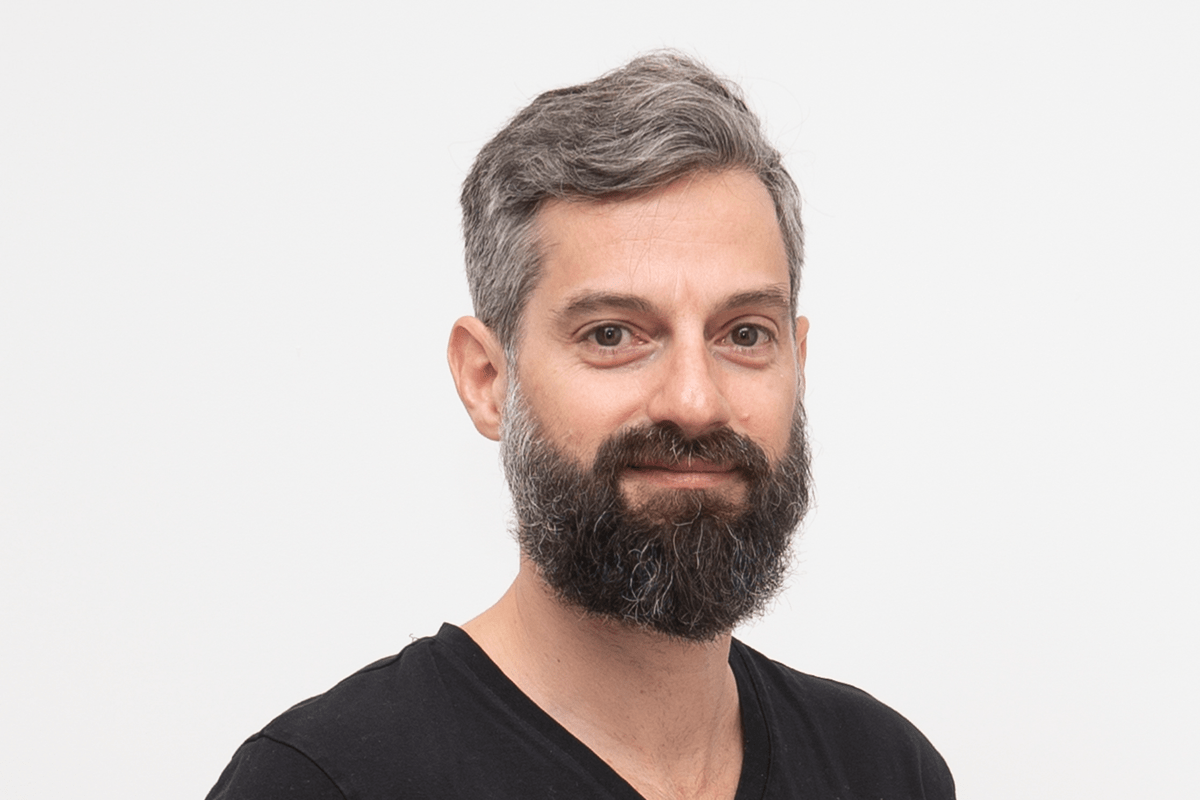
Fabrice Haiat runs a company built around people most software never bothered with: the store associate restocking a shelf, the warehouse picker, the barista, the merchandiser setting up a window display. As co-founder and CEO of YOOBIC, he has spent more than a decade arguing that these frontline workers deserve tools as good as the ones head office takes for granted.
Today YOOBIC is a frontline employee experience platform used by more than 200 global brands, among them Boots, Lancome, Lacoste, Logitech, Peloton, Puma, Vans and Sanofi. Its pitch is simple to state and hard to build: put communication, training and task management into a single mobile app so that the people closest to the customer can actually do their jobs, and prove they did them. The company has raised roughly $80 million to get there, including a $50 million Series C in 2021, and runs its US operation out of an office on Madison Avenue in New York.
Haiat's current preoccupation is a problem he calls, bluntly, pencil whipping. In retail operations, tasks get dispatched to stores, checked off, and reported as complete. Whether the work actually happened is another matter.
Tasks get checked off, but no one actually knows if the work got done. The execution loop is still broken for most operators. Fabrice Haiat, 2026
He describes retailers stitching together handwritten lists, emailed photos and Excel dashboards to answer a question their expensive software should already answer: is the shelf set correctly, is the promotion live, did the audit close. YOOBIC's answer is to connect the moment a problem is spotted to the moment it is fixed, with proof attached. It is unglamorous plumbing, and Haiat treats it as the whole game.
A family that builds companies
YOOBIC is not a solo act. Haiat founded it in 2014 with his two brothers - Avi, who leads engineering, and Gilles, who runs product and user experience. All three trained as engineers at Ecole Centrale Paris, and all three had already built a company together before this one. That earlier venture, Vizelia, was an energy-monitoring software business the brothers grew and then sold to Schneider Electric in 2011.
The sale gave Haiat a corporate detour rather than an exit into retirement. He joined Schneider Electric to lead energy management services in France, then moved up to a global professional-services sales role. In October 2013 he left to start over, and YOOBIC followed the next year. The pattern - build, sell, resist the safe path, build again - is one of the more telling things about him.
From consulting rigor to shop floors
Before any of the founding stories, there was McKinsey. Haiat began his career as a management consultant, and for roughly seven years, from 2005 to 2012, he also taught at ESSEC Business School. The analytical habit shows in how he frames YOOBIC: not as a feel-good mission to be nice to workers, but as a wager that treating frontline staff well is measurably good business.
Store staff are not a resource, they are an asset. The more you invest in them, the better your stores will perform. Fabrice Haiat
He points to flagship stores that have removed individual sales incentives because staff there function as brand ambassadors rather than commission-chasers. Retail, in his telling, is ultimately about people, and experience is what builds loyalty. Technology, then, is simply the thing that makes it feasible for a brand to invest in thousands of associates across hundreds of locations without the effort dissolving into inconsistency.
The AI question, answered sideways
Where many software chief executives now describe AI as a headline feature, Haiat has landed somewhere more contrarian. The interesting thing he sees is not customers wanting more AI for its own sake, but customers using AI as the justification to shrink their tangle of overlapping tools. If one platform can surface what matters in context, the reasoning goes, several other systems become redundant.
Do we even need our separate reporting tool anymore if the platform can surface what matters in context? A major retailer, recounted by Haiat
That framing - AI as a lever for consolidation rather than novelty - is a natural fit for a company whose entire premise is doing several jobs in one app. It also reflects a founder who has been in enterprise software long enough to be skeptical of features that do not change the underlying arithmetic.
Discipline off the clock
Away from the platform, Haiat is a father of three and, by the company's own account, a black-belt karate practitioner and Thai-boxing enthusiast. The martial-arts detail is easy to read too neatly, but the through-line of discipline, repetition and getting the fundamentals right is not a bad description of the product he sells either.
Asked once for the best thing about New York, where YOOBIC planted its American flag, he answered without hesitation: the energy of the city. Asked for the worst thing, he gave the same answer, with a wink. It is a small joke, but it captures the temperament of someone who moved a French-born company into the most demanding retail market on earth on purpose - and seems to enjoy the friction.
What Haiat is chasing, at bottom, is dignity for a workforce that enterprise software forgot, backed by the unsentimental claim that the dignity pays for itself. Whether AI accelerates that or just repackages it, the bet he made in 2014 has not changed: give frontline teams a real platform, and the stores will follow.