Profile / Medical Robotics
Eric Feinstein
He runs Clarapath, the company teaching robots to do one of the oldest, most delicate jobs in the pathology lab: cutting tissue for diagnosis.
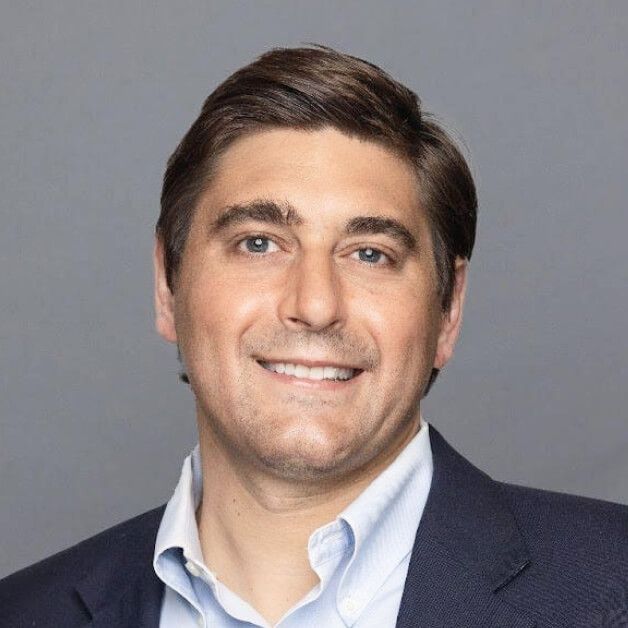
ERIC FEINSTEIN / PRESIDENT & CEO, CLARAPATH
He runs Clarapath, the company teaching robots to do one of the oldest, most delicate jobs in the pathology lab: cutting tissue for diagnosis.
Walk into almost any hospital and the diagnosis of a tumor still hinges on a step most patients never picture. A trained technician takes a block of tissue, shaves it into slices thinner than a human hair, floats those slices onto glass, and hands them to a pathologist. The craft is old, precise, and stubbornly manual. Eric Feinstein, the President and CEO of Clarapath, has spent years building a robot to do it.
Clarapath, based in Hawthorne, New York, makes SectionStar - an FDA-registered robotic microtomy platform that automates the cutting and mounting of tissue samples. Under Feinstein, the company has grown from a research idea into a business with a Mayo Clinic research collaboration, an artificial-intelligence acquisition, and a $36 million Series B round that closed in 2024. The pitch is not that machines are more exciting than people. It is that the people are running out.
Feinstein tends to describe the origin of the problem in flat, unglamorous terms. "There was a very pragmatic sort of problem," he told Westfair Communications, "which is that we don't have enough people to cut the tissue." Since Clarapath was founded in 2014, he notes, the average histotechnician has aged from about 50 years old to 59. Retirements are climbing. Recruitment is not. Testing demand keeps rising. "You have no one actually filling the funnel of talent while people are leaving," he said, "and you've got an increase in demand for testing."
"We're thinking about a bigger, broader Laboratory 2.0. We think about the laboratory as a Lean Six Sigma manufacturing operation."
Feinstein did not arrive by way of a wet lab. He built his career as an investor and advisor across medical devices, software, healthcare IT, and services. He holds an MBA from Cornell's Johnson Graduate School of Management and a BA from Trinity College in Hartford. Before Clarapath he structured investment opportunities at Landmark Partners and Ampersand Capital Partners, worked as a principal at BSV Consulting Group, ran a Northeast transaction advisory and M&A group at RGP, and served as an Investment Director at Northwell Ventures.
That background shapes how he talks about the company. He does not frame the histology lab as a mysterious clinical space. He frames it as a production line with quality problems - variation, bottlenecks, repetitive strain, output that depends on who happens to be at the bench that day. The language of Lean Six Sigma, borrowed from manufacturing, is not decoration. It is the argument. If the lab is a factory, then automation is not a threat to the craft; it is the way to keep the craft consistent when there are fewer hands to practice it.
The device grew out of Dr. Partha Mitra's neuroanatomy research at Cold Spring Harbor Laboratory on Long Island, where processing hundreds of thousands of brain-tissue samples made the manual bottleneck impossible to ignore. After roughly eight years of development, Clarapath's answer condenses nine manual steps into a single automated system that mimics the judgment of an experienced technician while reducing the errors that creep into delicate work like biopsy sectioning.
The goal Feinstein describes is less about spectacle and more about ubiquity. He wants the technology "to provide a new standard in laboratories, to become ubiquitous in every hospital laboratory, as well as research and pharmaceutical." A robot that is impressive once is a demo. A robot that is everywhere and unremarkable is infrastructure.
"As labs adopt digital pathology downstream, automation in prior steps is crucial to establish consistent results and provide best-in-class samples for diagnostic review."
There is a lot of enthusiasm about AI reading pathology slides. Feinstein's contribution to that conversation is a quieter, upstream question: who makes sure the slide is good in the first place? His view is that AI-driven diagnosis is only as reliable as the sample it studies, and that a poorly cut, inconsistent slide undermines whatever algorithm sits downstream. Automation in the earlier, physical steps is what makes the later, digital steps trustworthy.
That logic explains the company's 2023 acquisition of Crosscope, a medical-AI firm building digital pathology software. The move let Clarapath layer a digital and AI platform around its hardware, connecting the moment tissue is cut to the moment it is analyzed. Hardware first, then the software that reads what the hardware produces.
In April 2024, Clarapath announced a strategic collaboration with Mayo Clinic to advance pathology tissue processing - the kind of partnership that signals a serious institution is willing to test robotic tissue handling against real clinical demands. Months later the company closed its $36 million Series B, framed explicitly around transforming laboratory processes that have gone essentially unchanged for a century and a half. Feinstein was named to The Business Council of Westchester's 40 Under 40 Rising Stars along the way.
"Laboratories, like manufacturing plants, need constant innovation and modernization," Feinstein has said. It is a modest-sounding sentence for an ambitious idea: that a slow, careful, deeply human corner of medicine can be re-engineered without losing what makes it careful. Whether Laboratory 2.0 becomes standard equipment or stays a promising bet is still being decided, one lab at a time. Feinstein is betting on infrastructure - the boring, everywhere kind.
There was a very pragmatic sort of problem, which is that we don't have enough people to cut the tissue.
We think about the laboratory as a Lean Six Sigma manufacturing operation.
Laboratories, like manufacturing plants, need constant innovation and modernization.