The Story
The conference that proved the point before it began
In 2016, a handful of women product leaders from Silicon Valley's top companies gathered for dinner. They were testing an idea: could a community dedicated specifically to women in product management actually find an audience? The answer arrived faster than anyone expected. When they announced their first conference, 3,000 people applied for 300 seats. The 10x oversubscription wasn't a marketing problem. It was proof of concept.
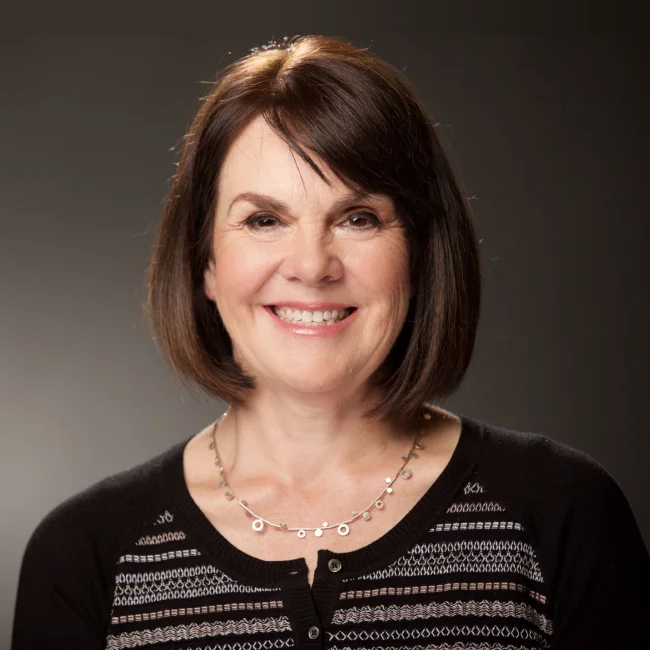
That dinner eventually became Women In Product. And in June 2019, Elizabeth Ames became the organization's CEO - walking into a role she describes with characteristic clarity: "The focus has always been on the women in our community - celebrating, connecting, coaching, and supporting them." Five years later, she handed over a community of more than 34,000 members, 24 active chapters, and a programming calendar that had long outgrown its annual conference origins.
"There are many very talented women product leaders out there who likely aren't on your radar - but you should make an effort to find them."- Elizabeth Ames
What makes Ames unusual in the executive landscape isn't the nonprofit role - it's the path that led there. She holds a BFA from the University of Hartford and an MBA from the Cox School of Business at Southern Methodist University. That arts-to-business arc isn't a quirk in her biography. It shapes the way she thinks about community, about what people need, and about the difference between a room that looks diverse and one that actually functions inclusively.
Before Women In Product, she spent more than five years at AnitaB.org - the organization behind the Grace Hopper Celebration of Women in Computing - as SVP of Strategic Marketing, Alliances and Programs. She joined in 2012 with no prior nonprofit experience. She joined because the mission was undeniable. By 2017, the Grace Hopper Celebration drew more than 18,000 attendees, and Ames was in Orlando talking to reporters about why women in the field care so personally about the next generation: "Women that are in the field care about the women coming up, and they want them to succeed."
That wasn't a press line. It's the animating logic of everything she's built.
Why product management had a gender problem
Ames has a clear-eyed diagnosis for why women have historically been underrepresented in product management: a decade of hiring practices that required Computer Science degrees, without anyone seriously asking whether those degrees predicted job performance. That requirement, which became standard in the mid-2000s, filtered out a generation of women who were qualified by every practical measure but didn't hold the credential. By the time companies started questioning it, the damage to the talent pipeline was structural.
Her prescription is equally direct. First: stop requiring credentials without validating their relevance. Second: recognize that talented women product leaders already exist - they're just not in your immediate field of view. Third: audit your own organization's composition before assuming the pipeline is the problem. When she wrote for Entrepreneur under the headline "The Tech Industry's Real Problem With Diversity Is Clear. It's Not The Pipeline," she was making the same argument: the shortage claim is often cover for something else.
"We'll never encourage women to get into this field if we only focus on the challenges and the obstacles. Just seeing the thousands of incredible, talented, exceptional, groundbreaking women that come to [Grace Hopper] each year is inspiring."- Elizabeth Ames
The career before the cause
Before Ames became the person building communities for women in product, she was an operator moving through Silicon Valley's technology companies in marketing and strategy roles. Apple. Verifone. Netcentives. Vontu. Certive. Plastic Logic. Each company a different moment in the industry's evolution; each role adding another layer to a map of how technology organizations actually work from the inside.
At some point, she founded RETHINK Partners, where she served as CEO - her first time running an organization rather than a function. That experience of building something from the ground up, and of carrying the full weight of an institution's direction, clearly informed how she approached Women In Product. She didn't arrive as an idealist. She arrived as someone who had managed revenue, built teams, and navigated the politics of organizations that weren't designed with her in mind.
That background matters because it changes what "advocate" means when applied to Ames. She isn't advocating from a distance. She's advocating with the vocabulary of someone who sat in those rooms, understood the internal logic, and chose to build the alternative infrastructure anyway.
What she built at Women In Product
When Ames became CEO in June 2019, Women In Product was already past its dinner-party phase, but still largely anchored to its annual conference format. By the time she stepped back in 2024, the organization had become something structurally different: a year-round platform with coaching programs, training initiatives, local chapter events, a podcast, a career center, and a job board.
The membership number - doubling to 34,000 - matters less than what it represents. A community that large, with 24 active local chapters, isn't a website. It's an operating system for a career. For a woman entering product management in 2024, Women In Product represents what didn't exist when Ames was navigating the same landscape: a structured support system built specifically for her.
In 2023, the organization hired Carmen Palmer as its first-ever Chief Product Officer. The intentionality of that hire - adding product leadership to a nonprofit dedicated to product management - reflects how seriously Ames took the institution-building dimension of her role. When she retired in 2024, Palmer assumed the top position with fifteen-plus years of experience in AdTech and Media. The handoff was clean because the institution was real.