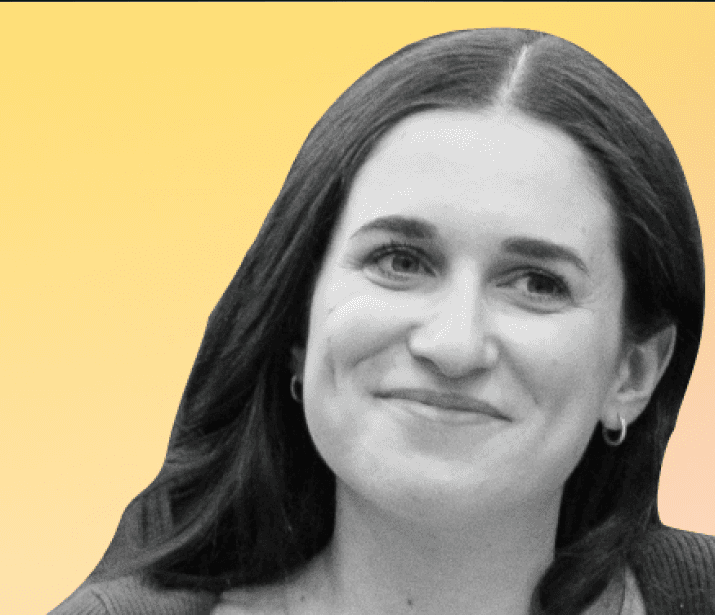
The founder rebuilding healthcare's broken money trail
Eliana Berger runs Joyful Health, a New York company that goes after the part of healthcare finance almost everyone else avoids: the denied and underpaid insurance claims that pile up, get written off, and quietly drain providers. In April 2026, the company raised a $17 million Series A led by CRV, bringing its total funding to $22 million. To date it has processed more than $1.4 billion in transactions and reports a recovery rate above 95 percent across a range of specialties. Berger is the co-founder and CEO.
The pitch is simple to state and hard to execute. American providers lose an estimated $125 billion a year to claims that were denied or paid short, with roughly a 15 percent denial rate and two-thirds of those denials never resolved. Joyful Health builds AI-powered financial infrastructure that reconstructs the full life of a claim - from care delivered to money actually collected - and then chases down what was lost. It does not just hand clients a dashboard. It pairs software with experienced operators who work the claims.
What sets the company apart is how it charges. Joyful Health works on performance-based pricing. There are no upfront costs and no minimum fees. It gets paid only when it recovers money, and typical recovery runs several times its fee. That structure keeps the company honest and lines up its incentives with the clinics it serves, a design choice Berger made on purpose rather than by default.
Why a data problem, not a staffing one
Berger did not arrive at that conclusion from a whiteboard. She and her team spent Joyful Health's first year working alongside clinics as fractional CFOs, embedded across different specialties, doing whatever the practices needed. That meant ordering office furniture, reading EHR data, and helping hire people. What she found again and again was that the money leaking out was not a workflow failure or a headcount shortage. Financial information was scattered across EHRs, billing platforms, clearinghouses, and payer portals, and no single view tied them together. Practices were losing 10 to 30 percent of revenue without realizing it.
That framing - billing as an infrastructure problem - is the core of the company. Connect the fragmented systems into one source of truth, apply AI to spot where claims stall or get shorted, and put operators on the follow-up. The intelligence points to the opportunity; the execution captures it.
A problem she grew up inside
The reason Berger noticed the pattern is personal. She grew up watching her mother and grandmother run an independent therapy practice, where the worry over whether payments would come through never really went away. She first felt the pain firsthand doing their billing by hand. That experience stuck with her, and years later it pulled her back.
Before she was pitching anyone, she was simply helping. Berger spent more than a year as an informal, unpaid consultant across roughly a dozen practices - not selling a product, just solving problems. The trust built slowly and then tipped: clinics started handing her their financial logins, unprompted. That is an unusual kind of permission to earn, and it became the foundation for the company.
How she runs the company
Berger holds a rule that shapes the culture: everyone works the claims. Operations and engineering alike regularly do denied-claims work themselves. Her reasoning is that you cannot build good product for a problem you have never felt. As she puts it, whatever the team builds “has to directly solve real problems in the revenue cycle.” Deep operational knowledge, in her view, is what makes the software actually useful rather than another layer of abstraction over a mess no one on the team understands.
She has framed her approach as going slow to go fast - a year of fieldwork before scaling, so that the product matched the problem rather than a guess about it. It is a patient path in a market that rewards speed, and the recovery numbers suggest the patience paid off.
The road here
Berger has been a “first” more often than most. She was the first product manager on Attentive's conversational messaging team, the first PM at Charlie Health, and a founding PM at Moonbeam. She also co-founded Envision Accelerator, an equity-free accelerator built for underrepresented founders. She studied at Northeastern University and speaks English and Russian natively, along with working Spanish. The thread across those roles is a habit of building things from zero and getting close to the people the product is meant to serve.
The bet now is bigger. If Joyful Health can turn the tangled back office of healthcare finance into something legible - a financial command center that shows providers exactly what happened to their money - it stands to claw back a meaningful slice of that $125 billion. Berger also expects the industry to move toward the model she chose: more AI automation for routine tasks like eligibility checks and claim scrubbing, more machine learning applied to complex denials, and broader adoption of performance-based pricing. She is building for the version of revenue cycle management she thinks is coming, and trying to get there first.
In Her WordsFun and telling facts
She speaks English and Russian at a native level, plus working Spanish.
Joyful Health earns nothing unless it actually recovers money for a provider.
Clinics handed her their financial logins before she ever pitched a product.
Founding or first-PM roles at Attentive, Charlie Health, and Moonbeam.