A surgeon in Santiago. A patient in Panama City. A robot in between.
In March 2026, a neurosurgeon sat at a console in Santiago, Chile and treated a stroke patient more than 200 kilometers away. No shared room. No shared city. Just a steerable robot, a network connection holding steady against latency and jitter, and a company called XCath proving that geography is not destiny when an artery is closing. The man who runs that company is Eduardo Fonseca - and he did not arrive here from a medical school.
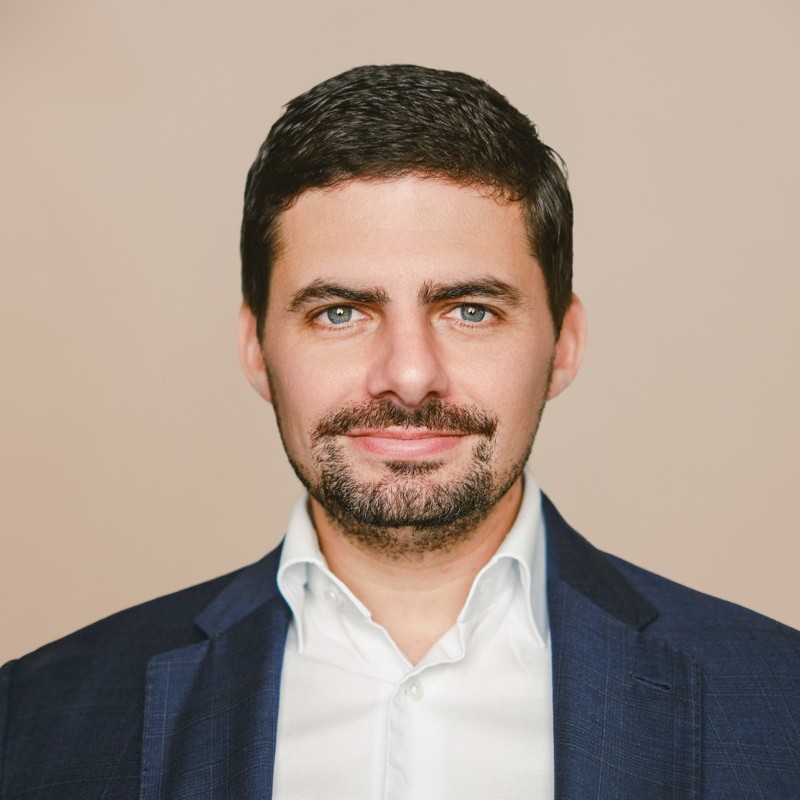
Fonseca is the CEO of XCath, an early-stage company building endovascular robotic systems and steerable guidewires to treat cerebrovascular conditions like stroke. He is also interim CEO of its sister company, EndoQuest Robotics. He runs both from a strange split footprint: Houston, Texas, home to the world's largest medical center, and Pangyo, South Korea, often called the Silicon Valley of Korea. Two time zones twelve hours apart, one mission stitched between them.
The mission is blunt. Every minute, stroke is killing people somewhere, and the treatment that could save them - a mechanical thrombectomy to pull the clot out - exists in only a handful of specialized centers. Most of the planet cannot reach one in time. XCath's bet is that a robot plus a network can carry the specialist's hands across the distance the patient cannot travel.
Robotics makes hard things easier and easy things harder.
— Eduardo FonsecaIt is the kind of line that sounds like a paradox until you have watched a guidewire navigate a brain. The hard thing - threading a vessel with sub-millimeter precision from across an ocean - becomes possible. The easy thing - just being in the room - becomes a problem of cybersecurity, imaging, networking, and trust. Fonseca's job is to hold all of those threads at once.
From state dinners to steerable guidewires
Before the robots, there was diplomacy. Fonseca served as the first Panamanian Ambassador to the United Arab Emirates and the first to Saudi Arabia, roles he held from 2016 to 2019. Representing a small nation in the Gulf is a job of patient negotiation, relationship-building, and reading rooms full of people who do not have to agree with you. It turns out to be unexpectedly good training for running a medtech company that depends on more than 60 physicians across five hospitals all pointing in the same direction.
From the embassy he moved into capital. He became an Investment Director on the Crescent Group investments team and Chief Corporate Development Officer of Gulftainer USA, a ports and logistics operator. Then in 2019 he joined the boards of XCath and EndoQuest Robotics. He watched the technology from the boardroom for four years. In 2023 he stepped down from the board and into the chief executive's chair at XCath. In 2024 he took the interim helm at EndoQuest too.
His credentials read like a deliberate collision of disciplines: an MBA from INSEAD, a BS in Commerce from Santa Clara University, and a seat in the National Association of Corporate Directors. He also sits on the board of HomeWork Mx. None of it is medicine. All of it is about getting complicated systems and complicated people to move together.
Why a non-doctor runs a doctor's company
Fonseca argues that the best medtech does not start with the technology. It starts with the clinical problem and works backward. He has been openly critical of "technology-first" thinking and of endovascular platforms that added complexity without improving outcomes. In his telling, the engineering only earns its place if it makes the procedure better, not just newer.
The CEO who asks what's wrong
Most chief executives sell certainty. Fonseca sells doubt - the productive kind. He says he often asks his team what might be wrong in their approach, and he works to make respectful dissent normal across every level of the company. In a field where a software bug or a network hiccup can have consequences inside someone's brain, a culture where the junior engineer can say "this looks wrong" is not a soft perk. It is a safety system.
Our mission is more important than any specific individual.
— Eduardo Fonseca, on XCath's cultureThat ethic shows up in how he talks about XCath's wins. When the company pulled off the world's first telerobotic neurosurgery, he did not frame it as a founder's triumph. He credited "an exceptional team working alongside more than 60 physicians across five hospitals, all united around a single priority: patients." The company's stated values - diversity, ethics and integrity, hands-on leadership, creative brilliance, resilience and growth - read less like a poster and more like a checklist for not getting people hurt while doing something genuinely new.
XCath's tagline is "Precision at the speed of life." It is the rare corporate slogan that doubles as a job description for the boss.
A string of world firsts
Talk is cheap in medtech; demonstrations are not. Under Fonseca, XCath built a habit of doing the thing in public before anyone else.
In 2024 the company staged the first public demonstration of a remote mechanical thrombectomy - a surgeon in Abu Dhabi operating on a model in South Korea, an entire ocean of latency between hand and instrument. The point was not the model. The point was the distance, collapsed.
In 2025 XCath's endovascular robotic system completed its first-in-human brain aneurysm procedures, moving the technology off the bench and into a real operating room with real consequences. And in March 2026 came the headline that had been building for years: the world's first remote robotic intervention in an actual stroke patient, with the surgeon and the patient in different places entirely.
Each milestone chips at the same wall - the idea that a patient's odds should depend on how close they happen to live to a great hospital.