The radiology cloud nobody is talking about loudly enough.
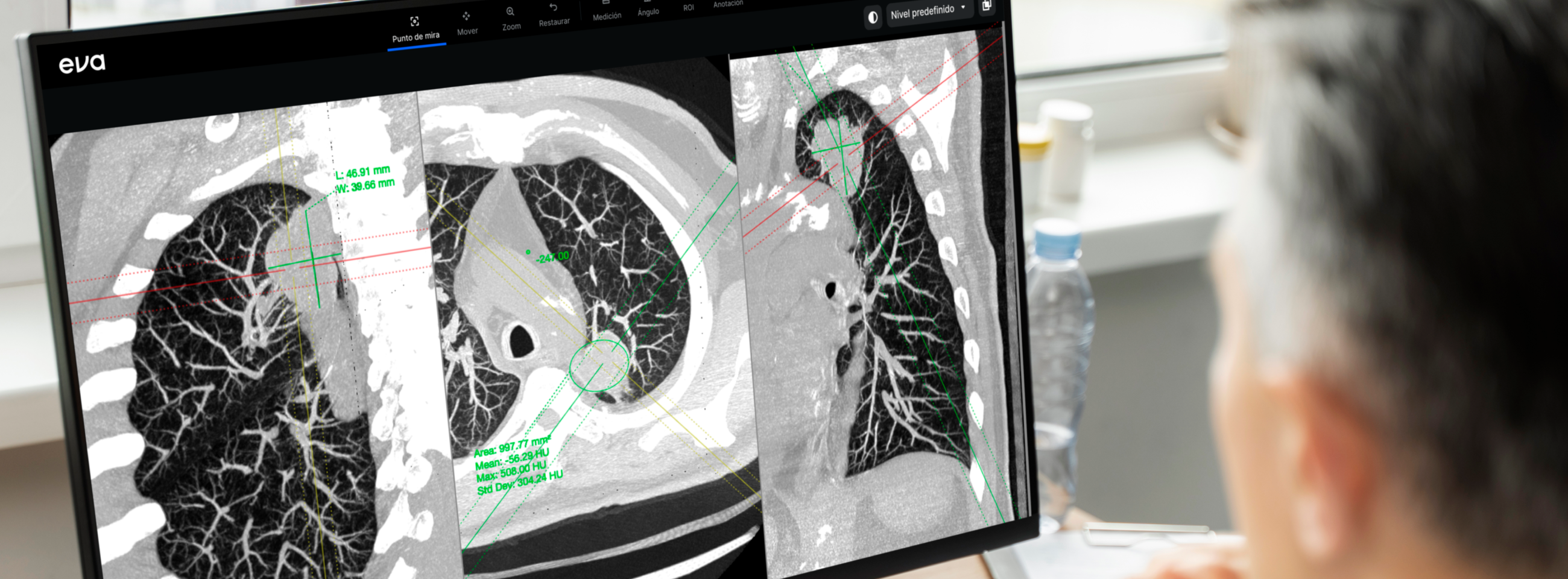
At three in the morning in a hospital outside Guadalajara, a radiologist opens a browser tab and pulls a chest CT off a server in Virginia. The image - 312 slices, 480 megabytes, taken twelve minutes ago in São Paulo - renders in under a second. She marks two suspicious nodules, dictates two sentences, and the report lands in the referring oncologist's inbox before the patient has finished his coffee. The whole thing runs on Eden.
Eden is the cloud Picture Archiving and Communication System, or PACS, that has become the default tech stack for a growing slice of Latin American radiology. It does not advertise itself in airports. It does not have a CEO podcast. It just sits there, processing roughly 3.5 million medical images a day across 17 countries, while the imaging departments that use it report being faster, cheaper and - this is the part the salespeople like - apparently more profitable.
The pitch sounds boring on purpose. The reality is not.
Most medical imaging still lives on a hard drive nobody backs up.
For all the talk of digital transformation in healthcare, a depressing share of the world's diagnostic imaging still lives on local servers in basements, on CDs handed to patients in paper envelopes, and on workstations that crash every other Tuesday. The on-prem PACS market is enormous and largely unloved. Vendors are entrenched. Migrations are scary. Radiology, the most data-heavy specialty in medicine, has somehow remained one of the least cloud-native.
This is the gap Eden walked into. In emerging markets the gap is even wider, because budgets are smaller, infrastructure is patchier, and the consequences of a misplaced mammogram are not theoretical. The reigning PACS systems were designed for a North American hospital with a six-figure IT budget and a fiber line. They are, to put it gently, not optimized for a clinic in Veracruz that just wants to read a knee MRI on an iPad.
It is, in other words, a problem that is both deeply technical and deeply human. The kind of problem founders fall in love with for personal reasons.
A teenager with a cancer story and a very specific obsession.
Julián Ríos Cantú, Eden's co-founder and CEO, has the kind of origin story that journalists tend to overcook. He was eight when his mother was first diagnosed with breast cancer. He was seventeen when he invented EVA, a wearable bra prototype designed to detect early signs of the disease using biosensors that mapped temperature, shape and weight. He won Mexico's Presidential Medal for Science and Technology. He went to Y Combinator in 2018 with $120,000 and a teenager's certainty. The press loved it. The product was harder.
What is more interesting than the bra is what came after the bra. Ríos and his co-founders - Raymundo González, now CPO, and Antonio Torres - looked at the LATAM healthcare system from the inside and concluded that the highest-leverage thing they could build was not another consumer device. It was the unglamorous plumbing underneath all of it: storage, viewing, workflow, AI. They pivoted toward Eden. The cancer-detecting-bra kid became, of all things, a B2B infrastructure founder. Adulthood does strange things to people.
Five things in a trench coat, pretending to be a platform.
What Eden ships is not one product. It is a stack arranged around the radiologist's day. The base layer is Eden PACS, a cloud-native archive and DICOM viewer that runs in a browser and, gleefully, on a phone. On top of that sits Eden RIS, the workflow brain - scheduling, referrals, structured reports, dictation. Layered above that is Eden Intelligence, the analytics module that tells administrators which technologists are bottlenecking which modalities. Then comes Eden Portal, the patient-facing app launched after the 2024 funding round, which lets patients carry their imaging history in their pocket instead of in a manila envelope. And finally there are the AI reading tools - 3D reconstructions, multiplanar views, vessel analysis, automated impressions - the modules everyone wants to talk about and almost nobody knows how to deploy at scale.
Eden PACS
Cloud DICOM storage and a viewer that does not require a $40k workstation to open a study.
Eden RIS
Scheduling, referrals, reporting, dictation. The unglamorous parts of running a radiology department.
Eden Intelligence
Productivity and clinical analytics. Tells you which radiologist reads three times faster on a Tuesday.
Eden Portal
Patient access to the complete imaging history on mobile. Goodbye, CD-ROM. Hello, phone.
AI Reading
3D reconstructions, vessel analysis, AI-assisted impressions, multiplanar reformats.
Apple Vision Pro
Spatial computing for radiology. Yes, the headset. No, it is not just a demo.
A short, opinionated timeline.
Eden is founded in Mexico, originally adjacent to the Higia / EVA project.
Y Combinator backs the founding team. The TechCrunch cycle ensues.
Quiet seed-stage years. Khosla, Kaszek, Hummingbird, Liquid 2, Meridian and others stack in.
Sierra Ventures leads a $10M+ round to push AI and launch Eden Portal.
Radiology workflows announced for Apple Vision Pro. Headlines follow.
Series A closes. Reported around $22M. Total raised approaches $44M.
Customers, numbers, the things skeptics ask about.
It is easy to claim that healthcare software changes outcomes. It is harder to point at the receipts. Eden has a few. The teleradiology firm Telerob reports a 60% increase in remote interpretations after moving its workflow into Eden. Torre Médica, an imaging center, reports a 19% revenue increase, the kind of number a CFO frames. Across the platform, Eden cites more than six million patients served through partner institutions, with the daily image volume now in the multi-millions.
Eden's funding ladder, simplified.
The investor list is the other receipt. Sierra Ventures led the 2024 round and returned for the Series A. Around them sit Khosla Ventures, Kaszek - Latin America's most consequential venture firm - Hummingbird, Y Combinator, Liquid 2, Meridian, Dalus, Alt Capital, MBX and ID345. These are not vibes investors. These are people who have read a lot of medical-imaging pitches and politely declined most of them.
The phrase they keep saying out loud.
Eden's stated mission is to bring exceptional healthcare to everyone. This is the sort of line a comms team would normally bury under thirty layers of irony, but Eden seems to mean it in a literal, almost embarrassed way. Ríos talks about a future in which cancer is non-lethal. The company's internal principles include "fanatical devotion to excellence" and "we care deeply" - phrases that would be obnoxious if the founder had not been eight when his mother was first diagnosed.
The structural choice that flows from this is patient-centricity, a much-abused word that, in Eden's case, has product consequences. The Portal exists because patients in Latin America have historically had to physically transport their own imaging studies between specialists. Eden's commitment to interoperability - DICOM standards, HIPAA-style compliance, ISO 27001, even WhatsApp-based study sharing - reads as a long argument that medical data should follow the person, not the building.
Why this is bigger than radiology.
Cloud PACS is a foothold. The interesting move - the one Eden is positioning for - is becoming the operating layer for radiology across an entire continent and then exporting that playbook. AI models need training data. Training data sits in PACS. Whoever runs the PACS, especially the cloud-native PACS, ends up with a structural advantage no on-prem vendor can match. Eden is roughly three years into that compounding loop, and it is already the largest of its kind in Latin America.
There are obvious risks. Healthcare procurement is slow. Regulation is regional. A US-incorporated, LATAM-operating health-tech sits awkwardly across data-sovereignty regimes that politicians keep changing. The competitive set includes Sectra, Intelerad and the long shadow of Change Healthcare. But the most dangerous competitor for any incumbent is the one whose product is simply better on a phone, and Eden has a head start on that fight.
3:00 AM, Guadalajara. One more scan.
Back to the radiologist outside Guadalajara. She closes the chest CT, opens the next study - a mammogram, this time from a clinic in Querétaro - and reads it without thinking about the server, the country, or the company whose software just made any of this possible. That is the actual point. Infrastructure works when nobody notices it. Eden is the rare radiology product that has earned the right to be invisible.
A teenager once tried to build a bra that could detect breast cancer. The bra did not change medicine. The cloud underneath it might.
Where to find Eden.
- edenmed.com · Official site
- LinkedIn · Eden Medical Global
- Facebook · Eden Med
- YouTube · @edenmed (demos & interviews)
- Y Combinator company page
- Blog · $10M Sierra Ventures round
- Blog · Eden on Apple Vision Pro
- Expansión · Funding coverage
- Mexico Business News
- TechCrunch · The original YC story
- Crunchbase · Julián Ríos Cantú
- LinkedIn · Julián Ríos Cantú