YesPress Profile · AI Audio
ElevenLabs
They gave every voice a global audience. Now they want to give technology a human voice.
Forbes AI 50 · 2025
They gave every voice a global audience. Now they want to give technology a human voice.
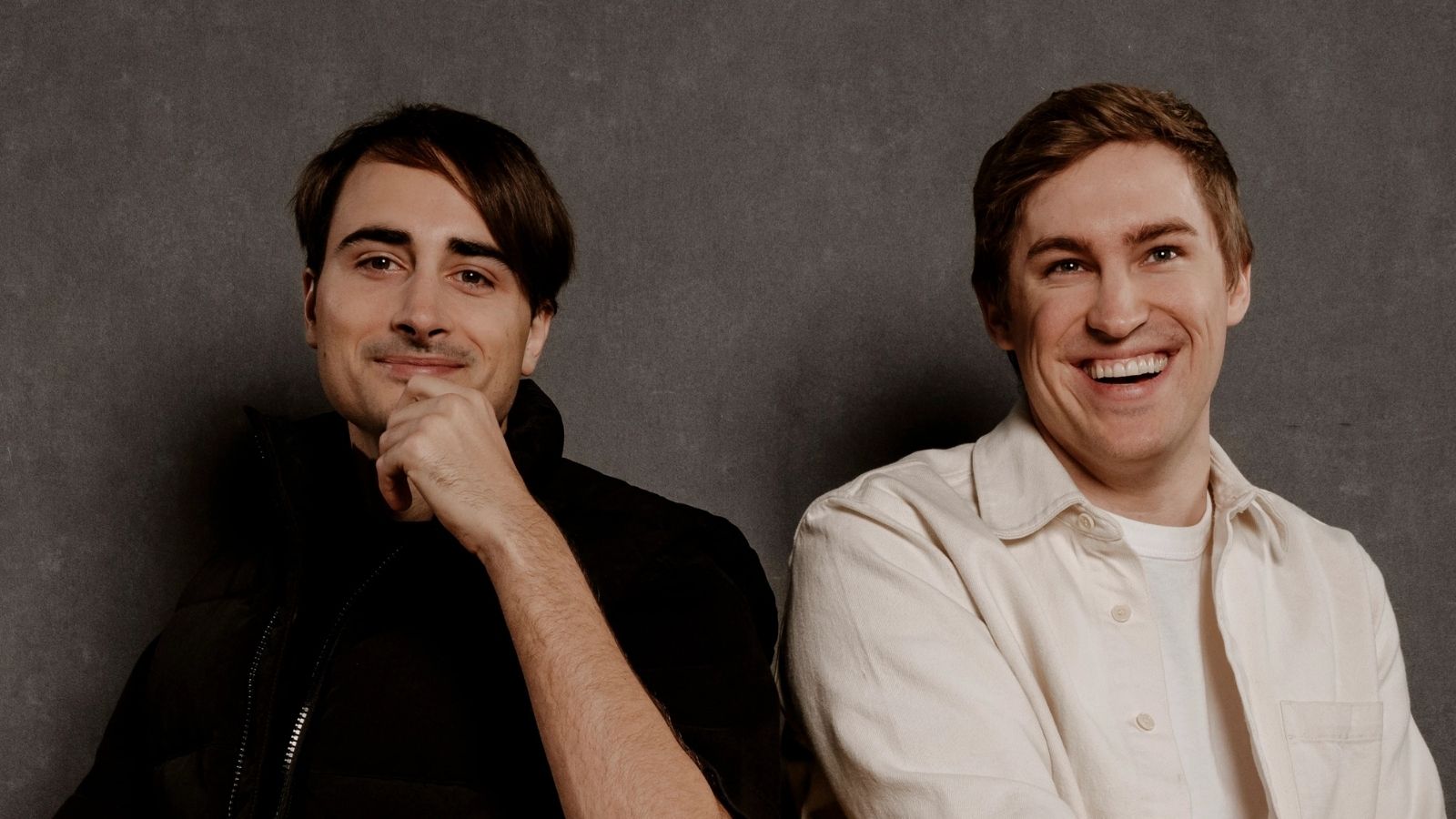
Mati Staniszewski and Piotr Dabkowski grew up in Poland. Like millions of kids across Europe, they watched American movies and TV shows dubbed into their language - stiff, robotic, flat. The performances were good. The voices were not.
They sat with that frustration for years. Then, in April 2022, they decided to do something about it. Staniszewski had spent time at Palantir as a strategist. Dabkowski had done machine learning work at Google. Put them together and you get a company that thinks commercially but builds technically.
ElevenLabs launched in beta in January 2023 with a text-to-speech model that sounded different from anything that came before. Not flat. Not robotic. Emotionally aware. The kind of voice that pauses in the right place, speeds up when excited, softens when the text asks it to.
Within six months they had a million users. Within three years, $200 million in annual recurring revenue and a valuation that crossed $11 billion.
Most voice AI was built to be accurate. ElevenLabs was built to be believable. That single distinction became a $11 billion business.
The commercial brain. Former strategist who understood how to take deep research and turn it into something people would actually pay for. Now leads a company growing faster than almost any SaaS business on record.
The technical architect. Machine learning engineer who built the core models. Cambridge educated, he assembled a team that punches well above its weight - IOI medalists, ex-founders, researchers who could have gone anywhere.
"The goal hasn't changed - the possibility to create content in every language, in every voice, in every sound."- Mati Staniszewski, Co-Founder & CEO
ElevenLabs incorporated in April 2022. Staniszewski and Dabkowski started building what they wished existed: a voice model that understood context, not just text.
ElevenLabs launched in public beta. Initial backing of ~$2M. By June 2023, over one million registered users. Raised $19M Series A led by Andreessen Horowitz, Nat Friedman, and Daniel Gross.
28 languages added. AI Dubbing launched, preserving original voice and emotion across translations. Projects tool released for long-form audiobook creation. AI Speech Classifier launched - an industry first.
Led by a16z with Sequoia Capital. Offices now in London, New York, and Warsaw. Voice Marketplace and Dubbing Studio launched. ARR growing from $25M toward $80M by year end.
ElevenLabs selected for the Disney Accelerator program to explore high-quality dubbing for entertainment. Conversational AI platform launched for developers.
Co-led by a16z and ICONIQ Growth. Strategic investors include Deutsche Telekom, LG Technology Ventures, HubSpot Ventures, NTT DOCOMO Ventures, and RingCentral Ventures.
Hit $100M ARR in 20 months. Then $200M ARR in just 10 more months. Eleven v3 released with 70+ language support, audio tags like [excited] and [whispers]. Forbes AI 50.
Sequoia Capital joins. Cisco and Epic Games among enterprise clients. Company eyes potential IPO. Both founders' net worths cross $1 billion.
Started with one voice model. Now spans agents, creative tools, and foundational audio infrastructure.
The original product. Context-aware, emotionally intelligent voice synthesis across 70+ languages. Eleven v3 supports audio tags like [excited], [whispers], [sighs] for natural performance.
Conversational AI agents for customer service, sales, and support. Processes audio in 100ms chunks. Integrates with HubSpot, Salesforce, ServiceNow, Zendesk. Better.com automated 1.89M mortgage calls using it.
A full creative platform for speech, music, image, and video across 70+ languages. Includes AI Dubbing, Sound Effects, Voice Isolator, and Flows - a node-based visual workspace for creative pipelines.
Foundational audio models via API. Used by companies from startups to Fortune 500s. Enables voice cloning, text-to-speech, speech-to-text, dubbing and more at scale.
iOS and Android app that turns articles, PDFs, ebooks, and newsletters into audio with AI voices. Authors can now publish AI-generated audiobooks directly through the platform.
Speech recognition model with character-level timestamps and speaker separation. Third-party benchmarks put it above Google Gemini 2.0 and OpenAI Whisper on word error rate.
They picked up some notable company along the way.
Generate voiceovers, dub your content into dozens of languages, create audio versions of written work, or clone your own voice for consistent narration across every episode.
Turn books and articles into audiobooks without booking studio time. Publish directly to the ElevenReader app. TIME, HarperCollins, and The Atlantic already do.
Access foundational voice models via the API. Build conversational voice agents, embed TTS into apps, or add real-time speech-to-speech for gaming and virtual worlds.
Deploy voice and chat agents at scale. Automate routine calls, qualification flows, and follow-ups. Better.com automated 1.89M mortgage conversations - and saved 1,600 hours of loan officer time per month.
Localize learning content across languages without re-recording. Build interactive AI tutors. Chess.com, SchoolAI, and Synthesis already use ElevenLabs for audio-driven learning.
ElevenLabs offers free licenses through its Impact program to individuals with accessibility needs and nonprofits across healthcare, education, and culture. The original mission - universal accessibility - still shows up here.
ElevenLabs has faced real criticism. Shortly after launch, users abused the platform to generate fake statements in the voices of celebrities and politicians. Content on platforms like 4chan raised questions the company wasn't ready to fully answer.
In 2024, lawsuits emerged from creatives alleging their voices were used without consent to train AI models. The ethical and legal questions around voice data, consent, and impersonation aren't resolved - and ElevenLabs knows it.
The company responded by building an AI Speech Classifier to detect audio generated by its own models, launched an Iconic Marketplace to ethically license celebrity voices, and invests in AI safety research. Whether these moves are enough is genuinely debated. Voice AI that sounds this good is a capability that requires honest conversation about misuse.
"Our largest potential competition is OpenAI. They will probably also start to build more and more models in audio."- Mati Staniszewski, CEO · Sifted, 2024