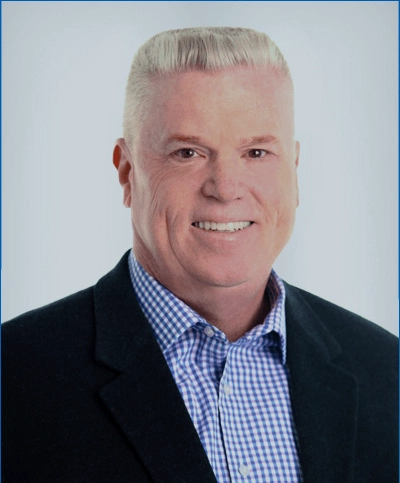
The steady hand behind a secure-computing holdout
Doug Layne spends his days thinking about a problem most people never notice. When you sit down at a work computer, where does the data actually live? For the government agencies, military units, hospitals and banks that buy from his company, the answer matters a great deal. Layne is the President and CEO of ClearCube Technology, a Cedar Park, Texas manufacturer that builds the hardware sitting at the far end of a virtual desktop - the zero clients, thin clients, blade PCs and secure switches designed so that sensitive data stays locked in a data center and never rests on the box under the desk.
It is a specialized corner of computing, and it is one Layne knows from the inside out. He joined ClearCube in 2001 and has been there ever since, which in an industry defined by job-hopping makes him something of an outlier. He arrived on the sales side, moved through general management, and served as Vice President of Global Sales and Vice President of Worldwide Sales & Marketing before taking the top job. More than two decades at a single company is not the usual resume for a technology CEO. Layne built his the slow way.
ClearCube's pitch is easy to state and hard to deliver: secure computing hardware, made in the United States, sold to customers who cannot compromise on where their data goes. The company positions itself as a domestic manufacturer of secure endpoint devices, a message that resonates with government and defense buyers who care about supply chains as much as specifications. Under Layne, that has meant leaning into certifications, custom configurations and the kind of TEMPEST- and government-grade hardware that most consumer technology companies never touch.
Our customers do not have to rely on multiple vendors for different bits and pieces. It offers them a single pane of glass with hardware and software, to efficiently manage their entire deployment.
Doug Layne, on ClearCube's approachProduct decisions that start with a phone call
Layne's engineering philosophy is unfashionably simple: listen to the customer, then build the thing they asked for. When ClearCube shipped a seven-port USB module for its zero clients, the origin story was not a lab brainstorm. It was a request. "Our customers asked us for more USB connectivity options in our existing product lines," Layne said at the time. "We were able to create the USB module to provide a simple, streamlined solution." It is a small example, but it captures how the company operates - close to the people who actually deploy the gear, in field offices, secure facilities and hospital wards.
That closeness is a competitive strategy as much as a personality. ClearCube sells into markets where trust is earned slowly and lost quickly. Government compliance, military-grade security, certified hardware, US-based support: these are the phrases that recur around the company, and they are not marketing garnish. They are the reason a buyer chooses a Texas manufacturer of 57 people over a global giant.
Clearing the cube
ClearCube's name is a small joke with a serious idea behind it. The goal, as the company frames it, is to "clear the cube" of clutter and PCs - to pull the noisy, hackable, hard-to-manage desktop tower out of the workspace and replace it with a quiet endpoint that holds nothing. Desktop virtualization has been promising this for years. What ClearCube offers is the physical layer that makes it real and secure: fiber-connected zero clients, rackmount workstations, secure KVM switches with integrated tokens, and blade PCs built for long enterprise lifespans.
Layne has steered the company through the practical work of staying relevant in that market. In 2018 ClearCube relocated to expanded facilities and opened an operations center in Cedar Park, north of Austin. The company has continued to roll out new generations of its Trusted Zero Client line, keeping pace with the security requirements of the agencies it serves. None of this makes headlines the way a consumer gadget launch does. That is rather the point. Layne runs a business whose success is measured in reliability, not virality.
Our customers asked us for more USB connectivity options. We were able to create the USB module to provide a simple, streamlined solution.
Doug Layne, on customer-led product designThe long game
There is a quiet lesson in Layne's tenure. In a sector that prizes disruption, he has spent 20-plus years compounding expertise inside one organization, learning a narrow market well enough to lead it. He came up through sales, which shapes how he talks about the business - always in terms of what the customer needs, rarely in terms of the technology for its own sake. His stated ambition is expansion: growing ClearCube's footprint as a trusted US maker of secure endpoints, and pushing centralized, virtualized computing deeper into the organizations that need it most.
Away from the company, Layne keeps a lower profile. He lives in the Round Rock area near ClearCube's headquarters, is married, and is a father of three. He is not a public figure in the way that startup founders court attention. His visibility comes almost entirely through the company he leads and the customers who rely on it - which, for a man in the secure-computing business, seems about right.
ClearCube will not be the biggest name in computing. It was never trying to be. Under Layne, it has aimed at something narrower and more durable: being the company a security officer trusts when the endpoint absolutely cannot fail. That is a smaller ambition than changing the world, and a harder one to fake.