A number for the industry's longest bet
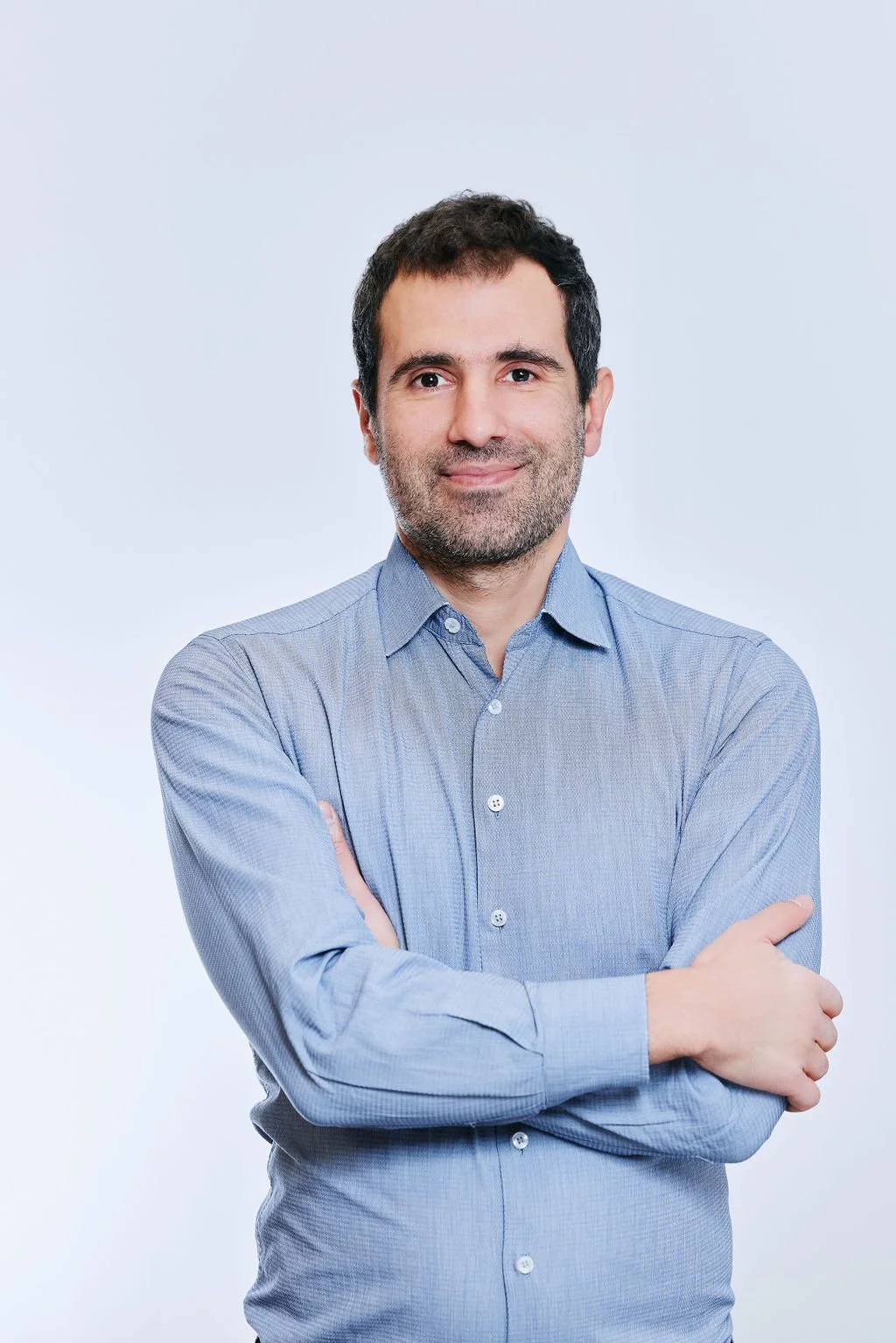
Every day, pharmaceutical companies pour money into drug candidates that mostly will not survive. The odds are brutal: the large majority of programs that enter clinical trials never reach patients. Dimitrios Skaltsas built a company around a quieter, more useful question - can you put a trustworthy number on those odds before the money is spent? That company is Intelligencia AI, and he runs it as co-founder and CEO from New York.
Intelligencia's platform combines a large, hand-curated biomedical data set with machine-learning models that estimate a drug candidate's probability of success - the likelihood it advances through clinical phases and wins regulatory approval. Pharmaceutical and biotech teams use those estimates to decide what to fund, what to license, and where the risk really sits in a pipeline. The pitch is not that AI replaces the scientists. It is that the scientists get a sharper instrument.
That framing runs through everything Skaltsas says about the company. In a market where every startup claims AI will replace something, Intelligencia sells the opposite idea: a decision-support layer for experts who already know the science and need to weigh risk faster and with more evidence. He describes the discipline the market often skips. "Innovation must be visionary and grounded in real-world needs," he has said. "You need to start there before just throwing out AI tools, thinking it's a panacea."
Law, a spinach-pie business, then AI
Skaltsas is Greek, and his route into technology was not obvious. He studied law - his degrees connect to the University of Athens and University College London - and practiced for a few years. Then he went back to school for engineering, a degree he never finished. Somewhere in there he founded a spinach-pie business to bring Greek cuisine to the United States, spent time in Africa with a nonprofit, and eventually earned an MBA from INSEAD. He is blunt about the shape of it.
The through-line he points to is not a field but a motive. "I wanted to do something meaningful, something that would impact peoples' lives in a positive way," he has said. That instinct pulled him toward healthcare, and toward McKinsey, where he advised life-sciences and healthcare clients across North America, Europe and the Middle East on strategy and digital transformation.
The turn came in 2016. Skaltsas took on a role as Domain Lead in Big Data and AI for Pharmaceutical R&D at McKinsey New Ventures, building machine-learning-enabled enterprise products for life sciences. He has called it his "aha" moment - the point where the problem and the tools finally lined up. A year later he left to build the company that idea demanded.
Two Greeks, one pipeline problem
Skaltsas did not build Intelligencia alone. He co-founded it in 2017 with Vangelis Vergetis, whom he met inside McKinsey's healthcare practice. Their backgrounds slot together: Skaltsas trained in law and ran the big-data and AI work for pharma R&D, while Vergetis came from computer science. The split - domain and commercial instinct on one side, technical depth on the other - is the kind of pairing that shows up again and again in durable companies.
Their bet was also a deliberate contrast to the crowd. Many AI startups in pharma promised to discover new molecules. Intelligencia went the other way: partner with pharmaceutical companies, and give them software that reduces the chance of failure in trials they are already running - predicting outcomes and flagging where a program can be improved. It is a less flashy claim, and a more sellable one.
Foundations is a word he keeps returning to - the curated data set, the validated models, the trust of buyers who cannot afford to be wrong. He lists four values behind the work: humility, care, building together, and a commitment to raising the bar. The company has grown into those foundations. It closed a Series A in 2021 and was named one of Forbes's Top AI Companies to Watch that year. In 2024 it won a U.S. patent for its probability-of-success assessments and made its debut on the Inc. 5000 and Inc. Regional Northeast lists.
On building, and on odds
"We've built the industry's most comprehensive, expertly curated data set and developed AI models that accurately estimate the probability of success for drug candidates."
"Innovation is deeply rooted in our core values: humility, care, building together and a commitment to raising the bar."
"Innovation must be visionary and grounded in real-world needs… before just throwing out AI tools, thinking it's a panacea."
"Without perseverance, chances are that one will be lost."
The marathon he ran once
Ask what he does away from the models and the answers stay unconventional. He paints, and has taken part in exhibitions connected with the Metropolitan Museum of Art. He values quiet time in the countryside and hours with family and friends. And he ran the Athens Marathon - once. He describes it as a dream come true and, in the same breath, "too much" to make a habit.
The marathon is a fitting image for how he talks about company-building. When asked what keeps him up at night, his answer is simple and human: the moments when the company's future may be at stake. Perseverance, he says, is the trait that decides whether a founder makes it through those nights. The long run, in other words, is the one he is still on.
Tags
Frequently asked
Who is Dimitrios Skaltsas?
He is the Greek co-founder and CEO of Intelligencia AI, a New York enterprise software company that uses machine learning to estimate the probability that drug candidates will win regulatory approval.
What is Intelligencia AI?
Founded in 2017, Intelligencia AI builds AI models and curated biomedical data sets that help pharmaceutical and biotech companies assess a drug's probability of success and de-risk clinical development.
What did he do before Intelligencia?
He spent more than a decade at McKinsey & Company, most recently leading New Ventures' big-data and AI work for pharmaceutical R&D, after training and practicing as a lawyer.
Where did he study?
He holds law degrees connected to the University of Athens and University College London, and an MBA from INSEAD, where he is now an Executive in Residence.
How much funding has Intelligencia AI raised?
The company has raised roughly $15.5 million in total, including a Series A completed in 2021.