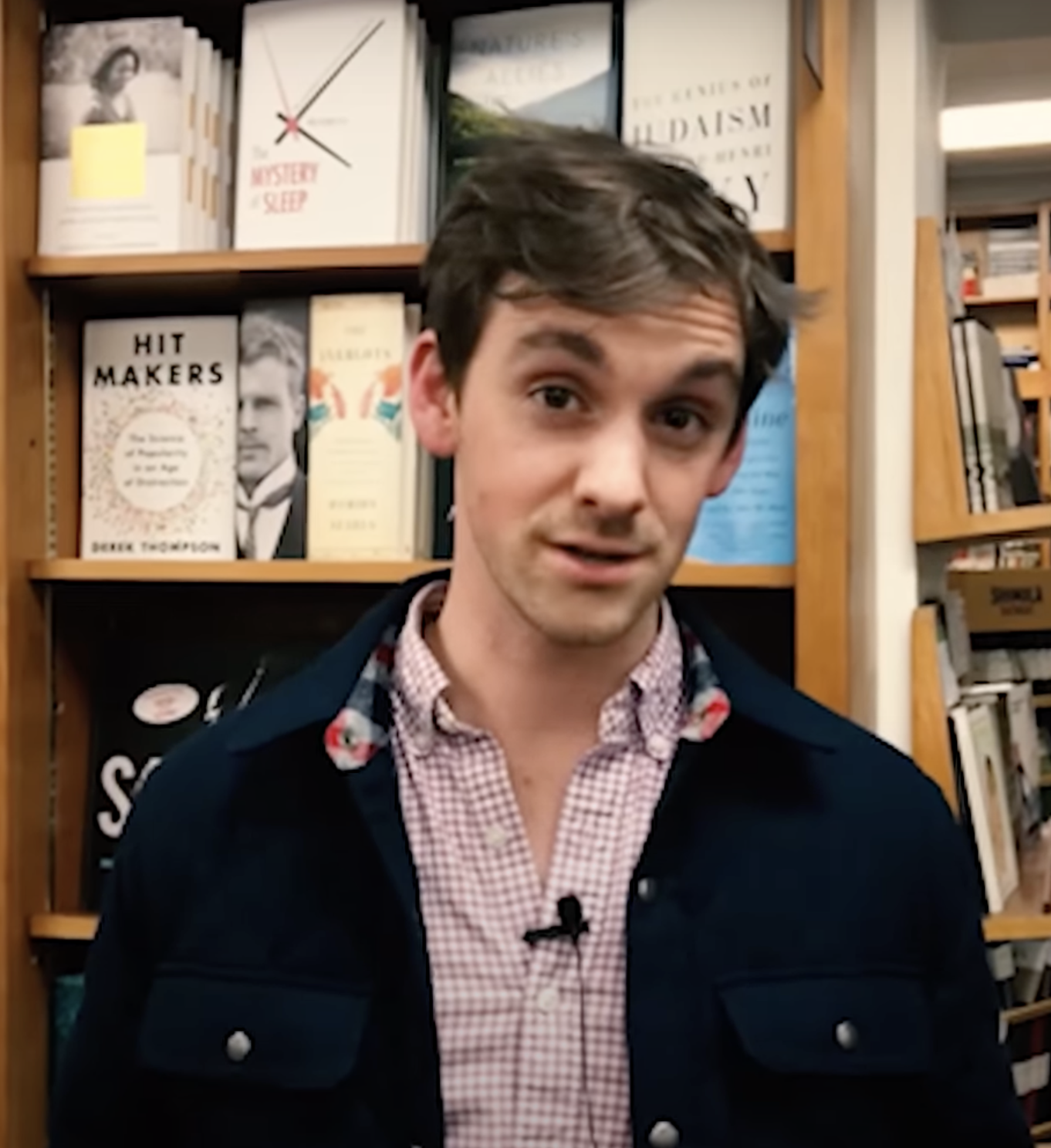
Journalist / Author / Podcaster
Derek Thompson
He spent seventeen years explaining the world from inside one magazine. Then he walked out the door with a thesis, a podcast mic, and a Substack login - and made scarcity the enemy.
He spent seventeen years explaining the world from inside one magazine. Then he walked out the door with a thesis, a podcast mic, and a Substack login - and made scarcity the enemy.
In June 2025 Derek Thompson did the thing nobody with a comfortable byline is supposed to do: he left. Seventeen years at The Atlantic, a staff perch that most journalists would trade a kidney for, and he traded it for a Substack login and an empty cursor blinking on a white page. The reason was not a feud. It was appetite. After almost two decades writing for one masthead, he wanted to write for himself.
That same spring, the book he co-wrote with Ezra Klein, "Abundance," shot to #1 on the New York Times bestseller list and quietly rewired a chunk of American political conversation. The argument is deceptively simple: the shortages that define modern life - housing you cannot afford, energy that is dirtier than it should be, healthcare that rations itself - are not laws of nature. They are choices. Artificial scarcities baked into decades of well-meaning policy. The fix is not to manage the shortage better. It is to build.
"We live in a world of scarcity," he writes. "But there's a better way forward - into a future of abundant housing, energy, innovation, and progress on all fronts." It is the kind of sentence that sounds like a campaign slogan until you realize he has the receipts to back it up.
If you have spent any time around American media in the last decade, you have absorbed Derek Thompson whether you noticed or not. He is the one who wrote "A World Without Work," the Atlantic cover story that made a generation nervous about automation before ChatGPT made it fashionable. He is the one who named "The Anti-Social Century," the 2025 essay that put a label on the slow disappearance of face-to-face life. He has a knack for finding the trend before it has a name and then handing it one.
Every week he sits down behind a microphone for "Plain English," his Ringer podcast that does exactly what the title promises: takes the most tangled story in the news - a drug, a war, a market, a cult - and explains it like a smart friend who actually did the reading. Time put it on its list of the 100 best podcasts. His earlier show, Crazy/Genius, earned an iHeartMedia nomination in its first year.
The throughline across books, essays, and audio is curiosity with a deadline. Thompson is less interested in being right than in being early, and he treats the future as a beat you can report on if you are willing to read enough graphs.
"Everything's utopian until it's reality." Derek Thompson, on the case for abundance
The short version: a kid from McLean, Virginia, triple-majors at Northwestern, talks his way into The Atlantic, and spends the next decade and a half turning economics, culture, and technology into things you actually want to read about. The long version is below.
Housing, energy, healthcare, education - the pillars of a good life, made artificially scarce by policy. His pitch: stop rationing, start building. It became a #1 bestseller and a political fault line.
AI, GLP-1 drugs, clean energy, biotech. Thompson covers the frontier the way other reporters cover city hall - skeptically, numerically, and a beat ahead of the headlines.
His 2025 essay named a quiet crisis: Americans are spending more time alone than any point on record. He treats the decline of in-person life as the social story of the decade.
How to succeed in an age of distraction. A study of why some songs, shows, and ideas catch fire while better ones die quietly. Won the AMA's Leonard L. Berry Marketing Book Award.
Money, Meaning, Identity. An essay collection wrestling with what jobs do to us and what we expect them to give back.
Co-written with Ezra Klein. The #1 New York Times bestseller arguing that scarcity is a choice and abundance is a buildable future.
"There's a better way forward - into a future of abundant housing, energy, innovation, and progress on all fronts." From Abundance, 2025
He is Derek Kahn Thompson - Kahn from his mother, Petra Kahn.
Born in McLean, Virginia, and schooled at The Potomac School before heading to Northwestern.
He didn't pick a major - he picked three: journalism, political science, and legal studies.
Walking away from a 17-year staff job to start over on Substack is the kind of bet his own books are about.