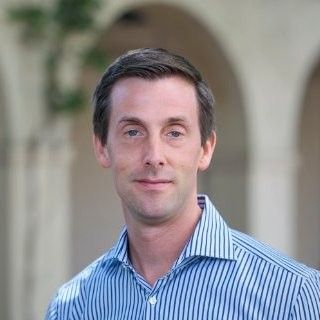
He runs the money so the scientists can chase the cancer.
Dave Licata trained as a mechanical engineer. Two degrees from Stanford, both in machines and forces and tolerances. Today he spends his days on antibody-drug conjugates aimed at proteins called Claudin 6 and Claudin 18.2. The distance between those two facts is the whole story.
Licata is co-founder, President and Chief Financial Officer of TORL BioTherapeutics, a clinical-stage oncology company headquartered in the Los Angeles area. He is also Executive Chairman of 1200 Pharma. He has held the CEO title at both. What he actually does is harder to put on a business card: he builds the structure - the financing, the partnerships, the operating discipline - that lets a discovery become a drug.
That distinction matters at TORL. The science comes from one of the most respected cancer laboratories in the world. Licata's job was to wrap a company around it that could move fast and spend carefully. By the time TORL raised its $158 million Series B, it had spent less than $50 million since inception. In biotech, where companies routinely burn nine figures before a single patient is dosed, that number reads like a quiet provocation.
It helps to know what the company is actually making. An antibody-drug conjugate is two things welded into one. There is an antibody - a guided protein that recognizes a specific marker on a cancer cell - and there is a payload, a toxin powerful enough to kill that cell once it gets inside. On their own, the payloads are too blunt to give a patient safely. Bolted to the right antibody, they become a delivery system: poison with an address. Designing the linker that holds the two together, and the target the antibody hunts for, is where a program lives or dies. TORL's bet is that the UCLA lab knows which addresses are worth delivering to.
A co-founder whose science changed breast cancer.
TORL began in 2018 as a partnership between Licata and Dr. Dennis Slamon, the UCLA oncologist whose research led to Herceptin - a drug that rewrote the survival odds for a whole category of breast cancer patients. When a founder like that hands you a portfolio, the question is no longer whether the targets are interesting. The question is whether anyone can build the machine to develop them.
Through a strategic partnership with the Slamon Research Laboratory at UCLA, TORL was granted exclusive development and commercialization rights to a portfolio of biologics-based drugs. Each one is designed to home in on antigens that cancer cells overexpress - flags the tumor raises that healthy tissue does not. The academic lab finds and validates the target. The company turns it into a therapy. It is a model built to skip the years most biotechs lose searching for something worth developing.
Licata served as CEO through the early stretch, the part where a company is mostly promise. Under his watch, TORL started five Phase 1 clinical trials. Five. Most young oncology companies stake everything on a single shot and pray. Running five simultaneously is an argument about the model itself: if the lab keeps producing validated targets and the company can develop them cheaply, you do not have to bet the firm on any one of them. Then he did something founders rarely do voluntarily: he stepped out of the corner office.
The handoff
In 2024, TORL named Mark Alles - former chief executive of Celgene, one of the larger names in oncology - as Chairman and CEO. Licata moved to become the company's first fully dedicated Chief Financial Officer. Read it one way and it looks like a demotion. Read it the way the people who build companies read it, and it looks like a founder who cares more about the drug reaching patients than about the title on the door.
Four programs, named like coordinates.
TORL's drugs carry codenames that look like map references. TORL-1-23. TORL-2-307. Behind each is an antibody-drug conjugate - a targeting antibody bolted to a cancer-killing payload, engineered to deliver the toxin only where the tumor lives.
Three rounds, one discipline.
The funding history is the clearest fingerprint of how Licata operates. TORL launched publicly with $158 million in Series B financing led by Goldman Sachs Asset Management, with Bristol Myers Squibb, Deep Track Capital and Vertex Ventures HC among the backers. An oversubscribed $158 million Series B-2 followed. Then, in October 2025, a $96 million Series C - announced alongside updated Phase 1 data for TORL-1-23 at the ESMO Congress in Europe.
Why the structure is the strategy.
Most biotechs are built around a molecule. TORL is built around a relationship. The exclusive tie to the Slamon Research Laboratory gives the company a renewable supply of targets rather than a single asset to ride or bury. A discovery validated in an academic lab arrives further along than one started from scratch, which compresses both the timeline and the cost. That is the engineering insight hiding underneath the biology: design the system so the expensive, uncertain part - finding something worth developing - is solved before the company spends its venture dollars.
Licata has been explicit that the structure was the point, not an accident. Calling it “an original, capital efficient structure” is the language of someone who thinks about a company the way an engineer thinks about a mechanism: how few moving parts can produce the most reliable output. The proof is in the spend. Reaching a $158 million Series B on under $50 million of lifetime burn is not a rounding detail. It is the entire thesis, expressed in dollars.
It also explains the willingness to share the wheel. A founder protecting his ego optimizes for control. A founder optimizing for output recruits the person most likely to get a drug across the line and hands them the title. Bringing in a former Celgene chief executive while keeping the financial controls himself is the structural move repeated at the level of people.
CATALINA: the program that matters most
The clearest test of the whole approach is TORL-1-23, the Claudin 6 antibody-drug conjugate aimed at platinum-resistant ovarian cancer - a setting where patients have run out of good options. The pivotal Phase 2 study, CATALINA-2, began in late 2024 and is steering toward a pivotal data readout in 2027. A confirmatory Phase 3, CATALINA-3, is slated to start in 2026. Updated Phase 1 results were presented at the 2025 ESMO Congress in Europe, the kind of stage where oncology programs earn their credibility in front of the people who prescribe.
For Licata, the Series C exists to fund exactly this stretch - the move from interesting early data to the registration-enabling studies that turn a candidate into an approved medicine. It is the most expensive and least forgiving phase of the journey, and it is where the capital discipline of the early years is supposed to pay off.
From dental scanners to worm biology to oncology.
Licata's path to cancer drugs ran through some unexpected rooms. He spent his early leadership years at Arges Imaging, a dental imaging company - first as CEO from 2009 to 2011, then as general manager after it became part of Sirona Dental Systems, through 2015. It was an education in shipping a real product and running a real operation.
From 2015 to 2017 he was an Entrepreneur in Residence at Caltech, sitting at the seam between academic discovery and company building - exactly the seam he would later work at TORL. In 2017 he founded and chaired Holoclara, a company built on the therapeutic potential of helminth biology. Yes, worms. The idea that the human relationship with parasitic worms might hold clues to treating immune disease is the kind of bet that sounds eccentric until it doesn't.
Then came 1200 Pharma, where he remains Executive Chairman, and TORL. The throughline across all of it is not a scientific specialty. It is a temperament: find the discovery, build the structure, keep the burn rate honest, hand off the wheel when someone better suited can drive faster.
Fun facts & the strange specifics.
Two Stanford degrees in mechanical engineering - then a career in cancer biology. He builds companies the way engineers build systems.
Dr. Dennis Slamon's research led to Herceptin, one of the defining breast cancer therapies. That is the lab TORL was built around.
Before oncology, he founded Holoclara - a company exploring the therapeutic potential of helminth biology.
He recruited a former Celgene CEO to run the company he founded, then took the CFO seat himself.