The blind spot everyone walked past
Danny Brickman built a company around a question most security teams could not answer: who, or what, is actually logging into your systems?
Ask Danny Brickman where his career started and he goes back further than most founders would. Before the funding rounds and the Fortune 500 logos, there was a kid taking apart computers. “My fascination with computers and ethical hacking began at a young age,” he says. That thread - curiosity about how systems break - runs straight through everything that followed.
It led him into the Israel Defense Forces, where he spent 11 years and rose through the cyber ranks: Head of Cyber R&D Department, Cyber R&D Course Commander, Cyber R&D Team Lead. He was selected for Talpiot, the IDF program reserved for its most promising technologists. Along the way he and Amit Zimerman, the man who would later become his co-founder, earned the Israel Defense Prize for a national-level cybersecurity project. The military taught him to look at a problem and ask what everyone else was missing.
His academic path was unusual for a security founder. Brickman holds a master’s in biomedical engineering from the Technion and a bachelor’s in computer science and physics from the Hebrew University of Jerusalem. He briefly stepped outside security entirely, leading product strategy at Buildots, a construction-technology startup. But the pull toward identity and access never really left.
NHIs now outnumber human identities by a factor of 20x, creating a massive attack surface that must be secured.
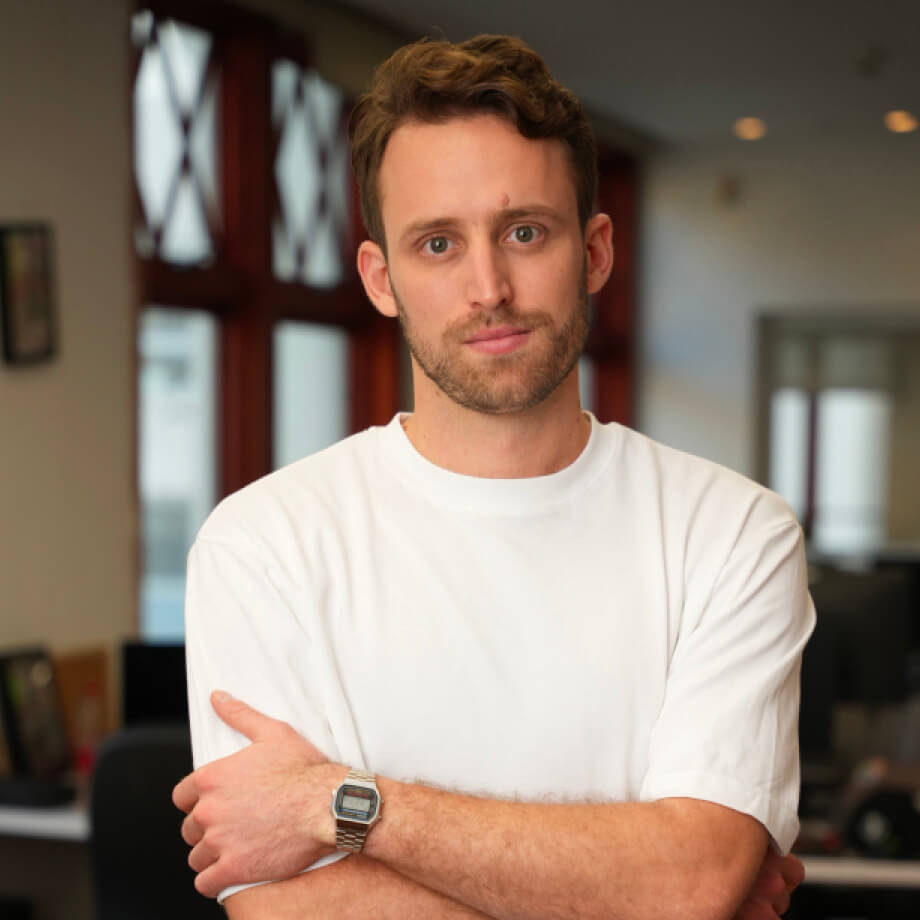
Danny Brickman · Oasis SecurityIn 2022, Brickman and Zimerman started Oasis Security to tackle a problem hiding in plain sight: non-human identities, or NHIs. These are the API keys, service accounts, tokens and certificates that let software talk to software. As companies moved to the cloud and automated everything, these machine identities multiplied - and nobody was managing them the way they managed employees. Traditional identity tools were built for people who log in, change passwords and eventually leave. Machines follow none of those rules.
The numbers made the case. By Oasis’s account, non-human identities outnumber human ones roughly 20 to 1, and more than 40% of organizations have suffered a breach tied to one. High-profile incidents at Dropbox, Okta, Slack and Microsoft all traced back to compromised machine credentials. Brickman saw a category that did not yet have a name, and he moved to define it.
He validated the idea the unglamorous way - by talking to the people who would have to buy it. Brickman spent extensive time with chief information security officers, testing and refining the product against their real headaches. His recurring question, the one that shaped the platform, was blunt: “What are we missing?” The answer became Oasis: an AI-driven platform that automatically discovers machine identities, scores their risk, finds their owners and governs their full lifecycle from remediation to compliance.
Investors noticed. Sequoia Capital led an early round, joined by Accel and Cyberstarts. A $35 million Series A extension followed, and Fortune 500 customers started signing on. Then in March 2026, Oasis raised a $120 million Series B led by Craft Ventures, pushing total funding to roughly $195 million. The round had a sharper focus than the last: securing the flood of AI agents now being wired into enterprise systems.
Cybersecurity is defined by how we protect against abnormal and risky events. In the era of AI, that definition is being reshaped by access.
Danny Brickman · on the Series BThat is the bet Brickman is making now. Every company racing to deploy AI agents is, in his words, “taking on access risks they can’t yet see.” An AI agent is just another non-human identity - one that can act on its own, reach into systems and make decisions at machine speed. Oasis calls the answer “agentic access management,” and Brickman is positioning the company as the standard for how enterprises govern it. In 2026, CRN named Oasis one of its 10 Hottest Cybersecurity Startups, crediting it with helping define identity security for the AI era.
Colleagues describe three traits that carried Brickman from the military to the founder’s chair: adaptability, the willingness to reinvent himself when the ground shifted; collaboration, the CISO conversations that shaped the product; and passion, the daily drive to keep asking what the industry has overlooked. He talks about striking a balance between confidence and grounded awareness - sure enough to build a category, humble enough to keep checking his blind spots.
The name Oasis fits the pitch. Machine identities sprawl like a desert - vast, unmapped, easy to get lost in. Brickman’s company is trying to be the point of clarity in the middle of it. Whether agentic access management becomes the household term he wants it to be is still an open question. But the problem he chose is only getting bigger, and he saw it before most of the industry knew to look.