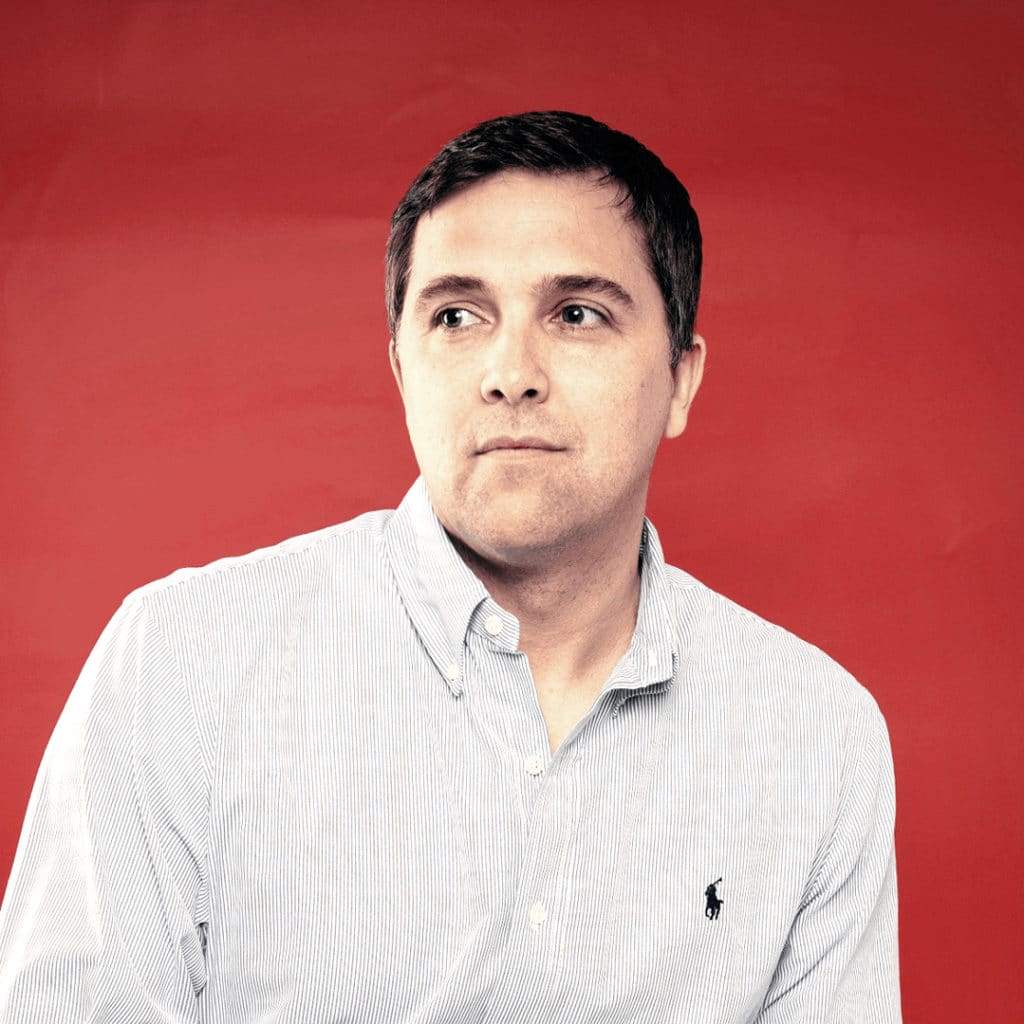
Daniel McKinnon has built a career around a single, stubborn question that follows every product from factory to shelf: is this the real thing?
For most of the last decade, McKinnon answered that question the hard way - in courtrooms, across borders, one lawsuit at a time. As Senior Counsel for Intellectual Property and Global Brand Protection at New Balance, he led the sportswear maker's fight against a wave of copycat brands that borrowed its famous "N" and sold shoes that were never made in its factories. It was slow, grinding work. For every counterfeiter shut down, others were already waiting. Today, as chief executive of Proof Authentication, a Boston company that makes technology to verify genuine goods, he is trying to answer the same question a different way - before the fake ever reaches a buyer.
The path there ran through some of the most closely watched intellectual property battles in Asia. McKinnon is best known for helping secure a $1.5 million damages award against a Chinese company selling sneakers under the name "New Boom." A court in Suzhou ruled that the copycats had, in its words, "drastically damaged the business reputation of New Balance." At the time, it was the largest counterfeit damages award a Chinese court had granted to a foreign company - a result that reset expectations for what overseas brands could achieve inside China's legal system.
"The New Barlun victory represents years of hard work in the fight against parasite and counterfeit brands."
That victory was not a one-off. Under McKinnon's watch, New Balance kept pressing. In a later case, a Shanghai court ordered copycat maker New Barlun to pay roughly 25 million RMB - about $3.85 million - one of the largest trademark judgments the Chinese sportswear market had seen. McKinnon framed the escalating damages as a message as much as a payout: notice, he suggested, that the "N" carried real weight, and that infringing it would carry a real cost.
A philosophy of not settling
What set McKinnon's approach apart was less a single legal tactic than a posture. Colleagues and industry observers described a brand protection operation that preferred to litigate rather than quietly settle. The stance, often summarized inside the company as the idea that settlement "isn't in New Balance's DNA," meant taking cases to judgment even when it was slower and costlier. The bet was that visible, on-the-record wins would deter the next wave of imitators more effectively than a confidential check ever could.
He did not arrive at that posture by accident. McKinnon studied economics at Bowdoin College before turning to law, earning a J.D. from Villanova University's Charles Widger School of Law and then a specialized master's degree in intellectual property law from George Washington University. The combination - the economist's eye for incentives and the lawyer's feel for enforcement - shows up in how he talks about counterfeiting. He treats it less as a crime to be punished after the fact and more as a business model to be dismantled.
The old fight
Track the counterfeiter. File suit. Wait months, sometimes years. Win damages. Watch three more copycats appear.
The new approach
Give the genuine product a mark that cannot be duplicated. Let any buyer verify it with a phone. Make the fake obvious before it sells.
Learning the enemy's playbook
Years on the enforcement side taught McKinnon something that shapes everything he does now: counterfeiting is not a single crime but an adaptive industry. Copycat operators watch how brands respond and adjust. Shut one down and its people, molds, and supply chains resurface under a fresh name and a slightly different logo. The "New Boom" and "New Barlun" cases were victories, but they were also reminders of how much effort it takes to win even once, and how quickly the ground shifts underneath a legal win.
That reality pushed him toward a harder question. If enforcement is always a step behind, what would it take to get ahead of the fake instead of chasing it? The answer, he came to believe, was not more lawyers. It was better proof - a way to bind authenticity to the physical product so tightly that a shopper, a customs officer, or a distributor could confirm it on the spot, without a lab, a lawsuit, or an expert. It is the difference between punishing a forgery after it fools someone and making the forgery unconvincing in the first place.
From counsel to CEO
In 2021, McKinnon made a move that few in-house lawyers make: he crossed from the legal department into the corner office of a technology startup. When Proof Authentication closed its Series A funding round - led by the New York firm VCFA Group - the company named him chief executive. The logic was hard to miss. Here was a leader who had spent years learning exactly how counterfeiting works, where its weak points are, and why litigation alone never fully closes the gap.
Proof Authentication's product reflects that hard-won view. Its core technology pairs a non-duplicatable printed mark with a custom smartphone app. A shopper, a distributor, or a brand investigator points a phone at the mark and gets a straight answer about whether the item is genuine. The company keeps the technical details deliberately close, describing itself as a discreet provider of advanced authentication used by large brands. The idea is disarmingly simple: every counterfeit depends on a buyer being unable to tell real from fake. Close that gap, and the economics of faking a product start to collapse.
"Customers demand to know with certainty that the items they purchase are authentic."
Counterfeiting leaves the luxury aisle
Part of what drives McKinnon's urgency is how much the problem has changed. Counterfeiting was once shorthand for fake handbags and knock-off watches - an annoyance for luxury houses. That framing is now badly out of date. Fakes have spread into everyday categories where the stakes are higher and the buyer's ability to spot a difference is lower. McKinnon has argued publicly that counterfeiting now touches every consumer segment, and that brands unable to authenticate their products risk being devalued by the flood of imitations riding on their names.
It is a point he can make with unusual authority, because he watched it happen from the inside. Few problems illustrate the limits of enforcement better than a copycat brand that reappears under a new name the moment the last one is shut down. McKinnon's answer is to move the fight upstream - to make authenticity a property of the product itself rather than a verdict handed down long after the damage is done.
There is a quieter dimension to the shift, too. Litigation is a tool available mostly to the largest brands - the ones with the legal budgets, the evidence, and the patience to see a foreign case through to judgment. A verification mark that a customer can scan with an ordinary phone democratizes that protection. It hands a piece of the fight to the buyer, who becomes the last and most numerous line of defense. For McKinnon, whose earlier wins depended on the resources of a global sportswear company, that broadening of who gets to check for fakes is part of the appeal.
A discreet company with a loud mission
Proof Authentication itself is not a company that courts attention. Its website is deliberately spare, describing itself as a premier provider of advanced authentication technology and declining to spell out how its marks work - a discretion that makes sense when your value depends on being hard to copy. What the company will say is who it serves: large, recognizable brands with the most to lose from imitation. The reticence is a feature. In a field where every published detail is a hint to a would-be forger, saying less is a form of protection.
Running that kind of company calls for a different temperament than winning a lawsuit. As a litigator, McKinnon could measure success in verdicts and dollar figures. As a chief executive, the scoreboard is quieter: brands retained, products protected, fakes that never reach a shelf and therefore never make the news. It is the sort of work that succeeds most completely when nothing happens at all - when a counterfeit is caught, or deterred, before anyone is fooled.
The through-line
Look across his career and the thread is consistent. Whether he is arguing a case in a Chinese court or shipping a verification app to a Fortune 500 client, McKinnon is working on the same problem: restoring trust in the simple act of buying something. The tools have changed - from statutes and damages awards to printed marks and mobile scans - but the target has not. He is still trying to make it pointless to fake a product, and to give the person holding it a way to know, for certain, that it is real.
The company he now leads is small - a Boston operation of roughly a dozen and a half people - but its ambition is outsized: to become the layer of proof that sits quietly behind trusted brands. For a leader who spent years cleaning up counterfeiting after the fact, building the thing that prevents it is a fitting second act.