The Story
The builder who keeps coming back to Main Street
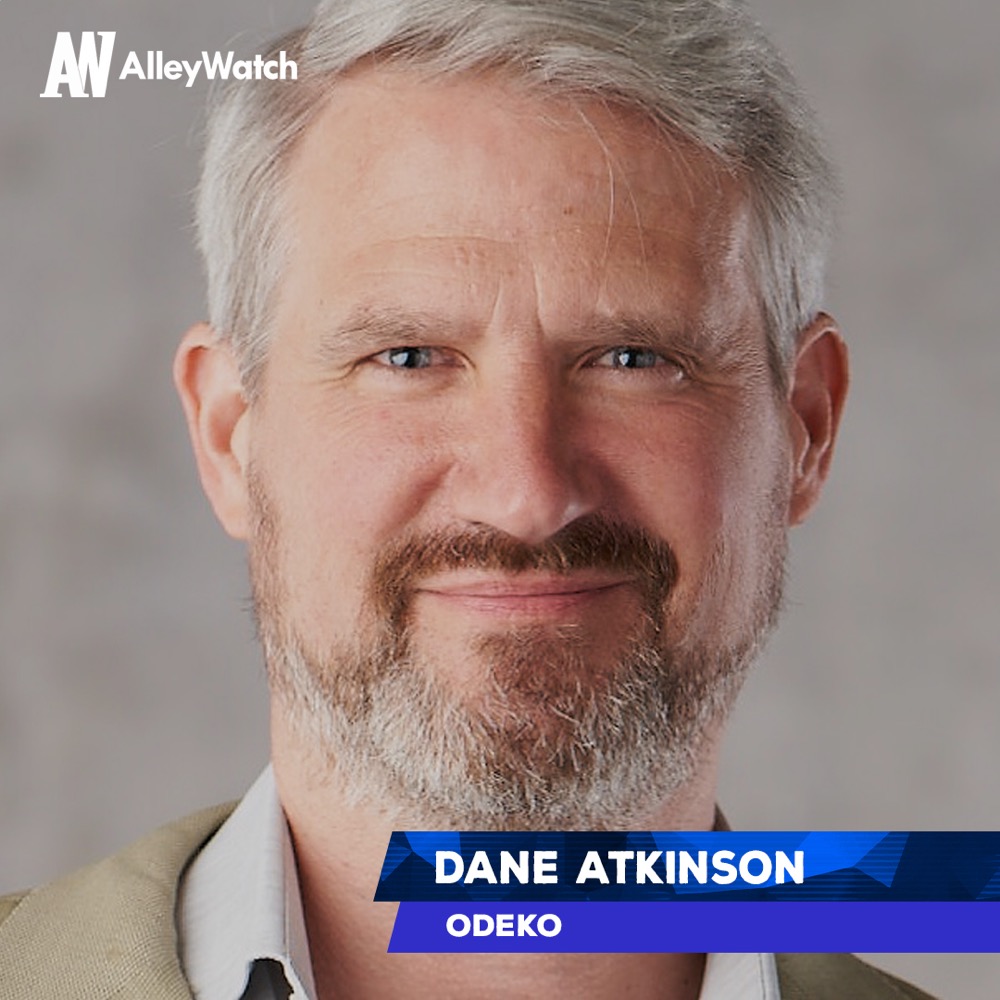
Dane Atkinson was running a company before he was old enough to sign most of the contracts that came with it. At 18 he founded SenseNet, a digital advertising agency that grew from a single desk into hundreds of employees spread across three continents, servicing Fortune 500 clients along the way. The teenage CEO landed in the very first issue of WIRED. It was an early lesson in a pattern that would define his career: he would rather ship something real than wait for the idea to be perfect.
Over the three decades since, Atkinson has founded, bought, and sold more than a dozen companies. Most of them share a single thread - they exist to hand small and medium-sized businesses the kind of tools that large corporations take for granted. He is comfortable calling himself unlucky and lucky in the same breath. "There is not a mistake I haven't found," he has said. "If there's a pothole on the ground, I've hit it." He describes his own track record, only half joking, as being like a slot machine in Vegas that people keep betting on. So far the machine keeps paying out.
The best-known chapter came at Squarespace, where Atkinson served as the company's first outside CEO from 2007 to 2011. He helped steer the website-builder through the years when it turned from a niche product into a household name. But it was the venture after Squarespace that made him a fixture in conversations about company culture.
The company that made every paycheck public
In 2011 Atkinson founded SumAll, a data-analytics company that pulled numbers from more than 40 platforms and turned them into simple pictures for small businesses. What made SumAll famous was not the dashboards. It was payroll. Atkinson made every employee's salary visible to the entire company, and he was unusually blunt about why.
He had, by his own admission, played the other side of the game for years. "Many times, I paid two people with the same qualifications entirely different salaries, simply because I negotiated better with one person than the other," he said. He came to see salary secrecy as something closer to a trap than a norm - a system where an employee "could find out exactly what someone else makes and be distraught by it, but you can't address the issue because you're not supposed to know."
You can't pay women less than men if everybody can see what you're doing.
Dane Atkinson, on pay transparency at SumAll
The policy drew coverage from Forbes, Slate, and NBC News, and it produced concrete moments: an employee sitting on an interview panel realized that a prospective hire would out-earn her despite having less experience - a gap that, in a normal company, she would never have seen and never been able to fix. At SumAll it triggered a raise. The company reported a 95% retention rate during the period, which Atkinson pointed to as evidence that sunlight was, among other things, good business.
Odeko, and the case for invisible technology
Atkinson's current company grew out of something more personal than a spreadsheet. He has owned bars, restaurants, and a coffee shop - he ran a bar in Williamsburg, Brooklyn, for three years - and he watched those businesses operate with tools that had barely changed in decades. "I've owned bars, restaurants, and coffee shops," he said. "They're incredibly locked in an old model with limited technology."
Founded in 2019, Odeko is his answer. The New York company handles the unglamorous back half of running a cafe: overnight supply deliveries straight to the fridge, mobile ordering, inventory, and the back-office software that lets an owner spend the morning with customers instead of a clipboard. Today it serves more than 14,000 independent food businesses, and Atkinson has scaled it from zero to roughly $150 million in annual revenue.
He has a phrase for what he is trying to build: invisible technology. The analogy he reaches for is a light switch. Customers do not want to think about wiring or voltage - they want the light to come on. Good software, in his telling, should disappear into the outcome. For a barista at 6 a.m., the milk simply arrived; the fact that a logistics network moved it there overnight is beside the point.
I started Odeko to ensure that independent food businesses have a platform that will support their growth and enable them to compete successfully alongside large global brands.
Dane Atkinson, founder & CEO, Odeko
That framing carries a conviction that runs deeper than product design. Atkinson talks about small business as culture itself - "the expression of culture in society," something that requires "cultivation, support, and love." When a neighborhood cafe survives another year, he sees more than a transaction preserved. He sees a piece of a place staying intact.
Winning versus surviving
In March 2025, Odeko raised a $126 million Series E - $96 million in equity led by B Capital, plus a $30 million credit facility - pushing the company's total funding toward $300 million. Alongside the round it acquired Butter Insurance, a small-business insurance startup, and added Gautam Grover as President and Ken Banas as CFO. The money is aimed at widening the platform and, in Atkinson's words, helping independents stand their ground against global chains.
He frames the moment less as a victory lap than a shift in mindset, and he says it plainly to other founders: "Startups are built with the mindset of winning - what's needed now is the mindset of surviving." It is a quieter kind of ambition, and it fits a career built not on one lightning-strike exit but on a long series of attempts, corrections, and second tries.
His advice to people starting out is the same thing he learned as a teenager with a company he was not quite old enough to run. Stop polishing. Start shipping. There is, he insists, no perfect idea - only the one you are willing to hit potholes for.