BREAKING•70,000+ patients across 3 counties•CALIFORNIA NONPROFIT OF THE YEAR 2024•17 health center sites & growing•Top 20% of U.S. health centers - HRSA•NO ONE TURNED AWAY•Two 1972 clinics, one 2023 merger•~700 employees in Napa, Solano & Yolo•
YesPress Company File
CommuniCare+OLE
The Northern California clinic network with one stubborn rule: everybody gets care.
Napa, California • The green plus that ate two counties and asked for a third.
70K+
Patients / Year
17
Care Sites
3
Counties
~700
Staff
1972
Roots
The Scene Today
A waiting room that doesn't ask the wrong question first
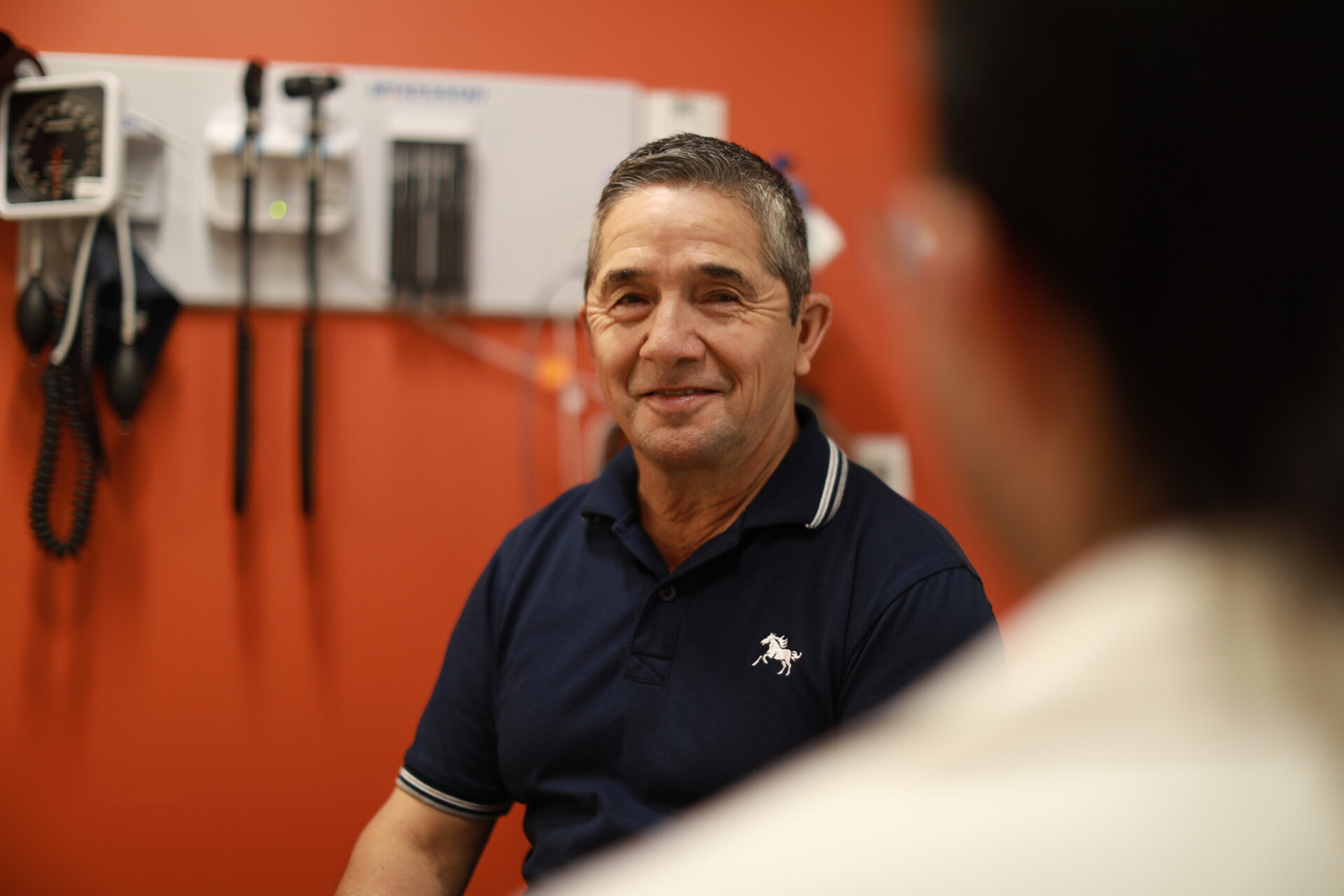
Walk into a CommuniCare+OLE health center on a Tuesday morning and you'll hear at least three languages before you reach the front desk. A farmworker who came in for a toothache. A new mother with a pediatric appointment. A teenager there for behavioral health. The intake form asks about symptoms. It does not, in any meaningful way, ask whether you can pay.
That last part is the whole point. CommuniCare+OLE is a nonprofit network of federally qualified health centers spread across Napa, Solano, and Yolo counties. Seventeen sites. Roughly 700 staff. More than 70,000 patients a year. And a policy, printed plainly, that no one is turned away for lack of insurance, immigration status, or ability to pay.
It is, on paper, an unglamorous operation - clinics, dental chairs, a pharmacy counter, a mobile health van. In practice it is one of the larger answers Northern California has to a question most of the system would rather avoid: what happens to the people the market forgets?
"Health care is a right, not a privilege."- The founding philosophy, still printed on the wall
Field work. Care that travels - because the people who need it most can't always come to you. The van is doing more cardiology than the brochure admits.
The Problem They Saw
In wine country, the people picking the grapes had no doctor
Napa Valley sells an image: rolling vineyards, tasting rooms, money. The image leaves out the workforce. For decades, the Spanish-speaking migrant workers who actually harvested the valley had nowhere to go when they got sick. No clinic. No coverage. No appointment to miss.
Ninety miles away in Yolo County, a different gap: students, low-income families, and people struggling with substance use, all stranded between an emergency room they couldn't afford and a primary-care system that didn't want them.
Two communities, same hole in the safety net. The hole has a stubborn quality - it does not close on its own, and pretending it isn't there has never made anyone healthier.
"A farmworker advocate asked the obvious question - why doesn't Napa have a clinic? - and then refused to let it go."- On the founding of Clinica OLLE, 1972
The skeptic's reply writes itself: noble idea, but clinics for the uninsured tend to run on fumes and good intentions, and good intentions are not a billing model. That objection is fair. It is also exactly the problem the founders spent fifty years solving.
The Founders' Bet
Two basements, one idea, fifty-one years apart from the finish line
In 1972 - the same year, independently - two clinics opened. In Rutherford, Clinica OLLE began on September 17th, staffed mostly by volunteers and inspired by farmworker advocate Placido Garcia. In Davis, UC Davis physician Dr. John Jones founded the Davis Free Clinic in a basement on L Street, modeled loosely on the clinics treating the lost causes of Haight-Ashbury.
Neither had a grand plan. Both had a bet: that a clinic accountable to its patients - not to shareholders, not to billing optimization - could survive if the community kept it alive. The bet got tested early. In 1980 a fire destroyed OLE's Rutherford facility, doing $65,000 in damage. The clinic reopened within ten days. You can read that as luck. It's closer to read it as the whole thesis in miniature: the community would not let the clinic die.
"When the building burned, they were back seeing patients in ten days. That is not a press release. That is a constituency."- YesPress, on OLE's 1980 fire
The structure that emerged was the federally qualified health center, or FQHC - a model with one beautifully blunt rule: at least 51% of the governing board must be current patients. The people receiving the care control the institution delivering it. It is, quietly, one of the more democratic things in American health care.
Fast-forward through the unglamorous decades. OLE became Community Health Clinic OLE in 1983, hired its first full-time physician in 1995, became an FQHC in 2005, opened a 29,000-square-foot South Napa campus in 2019. CommuniCare grew along its own track in Yolo. Then, in 2022, the two organizations did the thing nonprofits rarely do well: they agreed to merge.
The unglamorous heroics. An exam room. No marble, no atrium. Fifty years of mission distilled into a blood-pressure cuff and a chair that reclines.
Milestones
Fifty-one years to an overnight success
1972
Clinica OLLE opens in Rutherford; the Davis Free Clinic opens in a Yolo County basement. Same year, no coordination.
1980
Fire destroys OLE's Rutherford facility. Operations resume within 10 days.
1983
OLE renamed Community Health Clinic OLE.
1995
OLE hires its first full-time physician; CommuniCare name adopted in Yolo.
2005
Both organizations become Federally Qualified Health Centers.
Merger legally executed. CommuniCare+OLE is born - 17 sites, three counties.
2024
Named California Nonprofit of the Year; ranked in HRSA's top 20% nationwide.
What's Actually On Offer
Not a clinic. A whole front door to health.
The trick of a good community health center is that it refuses to specialize in only the profitable parts. CommuniCare+OLE runs medicine, dentistry, and behavioral health under one roof - then keeps adding the services that fall through everyone else's cracks.
Primary & Preventive Care
Family medicine, pediatrics, women's health, prenatal and postpartum care, immunizations, chronic disease management.
Dental
Full dental services for kids and adults - the care most safety-net systems quietly drop first.
Behavioral Health
Integrated mental health and substance use treatment, sitting right beside primary care.
Pharmacy & Optometry
On-site, affordable prescriptions and vision care without a second trip across town.
Nutrition & Education
Dietitians, nutrition counseling, and preventive health education in multiple languages.
Care Coordination
Enrollment assistance, referrals, and social support - help navigating a system built to confuse.
"Anyone can run the profitable clinic. Running the dental chair and the food pantry too - that's the part that requires conviction."- YesPress field note
The Proof
The receipts, in numbers a skeptic can check
Mission statements are cheap. Outcomes are not. Here's where the rhetoric meets the data - and where CommuniCare+OLE earns the benefit of the doubt.
Reach & recognition, by the numbers
Sources: CommuniCare+OLE, HRSA, Office of Sen. Bill Dodd
Patients served per year70,000+
Employees~700
COVID vaccine doses administered40,000+
Care sites across 3 counties17
HRSA national quality rankingTop 20%
Bars scaled for visual comparison, not to a shared axis. Figures are organization-reported and publicly cited.
In late 2024, the federal Health Resources and Services Administration ranked CommuniCare+OLE in the top 20% of health centers nationwide for clinical quality - the first time the organization had broken into that tier. It collected HRSA badges for Access Enhancer, Health Disparities Reducer, Advancing Health IT for Quality, and Addressing Social Risk Factors. Partnership HealthPlan of California gave it the fifth-highest overall quality score in Northern California.
"Top 20% nationally, on the first serious try, while serving the patients everyone else calls 'hard to reach.' Pick a more impressive sentence."- HRSA Community Health Quality Recognition, 2024
And the political establishment noticed. State Senator Bill Dodd named CommuniCare+OLE his Nonprofit of the Year in 2024, citing 52 years of service to disadvantaged families. The partnerships are the kind that survive audits: HRSA as funder and rater, Partnership HealthPlan as a managed-care backbone, the OLE Health Foundation as the philanthropic engine.
The Mission
Run by the people it treats
Strip away the awards and the model is almost defiantly simple. CommuniCare+OLE exists to deliver comprehensive, high-quality care to anyone in the community - full stop. The federal FQHC structure makes that more than a slogan: a majority of the board must be patients. The institution answers to the waiting room.
CEO Alicia Hardy, a licensed clinical social worker with an MBA from Yale, joined OLE in 2009 and steered the merger from the OLE side. Dr. Melissa Marshall, who led CommuniCare, became Chief Strategic Officer. Two CEOs voluntarily collapsing into one organization is rare enough to be worth noting - egos usually win those negotiations. Here the mission did.
"No one is turned away due to lack of insurance, immigration status, or ability to pay."- The line that governs every other decision
Margin Notes
Six things the annual report buries
01Both founding clinics opened in 1972 - 90 miles apart, neither aware it would one day merge with the other.
02Clinica OLLE opened September 17, 1972, in Rutherford, staffed mostly by volunteers serving migrant workers.
03CommuniCare began as the Davis Free Clinic in a basement on L Street, founded by UC Davis physician Dr. John Jones.
04When a 1980 fire destroyed OLE's facility, the clinic was seeing patients again within ten days.
05By federal rule, at least 51% of the operating board must be current patients of the health center.
06CEO Alicia Hardy is a licensed clinical social worker who earned her MBA at the Yale School of Management.
Why It Matters Tomorrow
Back to that waiting room
Return to the Tuesday-morning waiting room. Three languages, a toothache, a new mother, a teenager. Fifty years ago, most of those people had nowhere to sit at all. The farmworker would have worked through the pain. The mother would have driven an hour. The teenager would have gone untreated.
That room exists now because two volunteer clinics in 1972 made a bet that outlasted a fire, a half-century, and the gravity of a health system that rewards turning people away. The merger didn't soften the mission - it scaled it. As coverage gaps widen and immigration anxiety keeps people away from care, an organization whose first promise is "we won't ask if you can pay" stops being charity and starts being infrastructure.
The intake form still asks about symptoms. It still doesn't ask the wrong question first. That is the entire fifty-one-year project, sitting at a front desk in Napa, repeating itself one patient at a time.
CommuniCare+OLE • Napa, California • Filed by YesPress