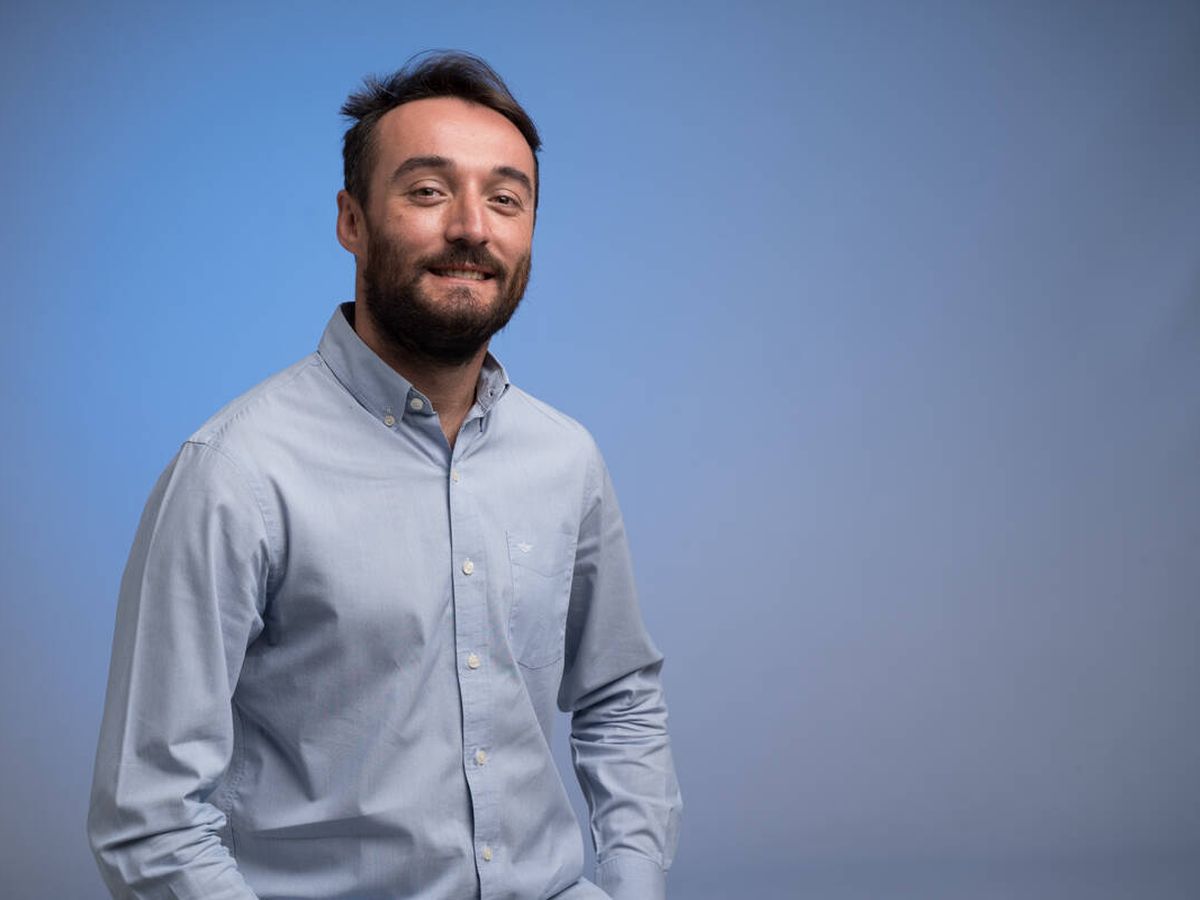
In 2012, a young Spanish PhD student stood at a podium in Orlando and presented research on ZVS in Full-Bridge converters to a room full of power electronics engineers. Most attendees had no idea who he was. He flew home to Madrid. He kept working. Eleven years later, that same researcher - Chema Molina - sits in San Francisco running a company that counts NASA, GE, and Bosch as clients, and whose magnetic components travel to orbit aboard Thales Alenia Space payloads destined for the International Space Station.
The story of Frenetic is a story about one of engineering's least-visible problems. Magnetic components - transformers, inductors, the copper-wound cores at the heart of every power converter - have always been designed through trial and error. A team of specialists would spend nine months iterating on geometry, materials, and winding configurations, building prototypes, testing them, scrapping them, starting again. The process was slow, expensive, and dependent on expertise so specialized that only a handful of professors worldwide fully understood it.
"Managing electrical energy is a key for human progress." - Chema Molina
Molina arrived at Madrid's Centro de Electrónica Industrial (CEI) at the Polytechnical University of Madrid in 2008, age 22, on a research grant. His mentor, Professor Óscar García, handed him the keys to the magnetic component lab. What followed was six years of deep immersion - a Master's degree, then a PhD, then the slow realization that everything he was doing manually could be automated. The professors around him had already built Pexprt, a magnetic design software tool eventually acquired by ANSYS. The next chapter, Molina decided, would be his.
Born in Spain, Built for the World
Frenetic was founded in 2015 while Molina was still completing his dissertation. He credits Spain's 40-year tradition in power electronics for giving him the technical foundation - and the ambition. "Spanish engineers are everywhere" in the global industry, he has noted, yet Spain lacked industrial software companies that could employ and scale this expertise. Frenetic was designed to fill that gap from day one.
The platform does something that used to require armies of specialists: it uses AI and machine learning - trained on thousands of finite element method (FEM) simulations - to predict magnetic component behavior across temperatures, frequencies, materials, and winding configurations. The result is 3x greater accuracy than traditional methods and a design cycle compressed from nine months to one week. Engineers who once spent most of their project budget on magnetic component iteration can now test dozens of configurations before ordering a single prototype.
"We were born to revolutionise the magnetics industry. This funding round enables us to scale into the US fast." - Chema Molina
From Madrid to Silicon Valley
In November 2023, Frenetic closed a $12.3 million Series A led by Kibo Ventures, with participation from 42Cap, Join Capital, Bankinter, Bonsai, and Big Sur. The round brought total funding to over $19 million. The stated plan: open a Silicon Valley office and chase the US market, where the EV revolution, aerospace programs, and consumer electronics manufacturing are all running up against the same bottleneck Frenetic was built to solve.
Molina relocated to San Francisco. The engineering team stayed anchored in Madrid - 54 people in total, building out the platform's capabilities across automotive, aerospace, industrial, and consumer electronics verticals. The company offers both a SaaS model and licensing agreements, with products including the Frenetic Core Optimizer, Frenetic AI, Frenetic Magnetic Simulator, and Frenetic Planar for planar transformer design.
The Physics Behind the Software
What makes Frenetic technically credible - and difficult to replicate - is the depth of its training data and simulation accuracy. The AI models are trained on more than 5,000 FEM simulations. The foil winding loss models achieve a 12% median relative error, a level of accuracy that holds up under lab validation at industrial temperatures and frequencies. Molina has noted publicly that only about 10% of cases are ideal for planar DC/DC transformer designs - a nuance that most automated tools miss, and that Frenetic's models account for.
The client list reflects this technical rigor. Thales Alenia Space uses Frenetic's magnetic components in hardware that has traveled to the International Space Station. Novasonix, which operates in the medical sector, depends on the platform's accuracy for compliance-sensitive designs. Sumida, one of the world's largest magnetic component manufacturers, is a partner. GE, Bosch, and Infineon - companies with formidable in-house engineering capacity - still choose to use Frenetic.
The Parallel Life of Dr. Molina
Alongside running Frenetic, Molina writes a Substack newsletter - "Dr. Molina Newsletter" - that documents his experience building a European deep-tech company in America. With over 1,000 subscribers, it is part engineering journal, part immigration diary. He has also written technical articles on Medium, covering everything from how Frenetic's AI models are built to the specific challenges of Litz wire design in the 100-300 kHz frequency range. He manages production for Big Circuits, a YouTube channel focused on electronics engineering.
In early 2025, he hosted one of the inaugural Power Electronics Engineering Community meetups in Sunnyvale, sharing a panel with engineers from Tesla and Lunar Energy. Tacos were served. The room was full. Power electronics has its own strange subculture, and Molina has become one of its more visible community builders in the Bay Area.
The aspiration behind all of it is consistent: prove that deep engineering software built in Europe - rooted in Spanish academic tradition, funded by European investors - can define a global category. Frenetic is not a general AI company that wandered into power electronics. It is a power electronics company that decided AI was the only way forward.