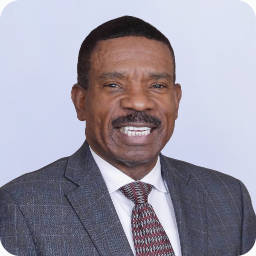
A scientist who keeps switching disciplines mid-career
At CorVista Health, Charles R. Bridges runs the science. As Executive Vice President and Chief Scientific Officer, he steers the development of the CorVista System — a platform that points machine learning at real-world signal data to help physicians spot cardiovascular disease without a catheter or a hospital admission. The work sits exactly where his strange, doubled-up training has always pointed: half clinic, half circuit board.
Most people pick a lane. Bridges keeps building bridges between them. He is a board-certified cardiac surgeon who also holds a doctorate in chemical engineering. He published 175 peer-reviewed papers as an academic, then crossed into industry to sign off on the science behind roughly a billion dollars of medical-device deals. The throughline is not a title. It is a habit of refusing to choose between medicine and the math underneath it.
Medical school at eighteen
The detail that stops people: Bridges started Harvard Medical School at 18, through the Harvard-MIT Program in Health Sciences and Technology. Before that he had earned an A.B. in engineering and applied physics from Harvard College, magna cum laude. The M.D. came with honors. Then, instead of stopping, he went back to MIT for a Master of Science in electrical engineering and computer science and a Doctor of Science in chemical engineering.
Four degrees, two institutions, four fields. Physics, medicine, electrical engineering, chemical engineering. It reads like someone who could not decide what to be when he grew up. The more accurate reading is someone who decided to be all of it, in sequence, and use each layer to see the next one differently. A surgeon who understands signal processing notices things a surgeon who does not will never see.
From the cardiac suite to the lecture hall
Bridges became the first African American full professor of surgery at the University of Pennsylvania, where he also joined the Bioengineering Graduate Group — the engineering side of his brain never fully left the room. He served as Chief of Cardiac Surgery at Pennsylvania Hospital, then as Professor and Chairman of the Department of Cardiothoracic and Vascular Surgery at Carolinas HealthCare System in partnership with the University of North Carolina.
Through those academic years he pulled in more than $10 million in continuous NIH R01 funding, the kind of sustained federal grant support that is hard to win once and harder to keep. The 175 papers and 15 patents accumulated alongside the clinical work, not instead of it.
The billion-dollar science desk
Then Bridges crossed over. At Janssen Pharmaceuticals, part of Johnson & Johnson, he became Chief Technology Officer and Head of Cross Enterprise Innovation for the cardiovascular and pulmonary therapeutic areas. The job put a surgeon-engineer in the seat where the science gets judged: he was the scientific lead on nearly $1 billion in cardiovascular and neurovascular device investments and acquisitions.
In 2021 the company recognized him with its Juan A. Simpson Outstanding Employee Service Award. Along the way he also co-founded an early-stage biotech company working on gene therapy for muscular dystrophy — founder energy layered on top of the executive role.
Teaching software to read heart signals
CorVista Health, formerly Analytics For Life, is a Toronto-based medical-device company applying machine learning to real-world physiological data. The pitch is deceptively simple: capture signals at the point of care, run them through machine-learned models, and give the physician an answer without the invasive procedures that cardiac diagnosis has traditionally demanded. Bridges leads the scientific and clinical development that has to hold up to regulators and clinicians alike.
It is the synthesis of everything before it. The surgeon knows what a real diagnosis costs a patient. The engineer knows what an algorithm can and cannot promise. The executive knows what it takes to move a technology from a paper to a product. CorVista is where those three people, who happen to be one person, finally work in the same room.
- National Academy of Engineering — elected member, 2022, one of the highest professional honors for an engineer.
- 175 peer-reviewed publications across a surgical and bioengineering research career.
- 15 issued patents spanning his clinical and device work.
- ~$1B in medtech deals shepherded as scientific lead at Johnson & Johnson.
- $10M+ continuous NIH R01 funding sustained across academic years.
- First African American full professor of surgery at the University of Pennsylvania.
A non-linear career, plotted
Things worth knowing
- He holds four degrees from Harvard and MIT — in physics, medicine, electrical engineering, and chemical engineering.
- He started medical school at 18.
- Before the algorithms, he spent more than three decades as a cardiac surgeon.
- At Johnson & Johnson he signed off on the science behind nearly $1 billion of medtech deals.
- He co-founded an early-stage biotech focused on muscular dystrophy gene therapy.