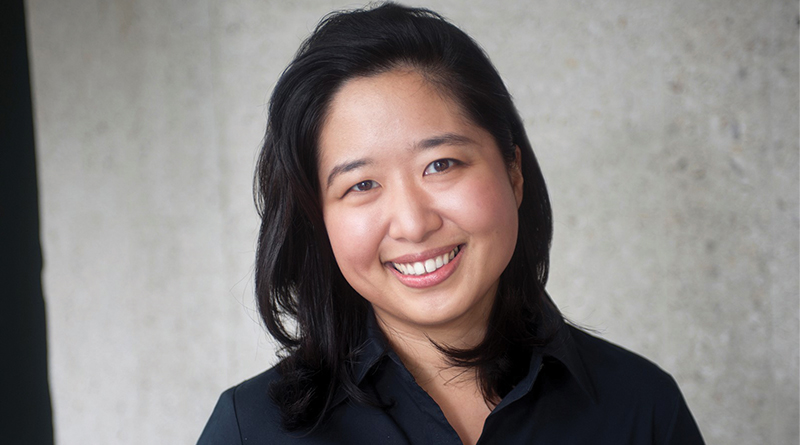
Caroline Shin runs a company that sells vacation dreams - the kind you locked into 40 years ago when timeshares were the future, and then couldn't get out of. That she does it from San Francisco, with a nuclear engineering degree from MIT and a resume that includes Hotwire, Starwood, and Sentient Jet, tells you everything about who she is: someone who shows up where the gap is biggest.
Vacatia is not, strictly speaking, a timeshare company. It is a marketplace, a technology platform, and increasingly, a resort management operation - the thing the industry never built for itself. When Shin founded it in 2013, the vacation ownership space had roughly $35 billion in annual revenue and was running on fax machines and manual processes. She knew this from the inside. At Starwood Hotels, she watched the company pour technology resources into hotels after acquiring Vistana Resorts, and then simply... not extend any of it to the timeshare division. The oversight stuck with her.
She launched Vacatia to fix the customer experience: help existing owners use their weeks, rent their units, resell their interests, or simply understand what they owned. The platform grew to serve both individual owners and major resort developers. Then it kept growing. Today, Vacatia manages 4,750 resort units across eight states, with 750-plus industry partners and a team of 360 people. The December 2024 acquisition of The Berkley Group and Daily Management added another chapter to what is quietly becoming one of the more consequential plays in the travel industry.
The thread running through Shin's career is the application of real technical skill to industries that move slowly. At Hotwire, she was the lead website architect on the founding team - the person who actually built the thing, not just the executive who showed up after. At Starwood, she ran global CRM and pricing across one of the world's largest hotel chains. At Sentient Jet, she was SVP of Client Management and Flight Operations, the unglamorous work of making a private aviation company actually function. Each role was a masterclass in operational complexity, and each one landed her inside a travel vertical right before it changed.
Nuclear engineering, she has noted, is not a detour in her story. "Learning engineering, particularly nuclear engineering, makes you sharper at problem-solving." The discipline of modeling complex systems, accounting for interdependencies, and not guessing at outcomes - it maps cleanly to building internet companies, managing global CRM systems, and running a marketplace that sits between frustrated vacation owners and an industry resistant to change.
From Hotwire to Hoteliers to Timeshares
The Hotwire chapter matters more than it might appear. Hotwire, launched in 2000, was one of the original opaque pricing models in online travel - you didn't know which airline or hotel until you booked. Shin and her team sold the company to Expedia. She was in her late twenties. She had just helped build, from scratch, one of the foundational assets of the online travel industry. What she did next was go to a hotel company and run CRM.
That pattern - building something transformative, then spending years inside an established institution learning how the machine really works - is the biography of a certain kind of founder. Not the person who raises a seed round at 23 and figures it out. The person who accumulates the specific, operational knowledge that lets them see around corners.
Sentient Jet, the private aviation membership business where she served as SVP, gave her something else: exposure to high-end, experience-driven consumer travel. The people who fly private are the same people who buy vacation ownership interests. Understanding how they think about luxury, consistency, and service - and how quickly their patience runs out - shaped the Vacatia product philosophy. "Don't make anyone feel like they're in the middle seat" is a line that works on two levels: it is a product standard and a statement about who Vacatia is trying to be.
Building the Team, Raising the Money
Shin built the Vacatia team through her professional networks, and the pedigree shows. Her Chief Marketing Officer brought credentials that match hers step for step: first VP of e-commerce at FedEx, first General Manager of Apple's online store, first CMO at StubHub. This is not a team that needed to learn how to build consumer internet companies from textbooks.
The fundraising path was measured rather than explosive. A $7 million Series A in 2015 funded the early marketplace build. The Series B, closed in November 2021, came in at $20 million - and was announced alongside the simultaneous launch of a $60 million acquisition and development fund. That double announcement was a deliberate signal: Vacatia was not just a software company anymore. It was moving into property management, acquisition, and resort operations. The timeshare industry was about to learn what it looks like when a technology-first operator enters its territory.
The acquisitions that followed were strategic and targeted. VSA Resorts in Virginia Beach brought 21 timeshares and 42 whole-ownership HOAs, 4,750 units and 50,000 owners across eight states. Liberté Management Group added a Florida beachfront presence. Sunsational Beach Rentals expanded the rental inventory. The Berkley Group and Daily Management, acquired in December 2024, deepened the operational stack further. Each deal extended the platform's reach while strengthening the data flywheel that makes Vacatia's technology more valuable over time.
Industry Recognition and the Disney Endorsement
In 2017, Vacatia won the ACE Innovator Award for Industry Partner at the ARDA Awards - the American Resort Development Association's annual recognition. That same year, Shin was named to ARDA's Board of Directors, at the association's annual conference in New Orleans. Being recognized by the incumbents you are disrupting is its own form of compliment.
The Disney endorsement is the data point that lands differently. Disney Vacation Club - one of the most recognized vacation ownership brands in the world, with meticulous standards for partner selection - endorsed Vacatia for managing DVC timeshare resales. When Disney hands you a channel, it is not doing so lightly. It is telling its members that Vacatia is the company it trusts with their most loyal customers' vacation investments.
In 2026, Vacatia earned 13 finalist honors in the ARDA Awards. The company that was supposed to disrupt the industry is now the industry's benchmark for excellence.
Mill Valley, Dogs, and a Pet Grooming Store
Shin lives in Mill Valley, the small Marin County town tucked below Mount Tamalpais, across the Golden Gate from San Francisco. It is a place that suggests a specific value system: proximity to nature, preference for community over spectacle, the kind of quiet that founders sometimes need after a week of building something large and complicated.
She has two dogs, Charlie and Chloe. She also owns a pet grooming store - not a holding company, not a portfolio investment, but an actual grooming operation. Running two businesses with very different operating models, at the same time, while serving on industry boards and closing acquisitions, is the kind of detail that tells you something about her capacity and her wiring.
The aspiration driving all of it is not complicated: help independent resorts thrive, and lead the travel industry in rethinking what a family vacation can be. Vacation ownership, stripped of the baggage the industry accumulated over four decades, is a good idea. Space, consistency, service, the feeling of returning somewhere familiar. Shin is betting that if you fix the technology, the customer experience, and the exit options, the underlying product sells itself.
She is probably right. The $35 billion industry is starting to notice.