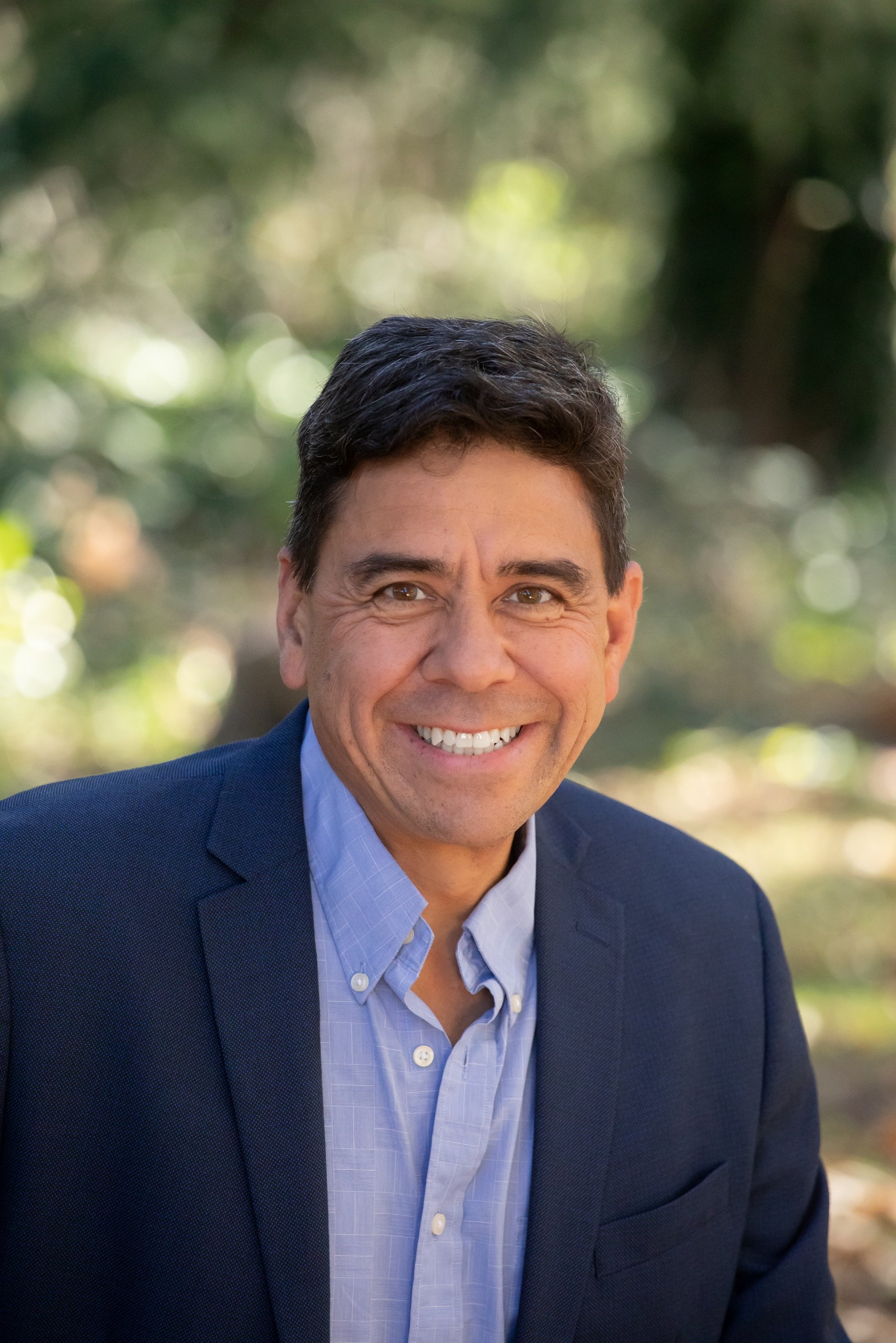
Open a Resynergi module and the surprise is how familiar the core idea feels. The same trick that reheats last night's dinner - microwaves exciting molecules from the inside out - is the thing Brian Bauer is using to pull diesel out of plastic that nobody else will recycle. He runs Resynergi, the Rohnert Park company he co-founded in 2015, as its president and CEO. The pitch is unfussy: take the plastic that is too dirty, too mixed, or too cheap to recycle the normal way, and break it back down to the molecules it came from.
Most pyrolysis - the heat-without-oxygen process that turns plastic back into oil - is slow, hot, and enormous. It tends to burn coal, propane, or wood to get there, and it tends to be built at the scale of an oil refinery. Resynergi's Continuous Microwave Assisted Pyrolysis, the technology Bauer markets as CMAP, swaps the firebox for microwave energy. By heating the plastic directly rather than the walls of a giant vessel, the company says it processes material roughly ten to twenty times faster, in equipment small enough to drop near the waste itself.
That last part is the quiet radical bit. Bauer is not trying to build one cathedral-sized plant and truck the world's plastic to it. He is trying to make the recycler modular - a unit you install in months, not years, close to where the trash already is. The output, by Resynergi's own accounting, runs about 80% diesel and 20% other materials, recovering close to 90% of the weight of the plastic fed in, with up to a 68% reduction in CO2 compared with making new polymer from scratch.
A decade of "what if" before the launch
Resynergi did not start as a pitch deck. It started as a long conversation between two old colleagues. Bauer and co-founder Jason Tanne first crossed paths in Sonoma County's "Telecom Valley," the cluster of communications companies that once filled the North Bay. They worked together at AFC. They kept in touch for roughly a decade afterward, and Tanne kept floating green-technology ideas Bauer's way. The timing - professional and personal - did not line up until 2015. When it did, they set out to reimagine pyrolysis.
Bauer's route there was not obvious. After AFC he landed in Santa Rosa at TriAccess Technologies, developing semiconductors for fiber-to-the-home and cable-TV infrastructure. He had a stretch in Belgium with a telecom firm, and earlier roles in product management and marketing at Motorola, Next Level Communications, and Gluon Networks. As VP of Sales and Marketing at TriAccess, he helped grow the business unit by roughly 300% over five years before the company was acquired - the kind of clean exit that buys a founder the freedom to chase the thing they actually care about.
What he actually cared about, it turns out, went back further than telecom. Bauer studied mechanical engineering at Stanford and later did an executive business program at UCLA Anderson. He has said he could not pursue his alternative-energy dreams while he was at Stanford. Resynergi is, in a sense, him circling back to an interest he had to shelve for a few decades while building a career in chips and signals.
Telecom discipline, applied to garbage
Ask Bauer what telecom taught him and he does not talk about networking. He talks about reliability. In a business where a dropped signal is a failure, you learn to engineer for uptime, and he says he poured that same discipline into Resynergi's hardware. It is a useful tell about how he thinks: the plastic crisis, in his framing, is less a moral lecture than an engineering problem with tolerances and yields and a deployment schedule.
That engineering temperament shows up in how Resynergi describes the machine rather than the mission. The selling points are speed, footprint, and modularity - install fast, take up little room, scale by adding units. It is a deliberately unsentimental way to sell a sentimental goal. Bauer's love for the environment is, by his own account, what drives the work; the pitch just refuses to lead with it.
2025: the year the lab became a product
For most of its life Resynergi was a promising pilot. That changed when Lummus Technology - a heavyweight in process licensing for the petrochemical world - came on board. In early 2024, Resynergi secured investment, including from Lummus, to scale CMAP. Then in March 2025 the two announced commercial availability of the microwave-powered pyrolysis modules. For a founder, that is the hinge moment: the difference between a clever demonstration and something a customer can actually buy and bolt down. Resynergi also raised Series B funding to push the technology toward commercial deployment, part of a total funding haul that has climbed past $31 million.
Partnering with a name like Lummus is a particular kind of validation. Advanced recycling has no shortage of bold claims and quiet failures, and skeptics rightly ask whether plastic-to-fuel schemes pencil out or just move pollution around. A company whose business is licensing real industrial processes choosing to commercialize your modules is a signal that the numbers survived someone else's spreadsheet.
Building it where he plans to retire
Bauer and his wife chose Sonoma County for the community and the landscape, and have spoken about retiring there. Instead of treating it as a place to wind down, he built a climate-tech company in it. He has praised the region's balanced entrepreneurial culture and the way its business leaders stay involved in the community - the kind of thing that sounds like boilerplate until you notice the founder actually located his plant in his own backyard.
That choice has not been frictionless. Siting a plastic-processing facility near where people live invites scrutiny, and Resynergi's Rohnert Park operations have drawn local questions from residents about what exactly happens inside. It is the unavoidable tension of decentralized recycling: the whole premise is to put the machine close to the waste, which means close to people - and proximity buys both convenience and conversation. Bauer's bet is that a small-footprint, microwave-driven box is the version of this technology a community can actually live next to.
Where this goes is still being written. Microwave pyrolysis at commercial scale is young, and the broader chemical-recycling field has to prove its economics and its environmental math over years, not press releases. But Bauer has done the hard part founders usually stall on: he took an idea that lived in a decade of conversations, engineered it like a telecom system, and got it to the point where it has a price and a partner. For a man who had to shelve his energy dreams once, that is a satisfying kind of second act.