BREAKING Dr. Bob Wassman leads clinical development at MARAbio A maternal blood test for an autoimmune subtype of autism CMO veteran of Genzyme Genetics, Ambry, Rosetta & more 40+ years translating lab science into bedside care BREAKING Dr. Bob Wassman leads clinical development at MARAbio A maternal blood test for an autoimmune subtype of autism CMO veteran of Genzyme Genetics, Ambry, Rosetta & more 40+ years translating lab science into bedside care
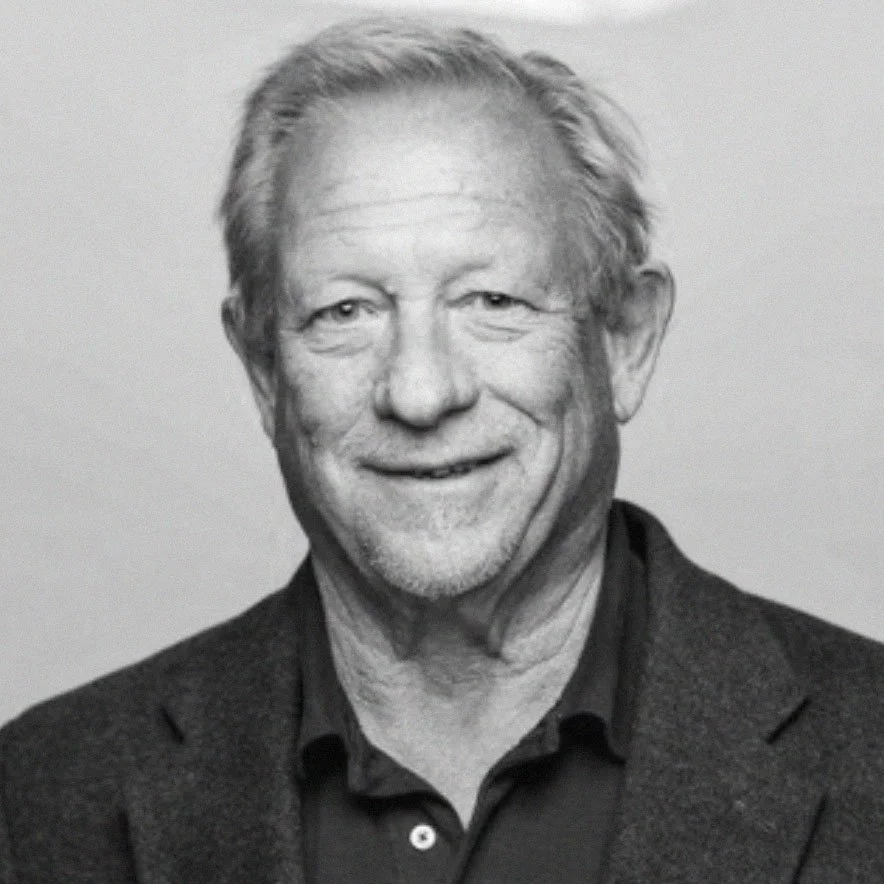
Portrait of Dr. E. Robert (Bob) Wassman
Salt Lake City, by way of a Larchmont surf break. The geneticist who keeps moving toward the frontier.
Person • Scientist • Executive

Bob
Wassman

E. Robert Wassman, M.D.

He has been the doctor in the room for a generation of genetic-testing companies. Now he is asking a quieter, stranger question: can a mother's own antibodies, drawn from a single vial of blood, point to autism before a child shows a single sign?

Chief Medical Officer, MARAbio EVP, Clinical Development Board-Certified: Pediatrics & Genetics
40+
Years in genetic diagnostics
10+
Chief Medical Officer roles
2
Board certifications
$19M
MARAbio Series A raised
The Work Now

A vial of blood, and a question nobody had answered

At MARAbio, the bet is simple to state and hard to prove: some autism is autoimmune. Specifically, that during pregnancy a subset of mothers produce autoantibodies that cross the placenta, react with proteins in the developing fetal brain, and shape neurodevelopment. The company calls it maternal autoantibody-related autism - MARA - and it is building a maternal blood test to find it.

Bob Wassman is the person responsible for turning that hypothesis into something a clinic can actually order. As Chief Medical Officer and Executive Vice President of Clinical Development, he owns the unglamorous, decisive part of the work: designing the studies, defining what a result means, and shepherding a frontier idea through the gauntlet of clinical validation. It is the exact job he has done, again and again, for four decades.

The appeal, for him, is the part most people would find daunting. A maternal blood test that flags risk before symptoms is the kind of translation he has spent a career chasing: take something true in a research lab and make it useful at a bedside. MARAbio sits at the intersection of his oldest interests - reproductive medicine, neurodevelopment, and biomarker-based diagnostics - which is to say it reads less like a new job than a culmination.

The science MARAbio is building on grew out of work tying maternal autoantibodies to a measurable share of autism cases. Wassman's contribution is to insist on the discipline that separates a promising correlation from a test a physician can trust: what cutoff counts as positive, how a result should be explained to a family, what a clinician is meant to do next. Those are not footnotes. They are the difference between an interesting paper and a tool that changes a life, and they are precisely the questions he has answered at company after company.

The MARA idea

A maternal blood test designed to detect autoantibodies linked to an autoimmune subtype of autism - aiming to surface risk early enough that intervention becomes possible.

His role, plainly

Design the clinical studies. Define what a positive result means. Move a frontier hypothesis through validation toward the clinic. The part that decides whether good science ever helps anyone.

Based

MARAbio, Salt Lake City, Utah. Wassman works from Park City. Company headcount: roughly 20.
Humans have a tendency to claim absolute truth based on their subjective and individual experience.
- Dr. Bob Wassman, on the parable of the blind men and the elephant
The Resume As Industry History

If you list where he has been CMO, you have written a history of genetic testing

There is a particular kind of operator in biotech who is never the name on the building but is somehow present at the founding of the important things. Wassman is that. His run of chief-medical-officer roles reads like a tour of the companies that built the modern genetic-testing industry, each one a place where a new technology needed someone to make it safe, legible, and clinically real.

Genzyme Genetics Ambry Genetics Rosetta Genomics Good Start Genetics Lineagen Helicos Biosciences Generation Health (CVS) Celula Alfigen Predictive Laboratories

The throughline across all of them is a single verb: translate. Reproductive medicine, cancer, neurodevelopmental disability, companion diagnostics - in each domain he has taken something that worked in a research setting and figured out how to deliver it as a clinical service. One concrete legacy: he helped push genetic-testing turnaround times down, shrinking the agonizing wait between a sample and an answer. For a family staring at an uncertain diagnosis, speed is not a metric. It is mercy.

It is worth pausing on what that range demands. Each of those companies arrived with a different technology - a different chemistry, a different machine, a different promise - and each needed someone fluent enough in both the science and the clinic to bridge them. Genzyme Genetics operated at industrial scale under Henri Termeer. Helicos and Rosetta were betting on sequencing and microRNA tools that barely existed yet. Good Start and Celula pushed into reproductive screening. To be the medical conscience of all of them is to be, repeatedly, the adult in the room: the one who asks whether a result is reproducible, whether a clinician will understand it, and whether a patient is genuinely better off for having taken the test. Wassman has made a career of that question, and MARAbio is simply its latest and most personal expression.

Origins

Seaweed, surf, and a friend with cystic fibrosis

He grew up in Larchmont, New York, close enough to the water that the ocean became a lifelong habit - surfing, sailing, swimming. The pull toward marine biology came first, and it left a mark on his undergraduate work at Yale, where he published research on the alga Codium fragile, a fast-spreading invasive seaweed nicknamed, with some affection, "sputnik weed."

Then biology got more personal. A college friend living with cystic fibrosis turned an abstract interest in genetics into a reason to go to medicine. At Yale he studied under Frank Ruddle, one of the founders of human gene mapping. The mentors that followed read like a genetics hall of fame: Victor McKusick, David Rimoin, Michael Kaback, George Church. He went on to Albany Medical College for his M.D., then board certification in both pediatrics and medical genetics, with later credentials in managed health care from Harvard and medical genetics from UCLA.

The shape of his career was set early: a scientist comfortable at the edge of what is known, trained by the people who drew the first maps, and motivated by a face rather than a footnote.

Mentored by the mapmakers

Frank Ruddle. Victor McKusick. David Rimoin. Michael Kaback. George Church. He learned genetics from the people who founded the field - and later worked under Genzyme's legendary Henri Termeer.

The seaweed years

Before the human genome, there was Codium fragile - "sputnik weed" - and a Yale undergrad publishing with Professor Joseph Ramus.

The Long Game

A career, in waypoints

1973-1977
M.D., Albany Medical College, after a Yale biology degree.
1983
Founds Life Designs Ventures - principal, CEO and CMO - consulting on genetics, personalized medicine and biomarker diagnostics.
The CMO years
Chief Medical Officer across Genzyme Genetics, Lineagen, Rosetta Genomics, Generation Health, Helicos, Good Start Genetics, Celula, Ambry and Alfigen.
2019
Named Co-Laboratory Director of Predictive Laboratories.
2020
Directs Progenitor MDX's COVID-19 laboratory during the pandemic.
Now
CMO & EVP Clinical Development at MARAbio; CMO at TREND Community; board director at TESS Research Foundation; advisor to Phase Genomics.
How He Thinks

The blind men, the elephant, and the spouse in the room

Ask Wassman about diagnosis and he reaches for an old parable. Several blind men touch an elephant; one feels the trunk and declares it a snake, another the leg and declares it a tree. Each is honest. Each is wrong. His point is humility: a single test, a single observation, a single expert can mistake a fragment for the whole, and medicine is full of people certain about the part they happen to be holding.

That conviction shows up in small, practical habits. He argues for involving spouses and caretakers in medical interactions, on the theory that the person across the desk is not the only one who needs to understand and decide. At TREND Community, where he is also chief medical officer, he has worked on using AI, machine learning and natural-language processing to read what patients say in online communities - a way of listening at scale, sorting signal from noise in the messy, human record of rare disease.

It is a coherent worldview for a man who keeps choosing frontier problems. If no one tool sees the whole elephant, the answer is more vantage points, more voices, and a healthy suspicion of your own certainty.

Listen at scale

At TREND Community he applies AI and natural-language processing to patient conversations - using the data to, in his framing, sort the wheat from the chaff in rare-disease communities.

Bring the caretaker in

He advocates including spouses and caretakers in medical decisions. The patient is rarely deciding alone - so the conversation shouldn't pretend otherwise.

Beyond MARAbio

Still on several boards, still near the water

TREND Community

Chief Medical Officer - social listening and AI applied to rare-disease patient data.

TESS Research Foundation

Board director, focused on epilepsy and SLC13A5-related treatments.

Phase Genomics

Advisor on proximity-ligation sequencing applications.

The portfolio is telling. Decades in, he is not consolidating - he is still spreading across the hardest, least-settled corners of genomics and rare disease. Life Designs Ventures, the consulting shingle he hung in 1983, is still the vehicle through which a lot of this happens. And somewhere underneath it all is the ocean kid from Larchmont, the one who studied seaweed before he studied genes.

Worth Knowing

Five things that explain him