Chief of staff to a vice president. Founding editor of The Weekly Standard. Co-architect of the Project for the New American Century. In May 2026 he walked into an office and registered as a Democrat.
On most weekday mornings Bill Kristol is on camera or on a podcast feed, dismantling an argument he might have made himself fifteen years ago. He is editor-at-large of The Bulwark, the center-right publication that grew out of the wreckage of The Weekly Standard, the magazine he founded and ran for nearly a quarter century. He runs Defending Democracy Together, the advocacy shop behind Republicans for the Rule of Law and the Republican Accountability Project. And since 2014 he has quietly recorded more than three hundred long-form interviews under the plain banner Conversations with Bill Kristol.
The throughline is not party. It is a fixation on who gets to govern and by what rules. Kristol spent decades as one of the most effective operatives of the Republican right - and then decided the Republican right had become the threat. In April 2026 he argued that Democrats should expand the Supreme Court, calling it "a proportionate response to Republican attempts to degrade liberal democracy." A month later he changed his own registration to match the argument.
It is a strange place for the son of Irving Kristol to end up. But Kristol has never been shy about being the most interesting person to disagree with in the room.
There is a photograph of the American conservative mind in the late twentieth century, and the Kristol dining table is in the middle of it. His father, Irving Kristol, was called the godfather of neoconservatism. His mother, Gertrude Himmelfarb, was a celebrated historian of Victorian ideas. The dinner conversation was the family business.
He interned at the Nixon White House at seventeen. He went to Harvard, graduated magna cum laude in government in 1973, and stayed for a doctorate in political science under the philosopher Harvey Mansfield, finishing in 1979. He taught - at Penn, then at Harvard's Kennedy School - before deciding that the more interesting fight was inside government, not the seminar.
So in 1985 he became chief of staff to Education Secretary William Bennett under Reagan, and in 1989 chief of staff to Vice President Dan Quayle. The New Republic put him on a cover as "Dan Quayle's brain." It was meant as a jab. He wore it as a calling card.
Before the magazine there was the memo. In 1993, chairing the Project for the Republican Future, Kristol circulated strategy arguing that Republicans should not negotiate the Clinton health plan but kill it outright, because passing it would cement Democratic majorities for a generation. The advice held. The plan died, and Kristol's reputation as a strategist who thought in decades rather than news cycles was made.
When the Republicans swept Congress in 1994, Kristol and John Podhoretz launched The Weekly Standard with Rupert Murdoch's money. For the next two decades it was the house organ of an ambitious, interventionist conservatism - the magazine that helped make the case for the Iraq War, championed the 2007 troop surge, and served as a finishing school for a generation of conservative writers. He co-founded the Project for the New American Century with Robert Kagan in 1997, a think tank whose foreign-policy memos would echo loudly through the post-9/11 decade.
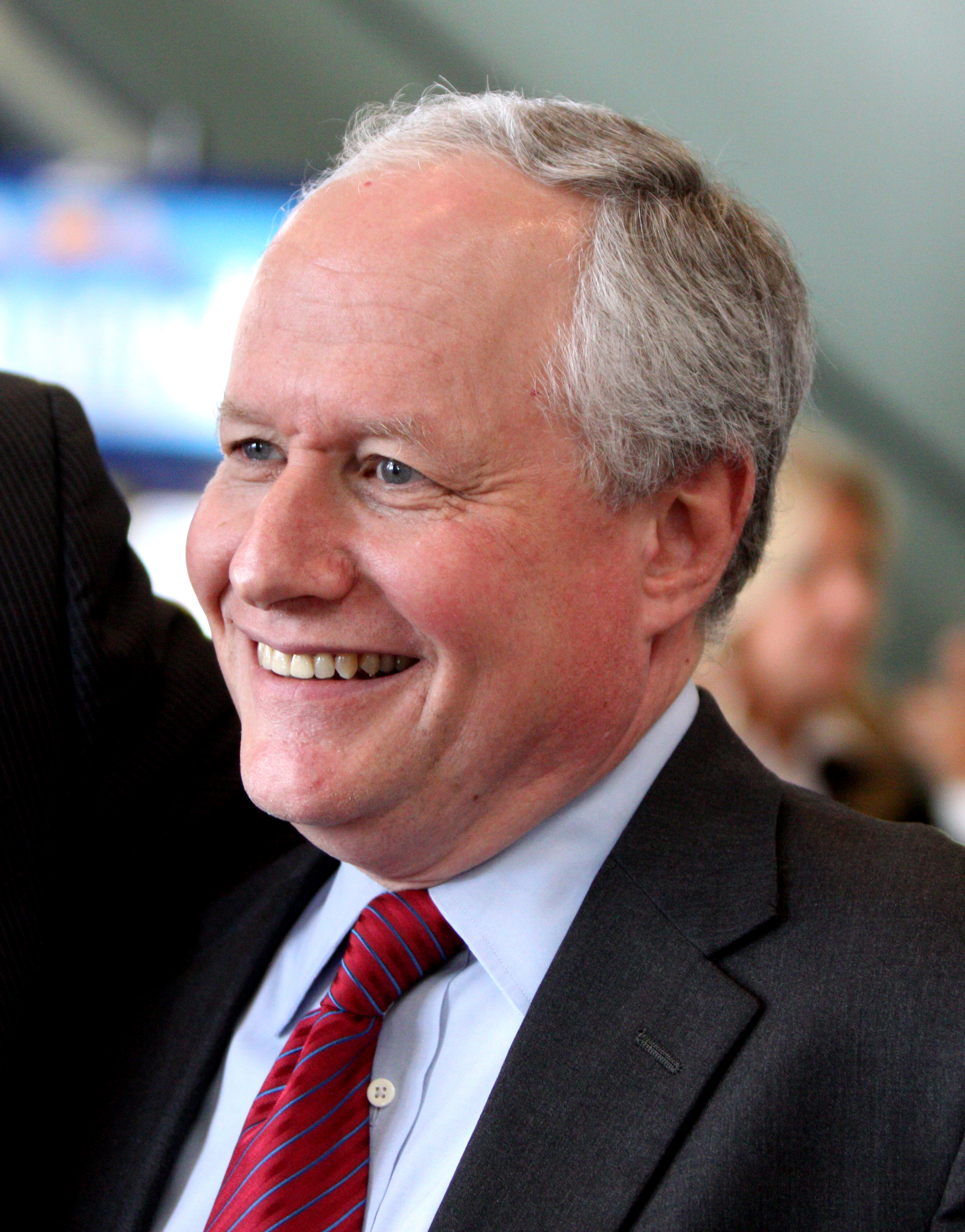
The Weekly Standard closed in December 2018, and the closing was not just a business event. The magazine had become a Never Trump holdout inside a party that had moved on, and Kristol moved with the holdouts rather than the party. He had already endorsed Joe Biden in early 2020 and launched Republican Voters Against Trump, a project built on the simple, brutal device of letting lifelong Republicans say on camera why they could not vote for the nominee.
In a 2021 interview he described himself as a "former Republican." By 2024 he was spending real money to back Nikki Haley in the primary, then endorsing Kamala Harris once she became the nominee. The arc was not subtle, but it was consistent: the same man who once played hardball to kill a Democratic president's signature bill was now playing hardball to keep a Republican out of office.
Critics on the right enjoy the irony. When Kristol backed expanding the Supreme Court in 2026, Fox News and legal commentator Jonathan Turley framed it as a conservative icon joining a "ruthless court-packing scheme." Kristol's answer was characteristically unbothered: meet force with force, or watch the rules erode.
The family wrinkle makes it sharper. His daughter Anne is married to Matthew Continetti, editor of the conservative Washington Free Beacon. The Kristol clan is still threaded all the way through the movement - even as its most famous member walked out the front door.
What gives the turn its weight is that Kristol is not a convert in the usual sense. He has not renounced limited government or constitutional originalism or a hawkish posture abroad. He insists the labels stayed put and the party moved. That framing irritates everyone: it denies the right the satisfaction of calling him a sellout, and it denies the left the satisfaction of calling him a convert. He is, by his own account, the same man making the same arguments to a different audience - which is either the most principled position in American politics or the most maddening, depending on who is listening.
The center-right publication that rose from The Weekly Standard's ashes. Kristol is editor-at-large and a fixture of its Substack and podcast feed, where the old conservative establishment argues with the present one in real time.
His advocacy organization, parent to Republicans for the Rule of Law and the Republican Accountability Project. The pitch: hold power accountable regardless of which jersey it wears.
Since 2014, more than 300 unhurried interviews with thinkers from Garry Kasparov to Anne Applebaum. No chyrons, no shouting - just two people and an idea, for an hour at a time.
His father Irving was "the godfather of neoconservatism." His mother Gertrude Himmelfarb was a renowned historian. Leaving the party was, in a sense, a family plot twist.
He was a White House intern at seventeen, before he could legally vote in the elections he would later try to swing.
"Dan Quayle's brain," courtesy of a New Republic cover. He never quite shook it - and never seemed to want to.
Over his career he's appeared on Fox News, ABC, NBC, CNN and MSNBC. Few pundits have argued from quite so many sets.
His son Joseph served in Afghanistan with the Marine Corps and later worked for Senator Tom Cotton.
Son-in-law Matthew Continetti edits the Washington Free Beacon - keeping a Kristol inside the movement Bill left.
Strip away the party labels and Kristol's project has narrowed to a single proposition: that constitutional, liberal democracy is worth defending even when defending it means turning on the people you spent your life beside. He is betting that the institutions survive - and that being on the right side of that fight matters more than being on the right side of the aisle.
It is an unfashionable wager from an unfashionable figure, made loudly and on the record, every single morning.