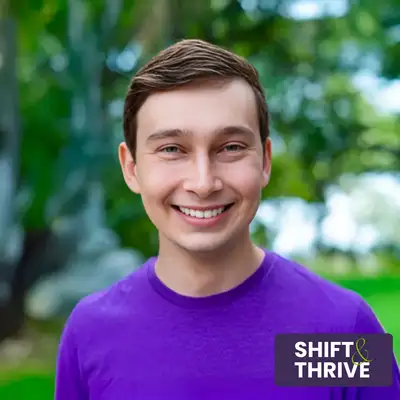
The man at the bottom of the stack
Picture the AI tool you tried last week. The recruiting platform that surfaced a candidate. The sales app that knew where a prospect worked. Somewhere underneath, there is a layer almost nobody talks about: the raw, structured records of people and companies that make any of it possible. Ben Eisenberg runs the company that sells that layer.
People Data Labs does not build the shiny thing on top. It builds the thing the shiny thing needs.
That distinction is the whole strategy, and Eisenberg states it without apology. While competitors chase polished interfaces and consumer-facing apps, he keeps People Data Labs pointed at one job: making person, company, and job-posting data that is clean, compliant, and genuinely usable by engineers. His customers are product teams and data scientists, not end users. The company deliberately avoids UI tools so it can stay, in his words, "just a data company."
It is a contrarian bet in an industry that loves dashboards. And it is the bet a CEO makes when he came up through the product, not the pitch deck.
We're sort of one of the only providers that's really, really focused on just building the data.
Intern to chief executive, no shortcuts
Eisenberg's first job in the orbit of data was an internship at Collectrium. He studied at the University of California, Berkeley, where he did something slightly unusual for a future data-company CEO: he double-majored in computer science and history. Half of him learned to build systems. The other half learned to read the past for patterns. Both turn out to be useful when your product is, essentially, the recorded facts about the working world.
He joined People Data Labs and stayed for more than seven years. That is the part worth sitting with. He did not parachute in from a bigger company with a CEO title pre-attached. He moved through the roles - senior applications product manager, director of product, vice president of innovation - touching nearly every function in the business. By the time the founders looked for a successor, the answer was already inside the building.
In September 2024, founders Sean Thorne and Henry Nevue stepped back from daily operations and handed Eisenberg the company. They remain its largest shareholders; Thorne joined the board. The framing from the founders was unusually warm.
- PRE-2017Intern at Collectrium
- 2016–2019UC Berkeley — double major, Computer Science & History
- ~2017Joins People Data Labs in a senior product role
- 2017–2024Product Manager → Director of Product → VP of Innovation
- SEPT 2024Named CEO, succeeding founders Thorne & Nevue
He has the broadest understanding of our business, our market, and our go-forward strategy.
Throw out the playbook. Then listen.
Ask most CEOs about leadership and you get a framework. Eisenberg gives you a confession about ego. His core belief is that a leader who insists on solving every problem has already failed. Trust the team, hand them resources, and get out of the way.
He places people by demonstrated ability rather than the credentials on a resume - fitting, given his own path was earned in the work, not granted by a title. He borrows ideas from industries unrelated to data, on the theory that the best moves rarely come from copying your direct competitors. And he is allergic to conventional playbooks, preferring iterative, organization-specific approaches that get customers involved early enough to actually shape the product.
That customer-first instinct shows up in how People Data Labs builds. The roadmap is steered by a public feedback platform. The company would rather ship what the market asks for than what a strategy slide predicts it might want.
Delegate, don't hoard
"You're never going to be a successful leader if you have to solve every problem yourself."
Skills over resumes
Position people by what they can demonstrably do, not the line items on a CV.
Steal from elsewhere
Import practices from unrelated industries to drive innovation that competitors can't copy.
Let the market write the roadmap
Get customers involved early; a public feedback platform shapes what ships next.
The dirty secret he says out loud
Most people in the data business will tell you their data is the best. Eisenberg will tell you that almost nobody actually knows how to measure that. "The dirty secret of the data space is no one really knows how to evaluate data quality," he has said, adding that it "becomes more of an art than a science." It is a strange thing for a data CEO to admit, and that candor is exactly why it lands.
His read on AI is similarly grounded. Language models are brilliant at processing text, he observes, but they lack reliable access to clean, structured entity data - the who-works-where-and-what-do-they-do facts. People Data Labs does not try to compete with the models. It feeds them. Clean person, company, and job-posting datasets are the missing input, not a rival output.
Then there is his bigger bet, the one he repeats: every business is quietly turning into a data company whether it means to or not. He even has vocabulary for it. He helped coin "datafication" and "datafy" inside the company - half real thesis, half playful jab at a founder's "data is the new oil" line and the actual oil barrel that once decorated the office back in 2015.
// Illustrative emphasis based on Eisenberg's public statements, not company metrics.
We believe that these businesses are 'datafying'. They are going to become data companies.
Data for good, with a privacy team to prove it
For a company built on records about people, privacy is not a footnote. Eisenberg describes a proactive stance: anticipate where regulation is going, and position to comply before you are forced to. People Data Labs sources from a public data-sharing co-op and public web sources, keeps a dedicated privacy team despite being only around a hundred people, and holds SOC 2 and ISO certifications.
His framing is simple. "We believe in the use of data for good," he says, arguing that smart regulation should protect privacy while letting the good actors keep operating. In an industry that often treats compliance as a tax, he treats it as a product feature. There is history here he does not hide from: a customer data incident in 2018 and 2019, which he is careful to note was not People Data Labs' own breach, pushed the company to think harder about how it helps customers maintain security standards. The lesson stuck. For a company of roughly a hundred people, keeping a dedicated privacy function is a deliberate signal about priorities, not an afterthought bolted on for a sales deck.
The unglamorous job at the center of the boom
There is a version of the AI story everyone tells, full of chatbots and models and demos that go viral. Eisenberg works one layer below that, in the part of the story that never trends. Models are only as good as what they can reach, and the thing they most often cannot reach is reliable, structured truth about people and companies. That gap is the business. People Data Labs does not promise to be the brain. It promises to be the memory the brain keeps reaching for.
That is also why the company keeps adding to how the data moves rather than how it looks. Newer work has centered on delivery mechanics that engineers actually want - webhooks, delta files, a job-posting dataset - the kind of plumbing that wins no awards but makes a data feed something a team can build a product on. It is the opposite of chasing headlines, and it is consistent with everything else about how Eisenberg runs the place.
The throughline from the intern at Collectrium to the CEO in New York is not a dramatic reinvention. It is consistency. The same person who studied both code and history now runs a company whose product is, in a sense, the recorded history of the working world, kept clean enough that a machine can read it. He did not arrive with a new playbook. He earned the right to throw the old one out.