The man who came home to Pakistan with a Stanford degree, his father's money, and a very specific plan to make a billion people play games he made in Lahore.
Co-Founder & CEO, Mindstorm Studios | San Francisco + Lahore
"Prior to the iPhone, it was a very closed-door system. So you had to apply for a developer's license to Nintendo or Microsoft or Sony." - Babar Ahmed, Mindstorm Studios
The thing about Babar Ahmed that doesn't fit the standard founder story is the scope of what he decided to build. Most founders are building a company. Ahmed seems to be building an ecosystem.
He joined Lion Studios - AppLovin's top-five global games publisher - as Head of Strategy and Technology. He co-founded M-Labs, a game development accelerator specifically designed to grow Pakistan's gaming industry toward a $1 billion valuation. He teaches at LUMS as adjunct faculty, because building the industry means training the people who will run it after him. He writes angel checks and sits on boards.
This isn't overextension. It's how you change an industry from the inside. When Ahmed said in 2016 that Pakistan's gaming sector would be a hundred-million-dollar industry within five years, it read as ambitious. Looking back, it looks like a conservative estimate from someone who could already see the runway clearly.
In 2024, Mindstorm Studios' Hexa Sort hit number one on the global App Store. Not number one in a regional market. Not number one in a niche category. Number one, globally, competing directly against Monopoly Go! and franchises backed by companies that dwarf Mindstorm's headcount. One billion downloads followed. Two million daily active users. More than a hundred games in the portfolio.
The studio he started with his father's money, in a country where most people thought the best tech talent would always leave, turned out to be exactly the kind of patient, principled bet that the games industry eventually rewards.
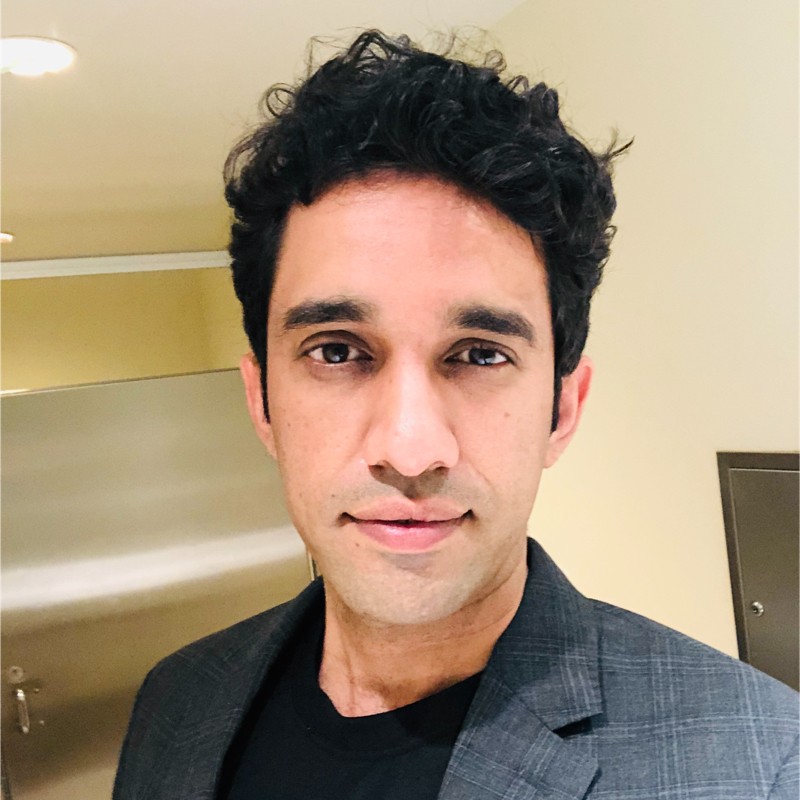
"Prior to the iPhone, it was a very closed-door system. So you had to apply for a developer's license to Nintendo or Microsoft or Sony."
On why mobile changed everything"You're left with second-tier choices, and the people who come back to Pakistan come back to do their own business."
On Pakistan's talent ecosystem"I'd say it's easily a hundred-million-dollar industry in Pakistan over the next five years."
Said in 2016 - turned out to be an underestimate"We're a startup, so I wear multiple hats: Business Management, Game Design, Programming, Mocap management, Physics and AI, and of course, Taking out the Garbage."
On the early startup reality"I'd say it's easily a hundred-million-dollar industry in Pakistan over the next five years." - Babar Ahmed, 2016 | He was right. Probably too conservative.
He built a motion capture studio in Lahore - one of the few in Pakistan - to give his games Hollywood-grade animation on an indie budget. When you can't buy your way to quality, you build the infrastructure yourself.
Mindstorm Studios survived its first three years not by making hit games, but by doing 3D rendering and architectural walkthroughs. Ahmed was patient enough to let a great product take three years - if the services side kept the lights on.
He was researching Valve's Steam platform as a distribution channel in 2009, years before indie Steam publishing became the default strategy for small studios. He was reading the map early.
His studio made the official ICC Cricket World Cup 2011 game. Not a knock-off. The official one. From a studio in Lahore that was still less than five years old.
In 2024, Hexa Sort - a casual sorting puzzle game - hit #1 globally, beating Monopoly Go!, a product backed by one of the industry's largest companies. Ahmed's studio had about 150 people. Hasbro has considerably more.
2004 - 2006
MS in Electrical Engineering & Management Science. Wireless communication focus. The degree that could have kept him in Silicon Valley - and didn't.
2000 - 2004
BS in Electrical Engineering. Where circuit design met a future game developer. The physics and AI he'd later build into games started here.
Adjunct Faculty
Teaching the next generation of Pakistan's tech talent, because building an industry means not just creating jobs but creating the people who'll fill them.
The billion downloads is not the ambition. The billion downloads is evidence that the ambition is working. What Babar Ahmed set out to build was Pakistan's gaming industry - not just a studio, not just a portfolio of hits, but the whole thing. The infrastructure, the talent pipeline, the credibility, the precedent.
M-Labs, the accelerator he co-founded, exists to prove that game development doesn't require a San Francisco zip code. His work at Lion Studios gave him a window into global publishing mechanics from the inside. His teaching at LUMS is less a side project than a forward investment - in the people who will run studios he hasn't founded yet.
His stated target: a $1 billion gaming industry in Pakistan. Given that Mindstorm alone has driven a significant portion of what exists today, and given that he called the hundred-million-dollar milestone years before it happened, there's no obvious reason to bet against him.
Pakistan has long exported its best-educated professionals to the US, UK, and Gulf states - an economic drain called brain drain. Ahmed represents the opposite: brain gain. He came home deliberately, not because he couldn't make it elsewhere, but because he thought elsewhere was the wrong place to build what he wanted to build.
His observation about Pakistan's talent retention was practical: in a smaller ecosystem, the best people haven't yet been scattered across fifty competing firms. That concentration is an advantage - if you get there early and build something worth staying for. Ahmed got there early.