She got into her dream med school. Then she turned it down to fix the whole system instead.
In an operating room, the most expensive mistake isn't a slip of the scalpel. It's a cancelled case — the patient sent home, the schedule blown, the revenue gone. Athena Doshi built a company to make that mistake disappear.
Doshi is the founder and CEO of Exactrx, a Nashville company that wants surgery to run like software instead of a fax machine. Its product is deceptively plain: autonomous, embedded checklists. Underneath sits a rules engine that reads payer policy the way a seasoned billing manager would — except it never gets tired and never misses a line.
The pitch she gives investors is not about billing. It is about access. Denials, delays, and missing documentation are, in her telling, the real barriers between a patient and a procedure. Fix the paperwork and you have not just saved a center money - you have moved a surgery from "rescheduled" to "done."
The numbers her team reports are specific enough to be checkable: day-of cancellations down by three percent, roughly thirty minutes of prep shaved off every case, and more than $300,000 recovered, per facility, per year. The platform claims something rarer still - a zero percent hallucination rate at the criterion level, validated across 3,145 real cases at Weill Cornell Medicine and Northwestern, where ordinary large language models stumble on 28 to 39 percent.
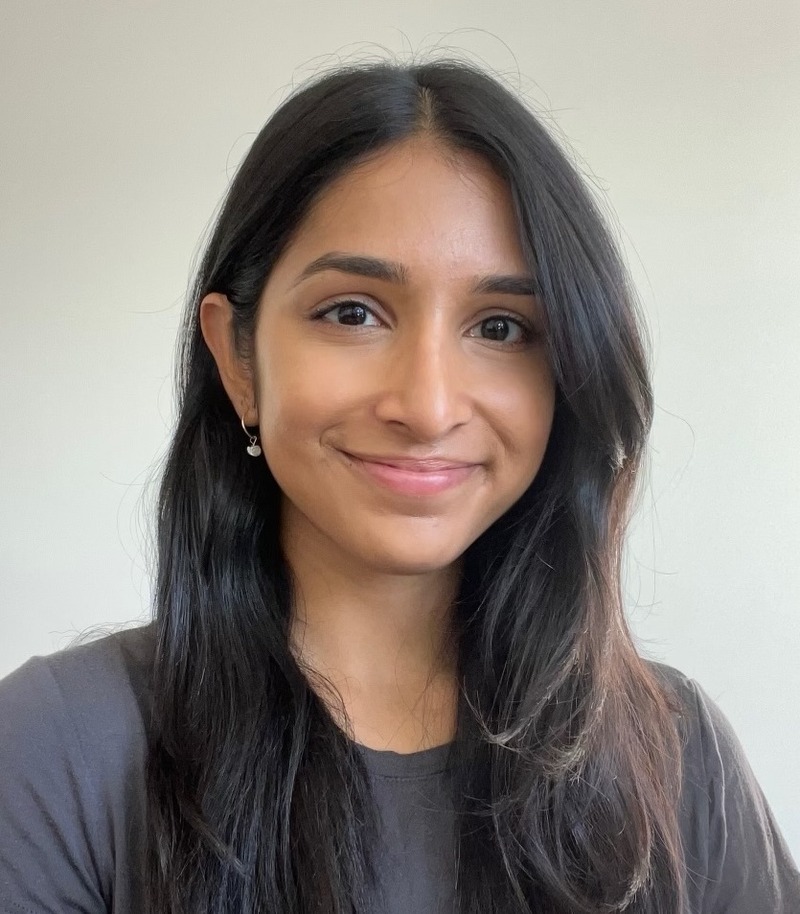
She calls the revenue cycle "one of the most consequential and underloved" systems in healthcare. Most founders chase the glamorous problems. She went straight for the one with the worst reputation and the biggest leak.
I was originally studying to be a doctor, but ultimately changed my path after falling in love with the intersection of healthcare and technology.
Here is the strange specific that explains everything else: she was accepted to her dream medical school, and she said no.
The logic was not modest. One doctor sees a few thousand patients in a career. Doshi decided she could reach more by building the infrastructure those doctors stand on. So instead of a white coat, she took a product role - and a recurring frustration that would not leave her alone.
"I think about clinicians who went into medicine to help people and spend half their day on paperwork instead," she says. The line is personal. Her sister is in medical school now, and Doshi talks about wanting her to practice with tools that let a physician be a physician, not a data-entry clerk.
She started early. While still an undergraduate at UC San Diego, she launched a public-health SaaS platform that ended up serving organizations across Tanzania and India. By 2021 it had grown to more than a thousand organizations and was acquired - a first exit before most people finish their first job.
Validated across 3,145 cases at Weill Cornell Medicine and Northwestern Medicine.
“The revenue cycle felt like one of the most consequential and underloved ones in the industry.”
Exactrx is a lean group of subject-matter experts, each carrying scar tissue from the systems they now automate.
Nine-plus years building partnerships and shipping AI in regulated settings. Scaled product at Omada Health before its IPO.
Associate professor at Weill Cornell Medicine, 15+ years in biomedical AI. Designed the claim-scoring architecture.
Built payments at WePay (acquired by JPMorgan Chase). Architected the engine handling 80,000+ payer rules.
UCSF-trained clinician across ASC, hospital and outpatient settings. Translates documentation standards into the rules engine.
I'm deeply honored to be included among such an exceptional group of female founders. This recognition reflects the incredible work of our entire team at Exactrx as we build the intelligence layer for modern surgery centers.
She turned down an acceptance to her dream medical school to build healthcare infrastructure instead.
Her very first startup, built in college, served clinics across Tanzania and India before being acquired.
She writes a Substack publication called Building Wealth.
She started, but did not finish, an M.P.H. in global epidemiology at Emory - the company won.
Her CTO once built payments at WePay before JPMorgan Chase bought it. The team likes infrastructure that doesn't break.
Doshi describes the goal as turning healthcare "from a system we navigate to a system we operate." Less wandering through a maze of denials, more pulling levers that work.
Her north star is ethical technology that improves the human condition by removing the financial and administrative friction between people and care. It is a big sentence. The work behind it is unglamorous, line-by-line, payer-rule by payer-rule - which may be exactly the point.