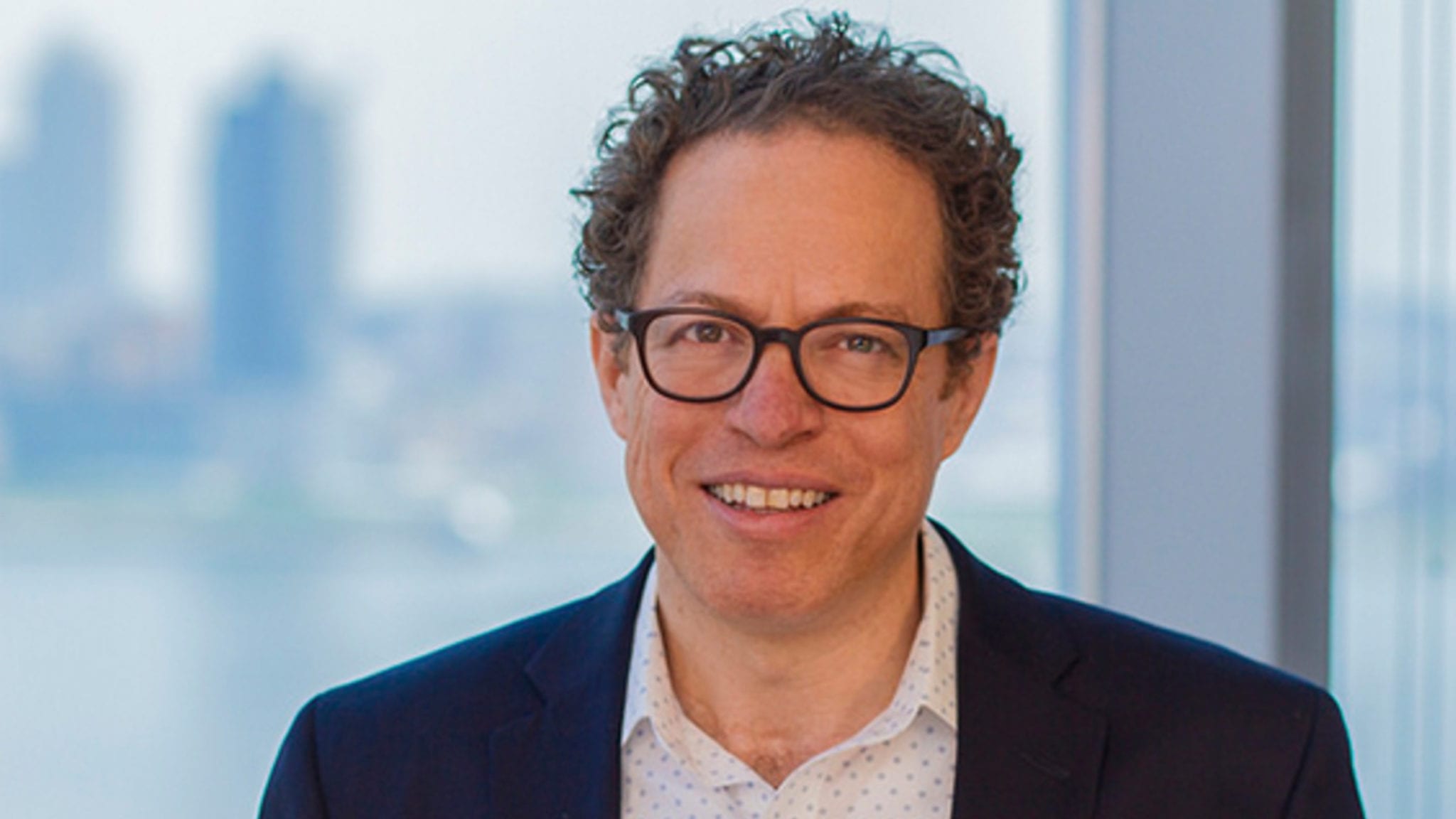
A glutaminase inhibitor walks into four diseases at once
Leal Therapeutics' lead molecule, LTX-001, is pointed at schizophrenia, bipolar disorder, major depression and ALS. Most biotech founders would pick one, raise around it, and stay in their lane. Asa Abeliovich pointed a single small molecule at all four, because the thread he sees connecting them is not a symptom or a region of the brain. It is metabolism - the unglamorous chemistry of how neurons make and burn fuel. Get the energy wrong, his thesis goes, and the disease names start to look like surface weather over the same broken engine.
That is a strange place to plant a flag. Neuroscience has spent a generation chasing plaques, tangles, misfolded proteins and dopamine. Abeliovich chased those too, for years, in peer-reviewed journals. Leal is the company built on the part of the brain everyone else skipped past: its books, its budget, its energy ledger. The company calls the approach "neuro-metabolic," and it spent more than two years saying nothing about it at all.
Leal sits in Worcester, Massachusetts - not Cambridge, not South San Francisco. It came out of stealth in 2024 with a pipeline already in or near the clinic, which is a very different entrance than the usual press-release-and-a-PowerPoint debut. By then Abeliovich had already done the thing biotech founders dream about and rarely pull off: he had built a company from a scientific hunch and sold it for roughly a billion dollars.
"This financing enables us to further progress our first-in-class neuro-metabolic pipeline to clinical data for patients with severe unmet needs."
- Asa Abeliovich, on Leal's 2025 Series ATenure was the safe answer. He gave a different one.
Abeliovich earned an MD from Harvard Medical School and a PhD from MIT, plus an MIT bachelor's that somehow spanned both life sciences and the humanities. He landed at Columbia as a tenured Associate Professor of Pathology, Cell Biology and Neurology, a member of the Taub Institute for Alzheimer's Disease and the Aging Brain, and an attending neurologist at NewYork-Presbyterian and the New York Psychiatric Institute. He saw patients. He ran a lab. He published the kind of work that gets cited for years - including a 2016 Nature paper arguing that defects in cellular trafficking are the bridge between Parkinson's pathology and its genetics.
Tenure is the prize academia hands you for a lifetime of careful work. It is also, quietly, a ceiling - a permission slip to keep doing exactly what you have been doing. Abeliovich treated it as a launchpad instead. The frustration was simple and familiar to anyone who has worked at a bench: a beautiful result in a journal does not become a pill in a patient. Somebody has to build the thing in between. He decided that somebody was him.
The lab teaches you what is true. The company is the only thing that can make it useful.
- The founder's logic, in spiritSo he started co-founding companies. Alector came first, an antibody outfit going after neurodegeneration through the immune system; he was a co-founder and later a consulting chief innovation officer as it grew into a public company. Then, in 2017, Prevail Therapeutics - a gene-therapy bet on Parkinson's genetics, seeded with the Silverstein Foundation and OrbiMed. Prevail went public, and in late 2020 Eli Lilly agreed to buy it for up to about $1.04 billion. The deal closed in 2021. It was the rare academic-to-IPO-to-acquisition arc that actually completed.
From midbrain neurons to a billion-dollar exit
Three shots at the brain's metabolism
Leal's bet is not one drug but a way of seeing. Each program corrects a different metabolic imbalance - too much glutamate, too much ceramide - in conditions that look unrelated on the outside but may share plumbing underneath.
The four-disease molecule
A glutaminase inhibitor that dials down excess glutamate. Targets: schizophrenia, bipolar disorder, major depression and ALS. Early clinical data supports safety and target engagement.
Quieting the lipid flood
An antisense oligonucleotide aimed at the SPT enzyme to cut runaway ceramide and sphingolipid synthesis. Target: genetic and sporadic ALS.
A small-molecule second front
A small-molecule SPT inhibitor for Alzheimer's, ALS and inherited sphingolipidoses - plus a next-gen antibody-like shuttle to sneak nucleic acids past the blood-brain barrier.
Two years of saying nothing
Most startups raise loud. Leal raised a $39 million seed in 2022 and then disappeared - building, dosing, generating the kind of human data that lets a company walk into the public eye already mid-stride instead of pitching a promise. When it finally surfaced in 2024, it did so with programs in or near the clinic and a thesis fully formed. Patience, it turns out, is a strategy. So is showing up with receipts.
The 2025 Series A, $30 million led by SV Health Investors' Dementia Discovery Fund with OrbiMed, Newpath, Chugai, Euclidean, Alexandria and others alongside, pushes LTX-001 deeper into schizophrenia trials and LTX-002 toward its first ALS readout. The investor roster reads like a who's who of people who have watched Abeliovich do this before and want to be in the room when he does it again.
"We're grateful to our new and existing investors for their shared commitment to advancing this work."
- Asa Abeliovich, Series A announcementWhat the pattern tells you
Run the tape three times - Alector, Prevail, Leal - and a personality comes into focus. He likes the diseases nobody has solved: schizophrenia, ALS, Alzheimer's, Parkinson's, the graveyard of neuroscience where billions have gone to die. He likes contrarian biology, the angle the field walked past. And he likes building, not just describing - the founder's appetite to take a true thing and make it useful, even when the useful version takes a decade and a clinical trial and a balance sheet.
There is a quiet stubbornness in choosing Worcester over Cambridge, in staying dark for two years, in pointing one molecule at four diseases when the safe move is to pick one and stay focused. None of it is the path of least resistance. All of it is the path of someone who has already been proven right once, expensively, and is not especially interested in the crowd's opinion the second time around.
The contrarian
Bets on the biology the field skipped - metabolism, not just plaques and dopamine.
The finisher
One of the few academics to ride a hunch all the way to a billion-dollar acquisition.
The patient one
Two years in stealth, no noise, then a debut with clinical data already in hand.
The repeat builder
Alector, Prevail, Leal - three companies, same conviction that science has to ship.