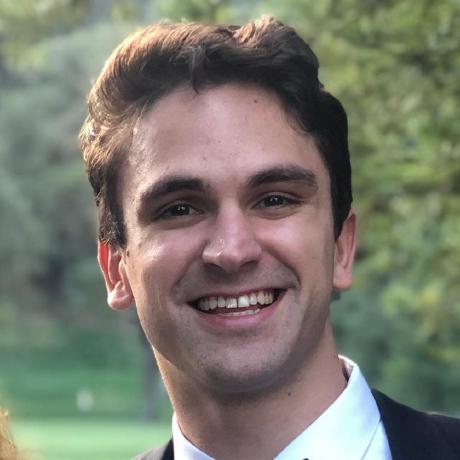
Hundreds of AI models. One endpoint. His.
Around 25 trillion tokens move through OpenRouter every week. That number tripled twice in a year. Each one is a question someone's software asked an AI model - and it passed through plumbing Alex Atallah started as a side project off a browser extension.
OpenRouter is a single API that sits in front of hundreds of large language models from dozens of providers. A developer writes one integration and can swap GPT for Claude for Gemini for an open-weight model from a startup nobody has heard of yet, comparing price, latency and uptime in real time. When a model gets cheaper or smarter overnight, the traffic moves. Atallah doesn't bet on which lab wins the model wars. He runs the exchange they all trade on.
That neutrality is the product. In May 2026 OpenRouter raised a $113 million Series B led by CapitalG, Alphabet's growth fund, with Nvidia's NVentures joining alongside ServiceNow, MongoDB, Snowflake, Databricks, Andreessen Horowitz and Menlo Ventures. Read that list again: it includes the venture arms of companies that compete fiercely in AI. They all wanted a piece of the road, not just the cars.
The era of picking a single model is over. Success now depends on continuously routing across a changing market.
It is a strange thing to be early to. Two years ago, "which model should I use" had an obvious answer for most people. Atallah's bet was that the answer would never sit still again - that inference at scale is fundamentally a multimodel problem, and the winning move is to stop choosing and start routing. The market agreed and sent him 25 trillion tokens a week to prove it.
Look at how the product actually behaves and the logic gets clearer. A developer building on OpenRouter doesn't shop for a model once and marry it. They write to one schema and let the router weigh price against latency against uptime, with fallbacks if a provider stalls and load-balancing across the ones that don't. When a new model lands on a Tuesday and undercuts last week's favorite, the traffic can shift without anyone rewriting a line of code. Switching cost, the thing that usually locks customers in, becomes close to zero. That sounds like a bug for a business. Atallah turned it into the moat.
The reason the strategy holds is that the AI market refuses to settle. Labs leapfrog each other on benchmarks every few weeks; prices fall; open-weight models from places nobody was watching suddenly become viable for real work. In a market that churns that fast, the most valuable position isn't being the best model. It's being the layer that lets everyone else treat models as interchangeable parts. OpenRouter is, in effect, a commodities exchange for intelligence - and exchanges tend to be very good businesses.
He keeps leaving the party early
Most founders ride one wave until it crests. Atallah has a habit of stepping off at the top and paddling out for the next one. He has now helped build inside three distinct tech eras: enterprise data at Palantir, NFTs at OpenSea, and AI at OpenRouter.
The OpenSea chapter is the one that made him famous. In 2018 he co-founded it with Devin Finzer and ran engineering as CTO while it became the first and largest NFT marketplace on earth. In 2022 that work landed him on the Forbes 30 Under 30 list in Finance. The same year, with the company at its peak, he stepped down to - his words - build something from zero to one. He stayed on the board and went looking for a blank page.
The origin story before that is even better. OpenSea traces back to Wificoin, a hackathon project for sharing WiFi through cryptocurrency. A weekend hack about routers became a company about digital ownership became, eventually, a man whose next company is literally named after routing. The through-line was never NFTs or AI. It was connecting things that weren't talking to each other.
Walking away from OpenSea in 2022 was not an obvious move. The company was at its peak, the title was CTO of a category-defining marketplace, and the comfortable choice was to keep riding. He stepped off anyway. The phrase he used - building from zero to one - is the kind of thing founders say and rarely do, because zero is uncomfortable and one is far away. He went back to a blank repository, started shipping small experiments, and let one of them - a browser extension for plugging your own AI models into the web - grow into the next company.
OpenSea
Co-founded 2018 with Devin Finzer. CTO through the NFT boom. The first and largest marketplace of its kind. He left in 2022, still on the board.
Window AI
An open-source browser extension - "use your own AI models on the web." Roughly a thousand GitHub stars, and the seed of what became OpenRouter.
Palantir
Forward-deployed engineer before any of the fame. Natural-language search and data exploration for customers who don't make press releases.
Side Quests
Zugata (acquired by Culture Amp), Hostess.fm (acquired by Beatport), Whatsgoodly, Redbase. The man tinkers the way other people breathe.
From hackathon to AI's road network
What 5x in six months looks like
OpenRouter's weekly token volume went from roughly 5 trillion to roughly 25 trillion in about half a year. Inference is a commodity, and commodities at internet scale compound in ways that are hard to feel until you draw them.
A blog older than most startups
Atallah has kept a personal site and blog with posts stretching back to 2011 - NFT royalties, product design principles, the future of software engineering. His GitHub, under the handle alexanderatallah, is a museum of half-curiosities: a Redis-based type-safe database called Redbase, an entity-recognition tool, a web UI for running language models locally, the OpenSea TypeScript SDK.
It is the resume of someone who builds first and theorizes later. The pattern that runs from a WiFi hackathon to a 25-trillion-token-a-week router isn't strategy so much as temperament: find the thing that should connect, and connect it before anyone agrees it matters.
The Stanford piece fits the same shape. His coursework leaned toward human-computer interaction and game theory - the study of how people deal with systems, and how systems full of self-interested players reach equilibrium. It is hard to think of better training for someone who would spend his career building marketplaces, first for collectibles and now for the models that competing labs would rather you locked into one at a time. Y Combinator and the HF0 hacker residency round out a background that reads less like a career ladder and more like a series of rooms full of people building things at 2 a.m.
Why neutrality is the whole product
There is a quiet audacity in OpenRouter's cap table. The same round that closed in 2026 drew Google's CapitalG and Nvidia's NVentures, plus the venture arms of ServiceNow, MongoDB, Snowflake and Databricks - companies with their own AI ambitions and their own reasons to prefer a world where customers pick one stack. They funded the opposite. They funded the layer that makes picking optional.
That only works if OpenRouter stays genuinely neutral, and neutrality is the asset Atallah has to protect more carefully than any single feature. The moment the router starts favoring one provider over another for reasons other than price, speed and reliability, the trust evaporates and developers route around it. So the business has to be Switzerland on purpose, a referee that profits precisely because it doesn't play. In an industry where almost everyone is trying to own the model, the contrarian position is to own none of them and sell the road they all drive on.
It is early, and the AI market could still consolidate in ways that make routing less interesting. But the trend so far has bent the other way - more models, more providers, more churn, more reasons to keep your options open. Every leapfrog between labs is, for Atallah, another reason the toll booth gets busier.
There is a tidy symmetry to where he has landed. He spent the OpenSea years arguing that ownership of digital things should be open and portable, not trapped inside one platform. OpenRouter makes the same argument about intelligence: your access to the best model shouldn't be locked to whichever vendor you happened to integrate first. Different decade, different boom, same instinct - keep the doors open and take a small toll from everyone who walks through. So far, a lot of people are walking through.