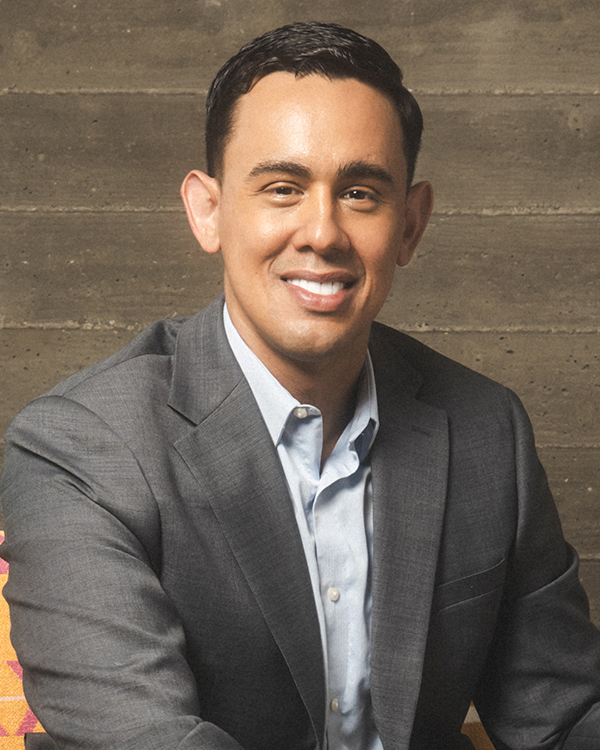
Most venture capitalists in Los Angeles want to talk about deal flow. Alejandro Guerrero wants to talk about who got the call. The General Partner and Co-Founder of Act One Ventures spends his time on two things that are not as separate as they sound: writing early checks into vertical SaaS, fintech, and AI-native enterprise software, and quietly redesigning the contract that decides who else gets to write a check next to him.
The redesign has a name. The Diversity Rider. It is a single paragraph, written in 2020, in which a lead investor formally commits to making a good-faith effort to invite traditionally underrepresented co-investors onto the cap table of a financing round. It is not a pledge. It is not a panel. It is contract language. It lives inside the term sheet, between the liquidation preference and the board composition, where the actual money is decided. Guerrero wrote it because he was tired of watching his industry respond to crisis with what he called "thoughts and prayers."
Act One Ventures is a Los Angeles micro-VC firm. Guerrero co-founded it around 2015 with Michael Silton, a UCLA connection that, like most of Guerrero's career, did not look inevitable at the time. The firm leads pre-seed and seed rounds. It is allergic to spotlight, partial to operators, and explicit about wanting to back founders who do not look like the canonical Stanford-to-Sand-Hill template. Roughly 70% of its portfolio is led by women or by founders from underrepresented backgrounds. That is not a marketing line. It is the math of the cap table.
Before the fund, Guerrero was a founder twice over. He co-founded Live Entertainment Network and then ran UniqApp as CEO. He spent time as an Associate at the UCLA Venture Capital Fund, which is where the rails got laid. He is a first-generation Mexican-American, raised in San Diego by parents who immigrated from Mexico, and he was the first person in his family to graduate from college. UCLA, class of 2007. The biographical line "first in his family" gets used a lot in venture marketing, and rarely means much. In his case, it is the entire prologue.
The story he tells about how he ended up in venture is almost always the same story, in slightly different words. Somebody opened a door. Somebody else walked him through it. Somebody else after that explained how the room worked once he was inside. He has named this debt in interviews, in podcasts, on conference stages, and, more practically, inside contract language that is now signed by hundreds of funds he will never run.
Act One Ventures closed its third fund in January 2024 with $73 million in committed capital, roughly three times the size of Fund II. In a vintage where micro-VC fundraising has been brutal, that is a non-trivial number. It is also a quiet vindication of a thesis that, in 2020, was politely treated as a values statement: that backing under-networked founders is not charity, it is supply. The undervalued asset class is the founder nobody else called.
His investment focus has tracked the next layer of the enterprise stack: AI-native systems for compliance, AI for regulatory oversight, AI for risk management, vertical SaaS for the industries that other funds find unfashionable - logistics, construction, supply chain, healthcare back-office, fintech infrastructure. The keywords are not the headline. The keyword is "unfashionable." Act One writes the check before the deck is finished, before the narrative is tidy, before the round is competitive. That is the only window where a small fund can be decisive, and Guerrero treats it like a craft.
A friendship that became a firm
Act One Ventures exists because two UCLA acquaintances stayed in touch. Michael Silton was the one who called. Guerrero was, at the time, a founder, not a funder. He has said in interviews that he did not arrive in venture with a long-laid plan. He arrived because the door opened and because, on the other side, he could see the shape of a fund that did not yet exist - a fund run by operators, small enough to write the first check, large enough to defend the company through the next two rounds, and stubborn enough to invest in founders the rest of the industry had structurally underweighted.
The firm describes itself as "light-touch." That is not a euphemism for absent. It is a posture. Founders run the company. Investors lend the network. Act One's pitch to a founder is the LP base and the operator Rolodex, not the boardroom intervention. In a year where every fund is trying to convince founders that "value-add" is a real thing, Guerrero's version is closer to a promise to stay out of the way unless the founder asks.
The paragraph
The Diversity Rider was drafted in the weeks after the murder of George Floyd. Guerrero watched the venture industry post black squares on Instagram and then watched the calendar reset. He decided that the only response that would survive the news cycle was a structural one - language that would still be on the page in 2026, regardless of who remembered why it was written.
The clause is not coercive. It does not mandate that any specific co-investor be included. It commits the lead investor to make a good-faith effort to invite underrepresented co-investors into the round, in collaboration with the founder. The genius is in the placement. Diversity, by being a line item in the financing document, becomes part of the negotiation rather than a footnote to it. It also creates a paper trail. Funds that signed it are on the record. Funds that did not are also on the record.
It worked the way contract language works, which is slowly and then suddenly. Hundreds of funds signed on. Some named partners adopted it as default term sheet boilerplate. The Marketplace tech podcast covered it. dot.LA covered it. BR Venture Fund covered it. The clause crossed the firewall from values to plumbing, which is where Guerrero wanted it.
What he is funding now
The current Act One portfolio leans hard into AI-native enterprise software - companies building deep automation for regulated, paperwork-heavy industries. AI for compliance. AI for fintech back-office. AI for logistics and supply chain. AI for customer engagement at the boring middle of the funnel where revenue actually moves. The bet is straightforward: vertical software is being rebuilt from the database up, and the founders who win will be domain specialists, not generalists with a model wrapper. Act One is comfortable being the first money in because the first money in is the only check that can underwrite a long thesis.
Guerrero serves as an Advisor at East Los Capital and speaks regularly on the LA Venture podcast, on Venture Unlocked, and at SuperVenture. He is direct on stage. He uses the word "tripping." He talks about the "birth lottery" in interviews. He does not perform a version of himself that the industry expects, and the industry, slowly, has stopped expecting it.
The career has the shape of a thesis the man holds about other people: somebody opens a door, somebody walks you through, somebody teaches you the room. Act One Ventures is, in practice, the door he is now holding open. The Diversity Rider is the hinge he installed so that it stays that way after he leaves.