The mobile advertisement has a wonderfully short life and a surprisingly long paper trail. It flashes between a thumb and a screen, makes its tiny bid for attention, and vanishes. Behind it sits a small civilization of exchanges, platforms, publishers, identifiers and reports, all arguing over who deserves credit. Andrew Tan has spent nearly two decades in that civilization. He began near its ground floor, supporting publishers, and eventually built a company around the hardest question in the building: did the ad actually work?
Tan is the Brooklyn-based co-founder and chief executive of FeedMob, a mobile-growth company he started with Sarah Hawley and Ken Lu in 2015. “Growth” is the optimistic word. The work underneath is more exacting. FeedMob helps app marketers find users through media beyond the largest search and social platforms, then watches what those users do after the install. The distinction matters. An install can be bought. A useful customer must be demonstrated.
His route to that problem was neither mystical nor especially tidy. After studying at UCLA, Tan began at Evolve Media in 2006 in publisher support. He became a sales planner, moved into inside sales at Tribal Fusion, and then took East Coast account roles at SocialMedia and MediaBrix, now Infillion. By 2011 he was in sales and business development at the mobile advertising company MdotM. He also co-founded Mixy.tv, later started Peso, and completed a Ruby on Rails program. Sales gave him a view of promises; code gave him a suspicion of what promises cost.
The useful education of being in the room
Digital advertising loves a clean abstraction. A dashboard displays a number with two decimal places and everyone briefly agrees the universe is knowable. Tan's career put him on several sides of that dashboard. Publisher support showed him the people who make inventory available. Sales showed him the people who package it. Business development showed him the alliances required to move it. Engineering taught him where certainty goes to acquire error messages.
The route to FeedMob
A professional biography describes Tan as one of the early salespeople on programmatic advertising's demand side and notes his foundation in engineering and coding. It also calls FeedMob his third startup. The sequence suggests an appetite for iteration, but not the glamorous sort. There are many easier ways to seem visionary than spending years learning why one database disagrees with another.
Three founders and a September correction
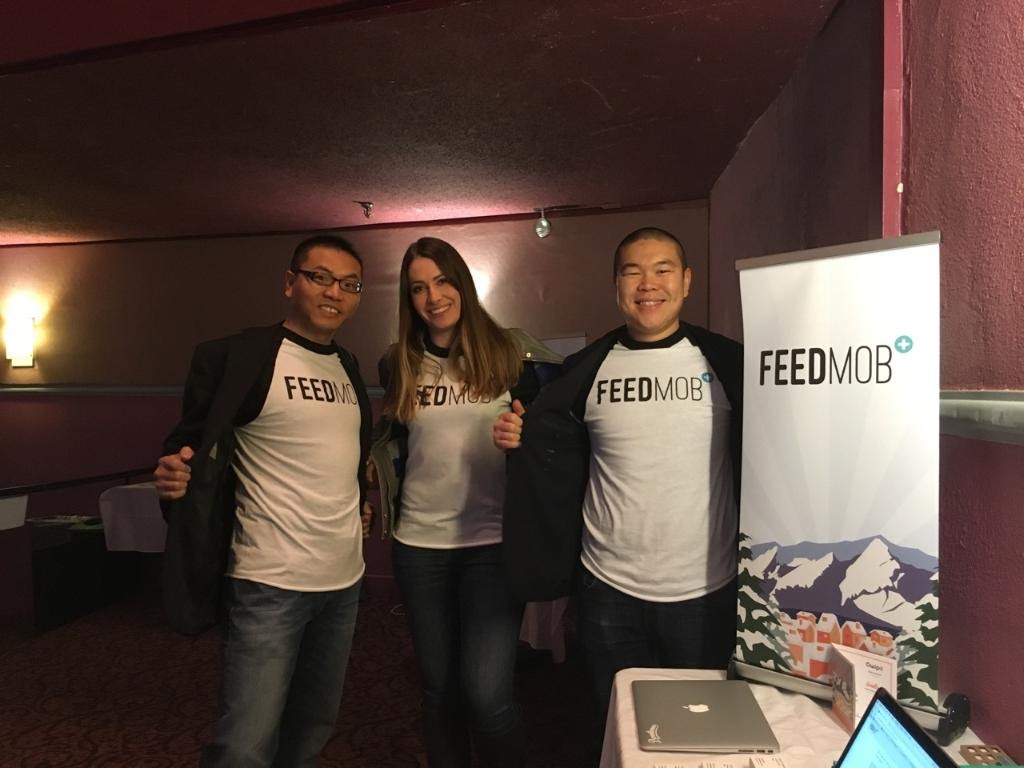
The first FeedMob pitch was a self-serve marketplace where app developers could bid for advertising in other apps. Tan, Hawley and Lu took the idea into Boomtown's fall 2015 accelerator class. In January 2016, they began operating between New York and San Francisco. A federal filing from the following month lists the three as FeedMob's founding officers and records $292,900 sold in an early offering of convertible notes. Startups enjoy talking about velocity. Paperwork prefers exact change.
Then came the correction that made the company. In September 2016, after whiteboarding its way through product-market fit, FeedMob pivoted toward transparent media buying and analytics. It was a meaningful change in emphasis. The company would not merely open another door to ad inventory; it would help clients choose doors, inspect the traffic coming through them, and decide whether any deserved to remain open.
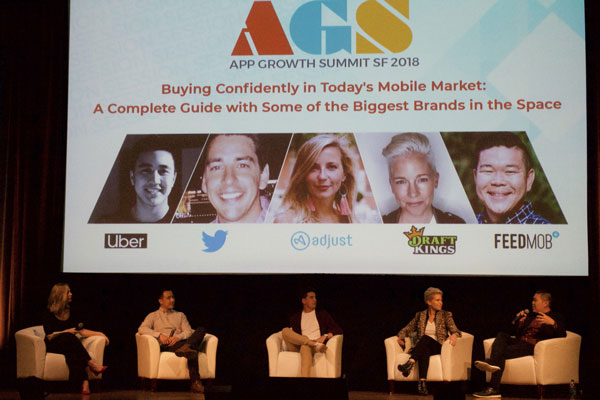
The next milestones arrived quickly. FeedMob released the first version of an anti-fraud suite in April 2017. It reached its tenth major client that June. By August it reported more than 20 people, with teams in Europe and Asia. A Series A closed in April 2018, and by October the client roster had passed 35 while headcount crossed 50. Tan appeared at the Kochava Summit to discuss mobile trends and at App Growth Summit San Francisco to talk about growth spending. The company that began as a tool was becoming a combination of technology, media buying and counsel.
“Fraud is a moving target, so I believe we have to continue to work together as an industry to iterate and build tools against any new proliferation.”Andrew Tan, 2021
The fraudster gets a vote
To understand Tan's operating philosophy, begin with that moving target. Mobile ad fraud is not a single trap waiting to be removed. It changes with incentives, attribution rules and technical loopholes. Tan has warned that fraudsters are inventive and that marketers must watch for odd patterns in first-party and mobile-measurement data. His language is collaborative rather than triumphant. No tool kills the problem. The industry keeps observing, comparing and building.
Apple's privacy changes sharpened the challenge. The old individual device identifier lost its central role, and SKAdNetwork, usually shortened to SKAN, changed how iOS campaigns could be attributed. Tan saw some promise in a system based on direct ad-served clicks, which could reduce the murk of resold redirect chains. He also expected new attempts to game it. The sensible response, in his view, was to build reporting around mobile-measurement APIs and aggregate analytics that could work under the new rules.
This is where his dual background becomes useful. A salesperson can explain why a new channel deserves a test. An engineer asks what evidence would survive the test. Tan seems happiest at the seam. In public, he speaks less about advertising's romance than its plumbing: postbacks, first-party data, pricing models, supply partners and downstream behavior. The result is an unusual founder's pitch. Please spend money, it says, but let us be fussy about where.
A budget with more than one address
Tan's most consistent strategic argument is diversification. For years, Facebook and the other dominant platforms absorbed so much user-acquisition spending that experiments elsewhere were difficult to justify. The privacy disruption changed the calculation. In 2021, Tan argued that the field had become more level and that marketers had an opportunity to explore other channels. FeedMob had been building that bridge for more than five years.
Diversification sounds pleasantly prudent, like owning several umbrellas. In practice it creates work. Carrier inventory, device-maker placements and independent media partners arrive with different formats, audiences and measurement constraints. A new source must be onboarded, tested, compared and sometimes dismissed. The attraction is not novelty for its own sake. It is a portfolio less dependent on one platform's auction, policy change or view of the customer.
That thesis has continued into FeedMob's partnership with T-Mobile Advertising Solutions. In a recent public note, Tan called it an “amazing journey” and emphasized helping mobile user-acquisition teams reach carrier audiences at scale. The partnership extends the same old question into new territory: can a channel outside the usual pair of giants produce measurable customers at a price the marketer can defend?
The balance board is not a metaphor, except when it is
Away from campaign mechanics, the public portrait of Tan contains two excellent details. He likes exploring cities on any two-wheeler. He has also been seen working while standing on a balance board. Neither fact needs interpretation. Both are improved by resisting it. Still, the balance board is almost indecently appropriate for a chief executive in ad tech, an industry where the floor changes angle while everyone is presenting the quarterly plan.
FeedMob itself sits on a series of productive tensions. It is an agency with software instincts, a media buyer that talks about transparency, and a growth partner that keeps returning to fraud. Tan's career has a similar construction: sales and code, New York and San Francisco, scale and skepticism. His public comments do not promise a final equilibrium. They favor flexibility, more buying models and reporting capable of following the money as the system changes.
Flexibility, in Tan's vocabulary, is quite specific. When he discussed FeedMob's product direction in 2021, he talked about moving beyond the familiar cost-per-install and cost-per-action arrangements into cost-per-click and cost-per-thousand-impression buying. Each step up the marketing funnel makes immediate results harder to see. It also asks the reporting system to carry more weight. For Tan, broadening the menu and strengthening the measurement were one project, not two.
He also expected privacy pressure on iOS to send more attention toward Android, not only through larger media budgets but through better product loops and user experience designed to increase lifetime value. This is a revealing kind of forecast. It does not treat advertising as a lever isolated from the app being advertised. If acquisition becomes more expensive or less legible, the product has to keep the users it earns. A media plan can open the door. It cannot persuade anyone to stay for dinner.
That may be the quieter achievement of the company he co-founded. FeedMob's story is not one immaculate idea marching toward its destiny. It is a sequence of adjustments: a self-serve platform, a pivot, an anti-fraud suite, new attribution infrastructure, new supply. The strongest through-line is a willingness to revise the route without abandoning the destination.
The advertisement still flashes and disappears. The budget still wants an answer. Tan's work begins in the interval between those two facts, where certainty is scarce, experiments are useful and someone must keep their footing.