The schedule ran to 120 pages. Andrew Gostine, then a medical resident, had nine people to prepare for procedures and a hospital's worth of systems conspiring to make a small job enormous. He found room numbers and typed them into a spreadsheet. He logged into another system to learn which residents were on call, then another to locate their phone numbers. He emailed the assignments. Finally, he called everyone to explain what the email had already said. Six hours had passed.
When Gostine raised the obvious objection, he was told the process was fine. This is the sort of institutional reply that can produce either surrender or a founder. Gostine chose the more exhausting option. Within roughly six weeks, he had built software to handle the task that had consumed his night.
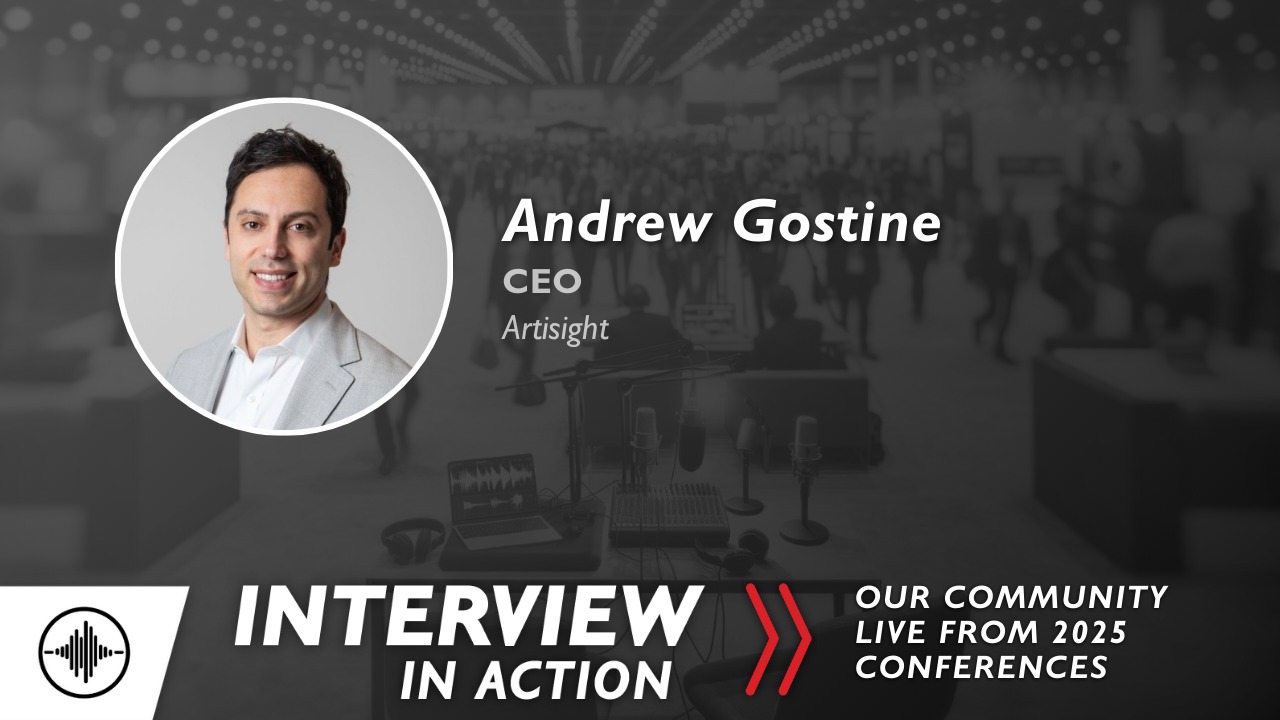
The episode became more than an origin anecdote. It supplied the governing idea for Artisight, the Chicago smart-hospital company he co-founded in 2015 and now leads as chief executive. The problem was not merely an old schedule or one awkward shift. It was the habit of asking highly trained people to serve as the connective tissue between machines that declined to speak to one another.
The education of an impatient physician
Gostine grew up in Grand Rapids, Michigan, in a family and community he has described as supportive and full of high achievers. He studied biochemistry at Boston College, then collected the two degrees that would define his professional grammar: an MD from Georgetown University School of Medicine and an MBA from Georgetown's McDonough School of Business. One taught him to read a room where seconds matter. The other taught him to ask why the room worked as it did.
His career then took a route that looks tidy only in hindsight. He began clinical training at Presence Health, pursued anesthesiology at Northwestern and created a boutique consulting practice that helped validate and commercialize healthcare technologies. That work led to a brief spell evaluating healthcare and information-technology investments at Jump Capital. The trading world offered an illuminating contrast. Financial firms worried about fractions of a second. Hospitals, by comparison, still carried pagers, clipboards and workflows that behaved as though copying information were a clinical virtue.
He returned to Northwestern to complete residency, started Artisight and continued building the company during a critical care fellowship at Stanford. In 2018, after the birth of his daughter, he came back to Chicago and Northwestern. The company was not built by someone fleeing clinical work. Gostine kept practicing, using the hospital as a place to understand what technology missed when its makers admired the technology more than the work.
The keyboard as villain
Every mission needs a useful symbol. Gostine has chosen a surprisingly beige one. Before he dies, he says, he hopes to see at least one hospital without a keyboard and mouse. He does not object to typing in principle. He objects to what typing steals: a clinician turns away from the encounter to document an event, then may enter the same information again elsewhere, and perhaps a third time for good measure.
His alternative is ambient computing. Artisight combines cameras, microphones and other sensors with software that recognizes context inside patient rooms and operating rooms. Computing happens on an NVIDIA-powered device close to the room, an architecture intended to avoid sending continuous feeds to a remote cloud. The system can support virtual nursing and observation, connect remote specialists, track operational events and pass relevant documentation into an electronic health record.
The premise is easy to caricature as a machine replacing a person, so Gostine is explicit about the boundary. “You'll never make a digital nurse, you'll never make a digital doctor,” he has said. He argues that the substitution fantasy undervalues what people contribute to care. His aim is narrower and, in its way, more demanding: let machines handle the noticing, routing and transcription they can do reliably, while preserving professional judgment and human attention.
Scale changes the argument
Artisight spent its early years under the name Whiteboard Coordinator, a name charmingly faithful to the kind of mundane obstacle the founders were attacking. It later became Artisight and widened its scope from individual workflow fixes to a common sensor and software layer for the hospital. The company says clinicians built the platform for clinicians. The boast matters less as pedigree than as a test: does the system remove work, or merely present staff with another screen and another password?
Money and deployments followed. Artisight announced a $42 million Series B in January 2024, with participation from NVIDIA and health-system investors; the company said demand made the round 2.4 times oversubscribed. In 2025 it secured another $40 million. Gostine said at that point that the platform was operating in 417 hospitals and that the company intended to reach roughly 1,000 more over the following 18 months.
The customers supplied more concrete measures. Guthrie Clinic leaders said their use of the platform helped reduce falls with injury by 40 percent year over year and save $7 million by cutting reliance on traveling nurses. In another deployment, voice kiosks served more than 1,200 people a day and cut wait times in half. Those figures describe particular implementations, not a universal promise. They also show why Gostine talks so often about workflow. A platform earns its room by changing a measurable nuisance, cost or delay.
Growth introduced a new lesson. Artisight originally emphasized hardware flexibility: a hospital could use various cameras and speakers. Gostine later described moving toward a more prescriptive model, closer to a structured Epic deployment. Infinite choice sounded accommodating but slowed adoption. A defined path made the complicated thing easier to install. In enterprise healthcare, flexibility can become the expensive art of never quite arriving.
Who gets to design the room?
Gostine's sharpest warning is aimed less at artificial intelligence than at its guest list. If physicians, nurses, physician assistants, nurse practitioners and respiratory therapists do not participate in design, he argues, the resulting systems will not fit their workflows. The point carries a trace of his first maddening schedule. Someone had once declared that process perfect, presumably from a safe distance from the person spending six hours on it.
Customers notice this posture. A Sanford Health nursing leader recalled that Gostine's focus on “solving real problems” caught the team's attention, adding that his clinical background gave him an understanding of labor-intensive nursing work. It is an encouraging endorsement, though the difficult part begins after the meeting: translating empathy into a repeatable product across different buildings, records and routines.
Recent work shows that map expanding. Artisight has collaborated with Microsoft on ambient documentation, linked bedside televisions with Epic-aware services, and worked with NVIDIA and KARL STORZ around operating-room technology. In 2026 the company announced enterprise deployments with UChicago Medicine and MetroHealth. Each partnership adds reach, but also another institutional language the platform must learn to speak.
A room that pays attention
Gostine is an unusual evangelist because his preferred future is defined by less visible effort. The ideal room notices who is present. It understands enough of what is happening to send the right fact to the right system. It calls for help when a known condition appears. It does not preserve every moment merely because storage is cheap. Above all, it does not ask a nurse to become a courtroom stenographer for work everyone has just watched happen.
There is wit in making the keyboard the enemy, but also discipline. “Transforming healthcare” is a phrase large enough to hide in. Removing one redundant entry is falsifiable. Saving half an hour on a shift can be counted. Preventing a missed step can be audited. The grand vision survives only if the small workflow behaves better on Tuesday morning.
That brings the story back to the resident, the spreadsheet and nine waiting names. Gostine's response was not to write a manifesto. He wrote software. More than a decade later, the systems are larger, the investors more prominent and the vocabulary full of edge AI and ambient intelligence. The test remains wonderfully plain: did the machine understand enough to spare a person the copy-and-paste?
A keyboard-free hospital may sound futuristic. Gostine's version is really an argument for restoring something old-fashioned - the freedom to look at the person in the room.